
Hail Damage Roof Repair in Tucson
Insurance-grade hail damage documentation and repair for Tucson commercial flat roofs — impact bruising assessment, photo logs with GPS tagging, and repair-vs-replace scope packages that Arizona adjusters can work from.
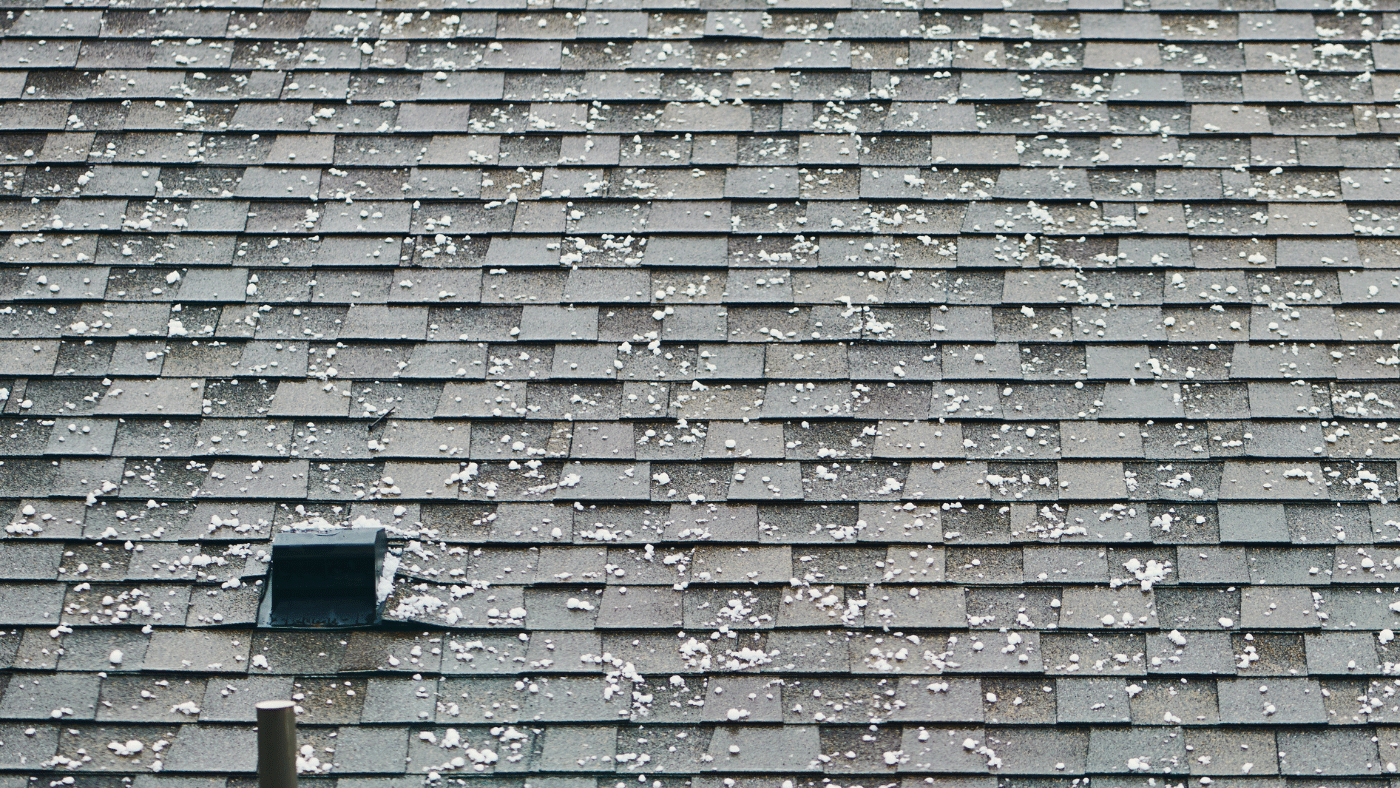
Hail is less frequent in Tucson proper than in the high-plains markets to the north, but when it arrives — typically during monsoon season supercell events or spring frontal passages — it arrives on membranes that have already been weakened by sustained UV exposure and thermal cycling. We document what the storm actually did, in a format your Arizona adjuster can use.
Tucson sits in a climate zone where hail events are episodic rather than seasonal, but they are well-documented and consequential. The October 2010 hailstorm that moved through the central Tucson corridor produced documented 1.5-inch stones over parts of Midtown and the University of Arizona area, damaging TPO and modified bitumen roofs on commercial buildings that had been operating in sustained UV Index 11-plus conditions for years. UV-degraded TPO seams that might have absorbed a glancing impact on a new membrane were already at reduced elasticity. Impact damage on aged Tucson membranes is categorically more severe than the same event on a membrane in a northern market.
The August 2018 Rincon Mountain supercell produced quarter-to-half-dollar-size hail across the southeast Tucson commercial corridor — Kolb Road, Davis-Monthan AFB access roads, and the Irvington industrial district. That storm hit roofs that had been through the monsoon dry-in season without maintenance inspections. Blocked scuppers already had standing water in low points; the hail impact on that standing water transmitted energy downward through the water column rather than dissipating at the membrane surface, producing insulation facer fractures beneath apparently intact-looking TPO.
Our job is to produce documentation that your adjuster or public adjuster can use — not to make insurance promises we are not qualified to make. We are roofers. What we deliver is a zone-level scope package: GPS-tagged photo log, core sample results, damage category breakdown by zone, and a written repair-vs-replace recommendation with the basis stated clearly.
How UV Pre-Damage Changes Hail Impact Outcomes in Tucson
Commercial TPO and PVC membranes in the Sonoran Desert experience UV-driven polymer degradation at roughly twice the rate of northern or coastal markets. The practical consequence for post-hail inspection is that a 15-year-old TPO membrane in Tucson may exhibit hail impact response more similar to a 25-year-old membrane elsewhere — reduced elasticity at seams, oxidized lap adhesion, and brittle flashing materials that crack on impact rather than deforming. We factor membrane age and UV exposure history into every post-hail scope, because the impact damage classification system changes when the underlying membrane is already compromised.
Impact bruising on UV-degraded TPO over polyiso insulation presents differently than on new systems. Large hailstones transfer energy through a softened membrane into the insulation facer with less surface evidence than the same impact on a new membrane. The insulation facer fractures beneath a membrane that looks superficially intact — no surface crack, no puncture, but no substrate support at that location. Tucson's heat cycle accelerates the failure sequence that follows: the unsupported membrane area heats to 175°F-plus daily, the membrane stretches and relaxes without a backing, and within one to two monsoon seasons the impact zone fails as an active leak.
We document all three damage categories — cosmetic surface marks, functional waterproofing compromise, and bruising-class insulation damage — separately, zone by zone. The adjuster receives a photo log organized by damage type, with zone diagrams and core sample results at suspected bruising locations. Arizona carriers including USAA, State Farm, Farmers, and Allstate have adjusters familiar with the flat-roof commercial market here; our documentation format is built to work with the scope packages those adjusters use.
Photo Log and Storm Documentation for Arizona Claims
Every impact site gets three photographs: a GPS-tagged wide shot establishing roof zone context, a mid-range shot showing the impact pattern relative to seams and penetrations, and a close-up with a standardized size reference. We pull NOAA NEXRAD radar data for the storm event, the National Weather Service Tucson office's storm reports for the date, and where available the Verisk or CoreLogic hail footprint map for the building's address on the Tucson metro grid. This anchors the damage documentation to the specific event your claim covers and eliminates the ambiguity that Arizona adjusters face when multiple monsoon events occur in sequence.
Core samples are pulled at locations where insulation damage beneath intact-looking membrane is probable — center-mass of the highest hail-density zones and at every low point where monsoon standing water may have amplified impact energy. Core results are photographed against the zone diagram and noted as either dry substrate, compromised facer, or saturated insulation. On a 30,000-to-50,000-square-foot commercial roof, the photo log typically runs 80 to 200 images — enough for an Arizona adjuster to construct a line-item scope without returning to the roof.
For buildings we have maintained, we include the pre-event inspection record alongside the post-storm documentation. The prior record establishes baseline membrane condition and separates storm-caused damage from pre-existing wear — a distinction that matters both for claim attribution and for the repair scope itself. Where no prior record exists, we document observable pre-existing conditions post-event and note clearly that those observations cannot be attributed to the storm.
Repair vs. Replace After Hail in the Sonoran Desert
Post-hail repair feasibility in Tucson depends on the membrane's pre-storm condition more than on hail density alone. A relatively new TPO system — under 10 years, seams intact, recent maintenance history — that sustained concentrated functional damage in one or two roof zones is a good repair candidate: membrane patch at impact sites, seam reinforcement at compromised laps, insulation board replacement at bruised zones. The repair scope is cleanable and the remaining system will hold.
A TPO system at 18 or more years in the Sonoran Desert UV environment, with pre-existing seam oxidation, lap adhesion loss at parapet flashings, and widespread bruising-class insulation damage from the hail event, is a replacement candidate — not because the hail alone made the decision, but because repairing individual impact zones on a globally compromised membrane does not restore a reliable waterproofing system. We document that pre-existing condition separately from the hail damage and we state the repair-vs-replace recommendation with its basis in writing.
We do not make insurance promises, and we do not tell building owners what their claim outcome will be. We give you the documented scope and the recommendation. What happens in the Arizona insurance process — with your adjuster, your public adjuster, or any attorney you have engaged — is between those parties and your carrier.
Frequently asked questions
How soon after a hail event should we schedule a Tucson roof inspection?
As soon as possible, ideally within two weeks. Monsoon season in Tucson means that hail events are often followed by additional convective storms within days. Getting a documented inspection scoped to a specific storm before the next event is critical for clean claim attribution. We can typically mobilize for post-hail inspections within two to three business days of a major event, though our schedule compresses when a storm affects a large area of the metro.
Does Tucson's climate make hail damage worse than in other markets?
For membranes with age and UV exposure, yes. Sonoran Desert UV degrades membrane elasticity at roughly twice the rate of northern markets, which means Tucson commercial roofs at a 20-to-25-year membrane would elsewhere. We account for that in our damage classification — a membrane that looks like it absorbed the impact cleanly may have bruising-class insulation damage beneath it precisely because the membrane was too stiff from UV degradation to flex and dissipate the energy.
Do you work with Arizona insurance adjusters?
We provide documentation that adjusters can work from — zone diagrams, GPS-tagged photo logs, core sample results, and a written repair-vs-replace scope. We are roofers, not public adjusters or attorneys. We do not negotiate claims or represent you in the insurance process. Arizona carriers including USAA, Farmers, State Farm, Allstate, and Auto-Owners are familiar with the commercial flat-roof market here; our scope packages are formatted to align with what their adjusters use on Tucson commercial claims.
Can you do temporary repairs while the claim is being processed?
Yes. Emergency dry-in and temporary patching are scoped and billed separately from the insurance documentation package. We can stabilize active leak points, document the temporary repair scope separately from the hail damage documentation, and ensure the temporary work does not complicate the claim. Fast dry-in after a monsoon-season hail event is important — standing water on a compromised membrane compounds damage quickly.
Need a post-hail inspection package for a Tucson commercial building?
We walk the roof, pull cores where the impact pattern warrants it, and produce a zone-level documentation package — GPS-tagged photo log, damage category breakdown, storm records — that your Arizona adjuster or public adjuster can use.
Ready to talk through a roof?
Tell us about the building and the roof problem. We'll document it and put a plan in writing — with an honest repair-vs-replace recommendation and no upsell pressure.
Documented, repair-first commercial & industrial roofing across Tucson and Pima County. Flat and low-slope systems for occupied buildings, planned around your operation.
Services
© 2026 Commercial Roofing Contractors Tucson. All Rights Reserved. Privacy Policy · Terms of Use