
Manufacturing Facility Roofing in Tucson
Commercial roofing for Tucson manufacturing facilities — Raytheon Missiles and Defense, Caterpillar surface products, IBM Tucson, and Bombardier — with production-schedule coordination, process exhaust flashing, and Sonoran Desert heat management.
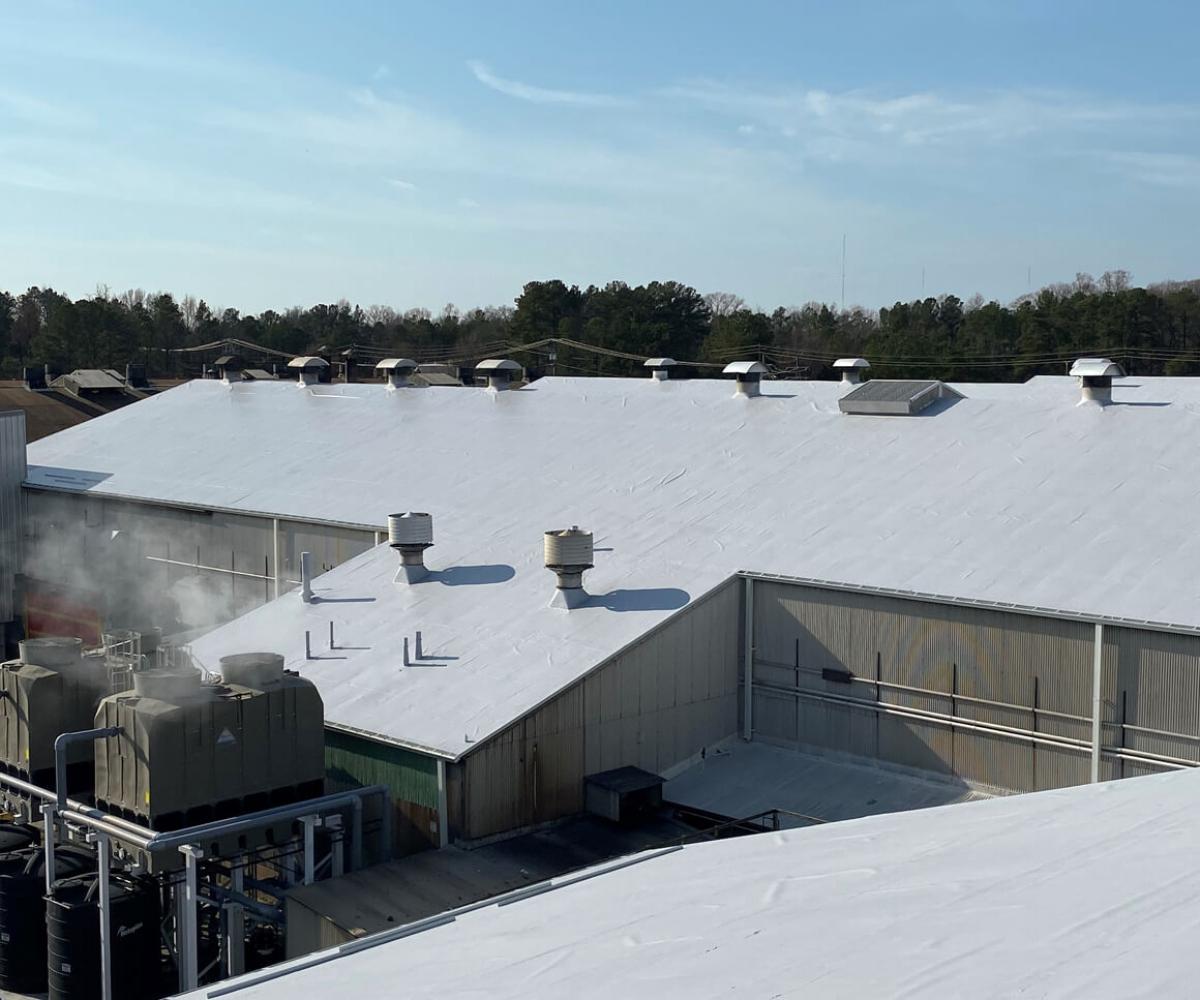
Tucson's manufacturing sector is powered by Raytheon Missiles and Defense, Caterpillar's surface products operations, IBM's Tucson campus, and Bombardier's aircraft facility — large-footprint buildings with process exhaust penetrations, heavy rooftop mechanical loads, and production schedules that drive contractor timing constraints.
Tucson has one of the most significant defense and advanced manufacturing concentrations in Arizona. Raytheon Missiles and Defense operates multiple engineering and production facilities across the Tucson metro, making it one of the largest private employers in Pima County. Caterpillar's surface technology and product development operations, IBM's Tucson campus with its research and development history, and Bombardier's aircraft maintenance and production facility at Tucson International Airport represent the range of manufacturing building types — from precision assembly environments requiring vibration and contamination control to heavy industrial buildings with large-footprint metal deck construction.
Manufacturing facility roofing in Tucson combines the access complexity of defense-sector facilities with the environmental demands of the Sonoran Desert. Raytheon facilities require contractor personnel vetting and security coordination before crew mobilization. Caterpillar and IBM campuses have production schedules that determine when and where roofing crews can work. Every one of these facilities carries process exhaust penetrations — paint booth stacks, metalworking exhaust, assembly cleanroom pressurization vents — that require individual flashing attention and coordination with the plant engineering team to understand what each penetration is carrying before anyone touches its flashing.
The Sonoran Desert adds a layer that manufacturing roofing markets in other regions do not face. Large-footprint metal deck buildings in Tucson's industrial corridors are exposed to sustained UV Index 11 conditions, rooftop surface temperatures above 170°F, and a monsoon season that delivers intense convective rainfall after months of heat cycling. These conditions accelerate membrane degradation and seam failure faster than manufacturers' service-life tables, based on moderate-climate data, anticipate.
Security and Access Coordination on Defense Manufacturing Sites
Raytheon Missiles and Defense facilities in Tucson operate under DCSA contractor access protocols. Personnel working on or around the facility must be cleared or escorted — the specific requirement varies by facility and by the area of the roof being accessed. We identify access requirements in pre-construction for every Raytheon-campus project and obtain required contractor registrations and personnel documentation before mobilization. Crew members who do not
Davis-Monthan Air Force Base on the southeast side of Tucson is a significant customer for adjacent industrial tenants and defense contractors. Work on DMAFB property requires DD Form 254 documentation and coordination with base operations through the contracting officer's representative. We are familiar with the base access process and factor DMAFB coordination timelines into project schedules for facilities with base adjacency or base-adjacent work areas.
Production schedule coordination on Raytheon and Caterpillar campuses means that crane placement, staging area assignment, and daily work windows are determined by the plant engineering team's production calendar — not by a contractor-driven preference for efficiency. We build these constraints into the project schedule before contract execution so that timeline expectations reflect actual available work windows rather than a theoretical production rate.
Process Exhaust and Penetration Flashing on Tucson Industrial Roofs
Manufacturing buildings in Tucson carry process exhaust penetrations that standard commercial roofing specifications do not fully address. Paint booth exhaust stacks, metalworking and welding fume exhausts, and chemical process vents run continuously during production hours and carry exhaust at temperatures and chemical compositions that standard TPO flashing details are not rated for at extended exposure. We work with the plant engineering team to identify every process exhaust penetration on the roof, document the operating temperature and exhaust composition where available, and specify the appropriate flashing material for each penetration.
Stainless steel pitch pans and PVC flashing sleeves are the correct detail for process exhaust stacks that run hot or carry chemically aggressive fumes. Standard EPDM or TPO flashing will soften and degrade at the flashing line on a stack running 300°F exhaust in Tucson's 105°F ambient heat environment. We do not substitute standard commercial flashing details on penetrations that require industrial flashing specifications.
IBM's Tucson campus and Bombardier's TIA facility have rooftop mechanical installations from multiple construction generations — equipment additions, modifications, and penetration changes accumulated over decades of facility evolution. We conduct a penetration inventory and condition survey before writing a scope on any building with a long history of modification, and we price the flashing remediation as a discrete line item in the scope so the facility manager understands the full investment.
Large-Footprint Metal Deck Buildings in Tucson's Industrial Corridors
The industrial corridors along Irvington Road, Alvernon Way, and the south-side manufacturing belt contain large-footprint metal deck buildings that serve defense, logistics, and manufacturing tenants in Tucson. Many of these buildings were constructed in the 1970s through 1990s and carry original BUR or first-generation single-ply systems on metal deck substrates that have experienced decades of Sonoran Desert thermal cycling. Thermal cycling in Tucson — 70-degree daily temperature swings are documented in spring and fall — drives differential movement at parapet flashings and causes fastener pullout creep in mechanically attached systems over time.
White TPO mechanically attached to metal deck is the standard replacement specification for large-footprint industrial buildings in Tucson. The reflective surface manages rooftop heat loads, the mechanical attachment handles the thermal movement that metal deck generates, and the system carries a manufacturer warranty path that aligns with the 15-to-20-year capital planning cycles common in owner-occupied manufacturing facilities. We specify fastener density based on the building's terrain exposure category under ASCE 7 — open industrial sites in south Tucson often qualify as Exposure C.
For manufacturing facilities that run high internal humidity — wet process environments, certain chemical manufacturing operations — we specify vapor-retarder placement and insulation attachment methods that account for vapor drive. Tucson's desert climate means exterior vapor drive is outward in summer, which is the same direction as most commercial assemblies are designed for; but internal high-humidity environments in manufacturing buildings can create reverse vapor conditions that standard desert-market assemblies do not anticipate.
Frequently asked questions
How do you handle security access requirements on Raytheon or DMAFB-adjacent facilities in Tucson?
We identify access requirements in pre-construction for every defense-sector project. For Raytheon Missiles and Defense facilities, we obtain required contractor registrations and personnel documentation before mobilization. For work on DMAFB property, we coordinate with the contracting officer's representative and obtain the DD Form 254 documentation the base requires. Personnel who do not
Can you work around active manufacturing production in Tucson?
Yes, but the production schedule drives our work windows — not the other way around. We build contractor timing constraints into the project schedule before contract execution, based on the plant engineering team's production calendar. Staging areas, crane placement, and daily work windows are documented and approved before mobilization. Odor-generating operations are scheduled for low-production windows with advance notice to plant management.
What membrane system is standard for large industrial buildings in Tucson?
White TPO mechanically attached to metal deck is the standard specification for large-footprint industrial buildings in the Tucson market. The reflective surface manages Sonoran Desert heat loads, mechanical attachment handles the thermal movement metal deck generates, and the system carries a manufacturer warranty path that aligns with industrial capital planning cycles. Fastener density is specified per ASCE 7 based on terrain exposure — open south-side industrial sites often require Exposure C design.
How do you flash process exhaust stacks that run hot or carry chemical fumes?
We work with the plant engineering team to document the operating temperature and exhaust composition of every process penetration on the roof before specifying a flashing detail. Standard TPO flashing is not appropriate for stacks running above 200°F or carrying chemically aggressive exhaust. We specify stainless steel pitch pans or PVC flashing sleeves for those penetrations, which carry better heat and chemical resistance than standard single-ply flashing details.
Need a roofing scope for a Tucson manufacturing or industrial facility?
Our project managers will walk the roof, inventory process exhaust penetrations, and produce a written scope that accounts for your security access requirements, production schedule constraints, and Sonoran Desert environmental demands.
Ready to talk through a roof?
Tell us about the building and the roof problem. We'll document it and put a plan in writing — with an honest repair-vs-replace recommendation and no upsell pressure.
Documented, repair-first commercial & industrial roofing across Tucson and Pima County. Flat and low-slope systems for occupied buildings, planned around your operation.
Services
© 2026 Commercial Roofing Contractors Tucson. All Rights Reserved. Privacy Policy · Terms of Use