
Commercial Roofing in South Tucson, AZ
Commercial roof inspections, replacements, and maintenance for South Tucson's S 6th Avenue commercial corridor, the independent municipality's older commercial building stock, and the surrounding mid-south Tucson industrial and retail buildings.
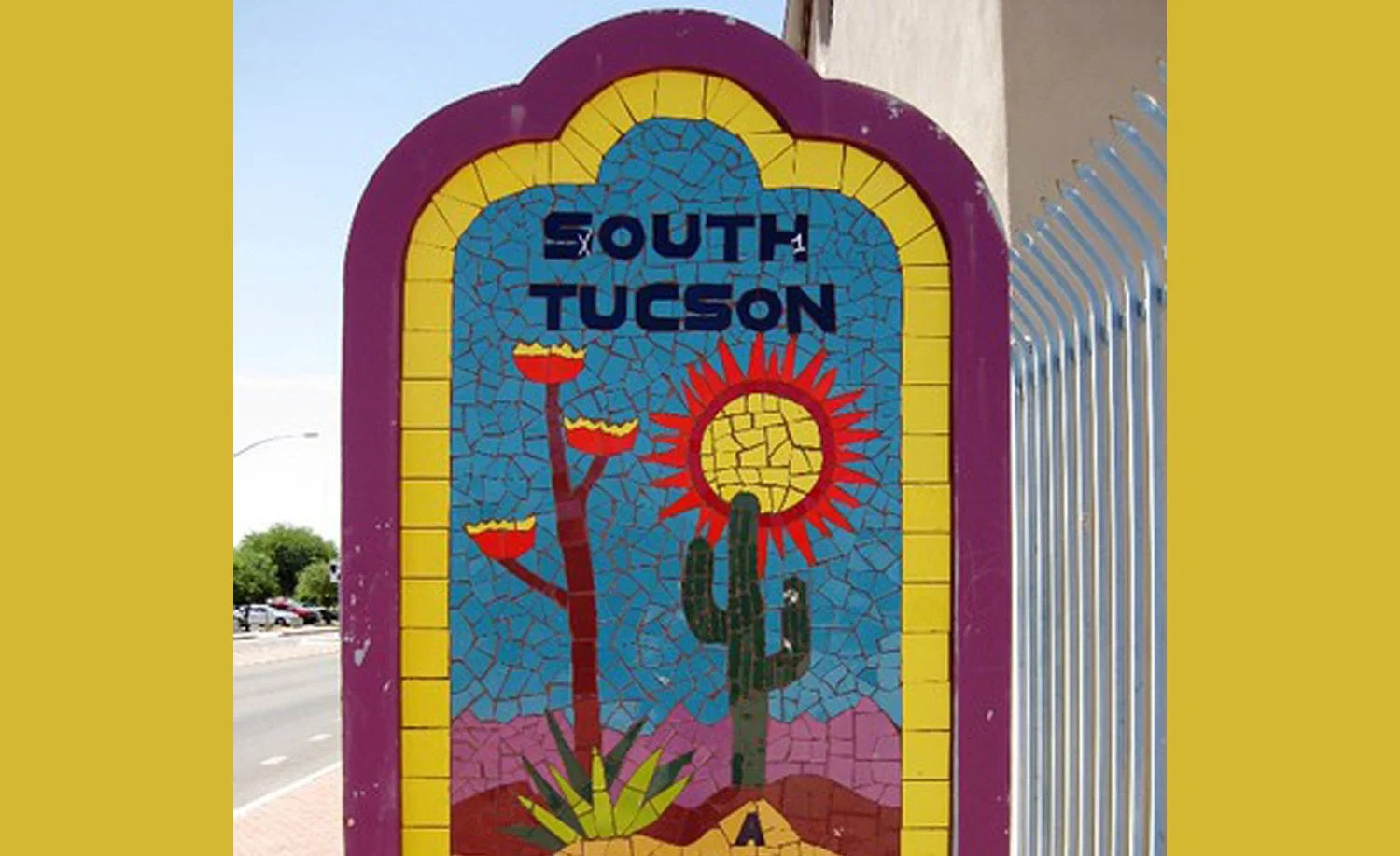
South Tucson is a separate incorporated municipality entirely surrounded by the City of Tucson — one of Arizona's smallest cities by land area, but with a concentrated commercial corridor along S 6th Avenue and a building inventory that skews older and more heterogeneous than the surrounding metro.
South Tucson is a one-square-mile independent city entirely enclosed within the City of Tucson, with its own municipal government, building department, and permit process — a jurisdictional quirk that surprises property owners and contractors who assume the surrounding city's rules apply. The commercial corridor runs primarily along S 6th Avenue and S 4th Avenue from 29th Street north to the Tucson city limit, headlined by restaurants, auto service, small retail, and light commercial buildings that reflect the city's predominantly small-business character.
The commercial building stock in South Tucson skews significantly older than the Tucson metro average. Many of the commercial buildings along S 6th Avenue were constructed in the 1950s through 1980s, and some carry original modified bitumen or built-up roof systems that are well past their design life. These older systems require a different assessment methodology than modern single-ply installations — moisture-core interpretation on aged built-up roofing requires familiarity with the layering patterns of those systems, and recover options on older substrates depend heavily on whether the existing deck and curbs can accept the added weight and fastener patterns of a modern single-ply system.
South Tucson Commercial Inventory and Building Vintage
S 6th Avenue commercial corridor (29th Street to Silverlake Road): The primary commercial spine of South Tucson, with restaurants, auto repair, grocery, and service retail buildings ranging from 1950s masonry block construction to 1990s metal-stud commercial. The oldest buildings in this corridor have built-up roofing systems — 3-ply or 4-ply asphalt-and-gravel — that were industry standard from the 1950s through the early 1980s. These systems are typically 30 to 50 years old and in active replacement cycles. Assessment of these roofs requires probe testing of the existing membrane layers and core samples that document how many layers are present, since South Tucson's building permit records may be incomplete for structures from this era.
S 4th Avenue and Ajo Way adjacent commercial: A secondary commercial cluster with similar building vintage to the S 6th Avenue corridor. Several auto-service and light-industrial buildings in this area were constructed without permits under earlier code enforcement regimes — permit history verification is a standard pre-construction step for any replacement or structural repair in South Tucson's older commercial stock.
Proximity to Interstate 10 and the Union Pacific rail corridor: South Tucson's northern edge abuts the I-10 / I-19 interchange and the Union Pacific main line — this industrial edge contains several warehouse and storage buildings that benefit from the freight logistics access. These buildings are typically larger footprint and more recent construction than the S 6th Avenue retail stock.
Working with South Tucson's Building Department
South Tucson maintains its own Building Department separate from the City of Tucson Development Services Center. Commercial roofing permits in South Tucson are issued by the South Tucson Building Department, and the permit application and inspection process differs from Tucson's in several practical ways — the department is smaller, permit review is handled by fewer staff, and coordination with the inspector requires direct communication rather than the online portal process available in Tucson. We have an established working relationship with South Tucson's building department and factor its specific process into every project timeline.
Energy code compliance in South Tucson follows the same IECC 2018 baseline as the surrounding Tucson jurisdictions — Climate Zone 2B reflectivity and R-value requirements apply. However, South Tucson's older commercial building stock often presents exceptions and variances that require case-by-case documentation. Buildings from the 1950s through 1970s were constructed under codes that did not require continuous insulation — when we replace roofing on these structures, the compliance path for adding insulation to bring the assembly toward current code requires a written energy analysis that we prepare and submit with the permit.
For buildings where permit history is unclear or where the existing roof assembly is unknown, we conduct a pre-permit condition assessment that documents existing assembly layers, deck condition, and curb heights before submitting permit drawings. This upfront documentation prevents change orders during construction and protects the owner from inspection holds on older commercial buildings where the existing conditions differ from what the permit drawings assumed.
Older Roof System Assessment in South Tucson
Built-up roofing systems from the 1950s through the early 1980s are evaluated differently than modern single-ply. The primary assessment question on a BUR system is layer count and inter-ply saturation — water trapped between felts in a multi-ply system does not behave the same way as water in a polyiso board, and infrared scanning on BUR requires different thermal-signature interpretation than on single-ply. We use physical core pulls in a grid pattern on South Tucson BUR roofs to document the saturation profile before writing a recover or replacement recommendation.
Recover of existing BUR with a new single-ply system requires verification that the existing roof assembly does not exceed two layers for building code compliance purposes, and that the existing deck can support the additional weight of the cover board and new membrane. South Tucson's older commercial buildings, particularly masonry block with wood deck construction, require deck load documentation before a recover scope is written.
Modified bitumen systems from the 1980s and 1990s — the transition generation between BUR and modern single-ply — are present on several South Tucson commercial buildings. These systems are assessed for membrane integrity, seam adhesion at laps, and flashing condition at parapets, with particular attention to base-flashing-to-cap-sheet laps, which are the primary failure mode in aging mod-bit systems.
Frequently asked questions
Does South Tucson use the City of Tucson's building permit process?
No. South Tucson is an independent municipality with its own Building Department. Commercial roofing permits in South Tucson are issued through the South Tucson Building Department, not the City of Tucson Development Services Center. Permit process, timelines, and inspection scheduling differ from the surrounding city. We manage this process on every South Tucson project.
Can you assess and replace a very old built-up roof system?
Yes. We assess BUR systems with a grid pattern of physical core pulls to document layer count, inter-ply saturation, and deck condition. The assessment output is a written condition report that documents what is there, what the saturation profile shows, and whether recover or full tear-off is the right call based on existing layer count, deck load capacity, and curb heights. On South Tucson's older commercial buildings, this upfront assessment is essential before any permit submittal.
How quickly can you respond to an emergency leak in South Tucson?
South Tucson is within the central Tucson service area — emergency response is typically two to four hours for commercial calls received during business hours. The small geographic footprint of the city means access is straightforward from any direction.
Do IECC energy code requirements apply to South Tucson commercial buildings?
Yes. South Tucson follows IECC 2018 with Arizona amendments, the same baseline as the City of Tucson and unincorporated Pima County. For older commercial buildings that were constructed without continuous insulation, we prepare a written energy analysis documenting the existing assembly and the compliance path for the new system, which is submitted with the permit application.
Need a South Tucson commercial roof inspection or scope?
Our project managers are familiar with South Tucson's building stock, permit process, and older roof system assessment requirements. We will walk the roof, pull cores on aged systems, and produce a written condition report for capital planning or replacement scope.
Ready to talk through a roof?
Tell us about the building and the roof problem. We'll document it and put a plan in writing — with an honest repair-vs-replace recommendation and no upsell pressure.
Documented, repair-first commercial & industrial roofing across Tucson and Pima County. Flat and low-slope systems for occupied buildings, planned around your operation.
Services
© 2026 Commercial Roofing Contractors Tucson. All Rights Reserved. Privacy Policy · Terms of Use