
Storm Damage Roof Repair in Tucson
Multi-peril monsoon storm damage documentation and repair for Tucson commercial flat roofs — combined wind, hail, and water damage scoped and documented separately for Arizona adjusters.
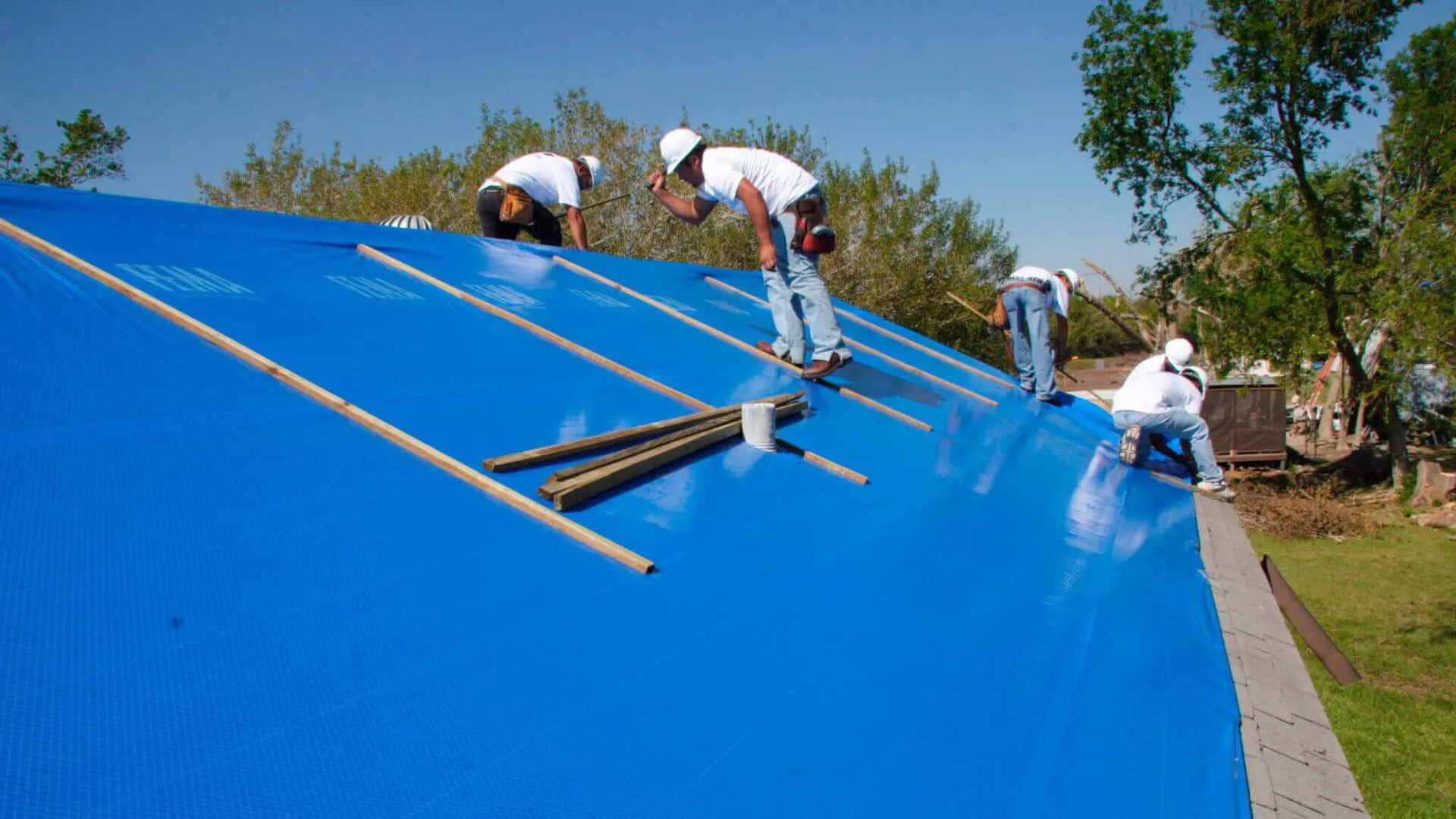
Tucson's monsoon season does not deliver single-peril events. A mature supercell over the Rincon Mountains brings microburst wind, large hail, and an inch of rain in forty minutes — on a roof that has been baking at 175°F for weeks. We document each peril's contribution separately so the people handling your Arizona claim have a clean scope to work from.
The North American Monsoon creates multi-peril storm events that are structurally different from the frontal squall lines of the Great Plains or Gulf Coast. A Tucson monsoon supercell initiates rapidly — the National Weather Service Tucson office may issue a severe thunderstorm warning with 20 to 30 minutes of lead time — and can simultaneously produce microburst downdraft wind, large hail from the hail shaft, and intense rainfall. A commercial roof on the wrong side of such a cell can sustain perimeter membrane lift from the wind, mid-field impact damage from the hail, and active water intrusion at every compromised point, all within a single 45-minute event window.
Documenting that multi-cause damage as a single undifferentiated 'storm damage' scope is how Arizona commercial property claims get complicated. Wind and hail may carry different deductibles or different coverage provisions depending on your Arizona commercial property policy. If the documentation does not separate what each peril did, the adjuster makes attribution assumptions that may not match what actually happened on your roof.
We walk post-monsoon roofs systematically, reading each peril's signature separately. Wind damage has a directional pattern that correlates with the cell's track as documented in NWS radar. Hail damage has an impact density and trajectory angle that matches the storm report's stone size and storm motion. Water damage has infiltration paths that follow the points opened by wind and hail. The scope package we deliver shows all three, documented separately.
The Monsoon Multi-Peril Sequence on Tucson Commercial Roofs
A typical Tucson monsoon supercell hits a commercial roof in a sequence: the haboob wall arrives first with sustained 40-to-60-mph wind that packs sand into seam gaps and lifts any already-compromised perimeter laps; the hail shaft follows within minutes, impacting on a roof that is already slightly displaced at the perimeter; and the intense rainfall arrives last, driving water into every gap that wind and hail have opened. The final damage picture at inspection reflects all three phases, and separating them requires reading the evidence of each phase — sand infiltration for the haboob, impact pattern for the hail, and infiltration pathway mapping for the water.
Tucson's flat-roof inventory is particularly vulnerable to multi-peril monsoon events because the pre-event condition of most commercial membranes in this market is already compromised by UV degradation. Seams that would survive a single-peril event — wind alone, or hail alone — may fail under the combined loading of the three-phase monsoon sequence. The documentation challenge is demonstrating that the storm caused the failure, not the pre-existing UV wear, which is why we document pre-existing membrane condition as a separate element of every post-monsoon scope.
Arizona commercial property insurers including State Farm, Farmers, USAA, Allstate, and Auto-Owners each have their own adjustment protocols for monsoon multi-peril claims in the Tucson market. Our scope packages are formatted to give adjusters from any of those carriers the per-peril documentation they need to process a line-item commercial roof claim without requiring a second inspection trip.
Blocked Drain Interaction with Storm Damage
Tucson's desert environment produces a specific pre-monsoon condition that amplifies multi-peril storm damage: sand, dust, and desert debris accumulate in roof drain bowls and scuppers during the dry months between April and July. When the first monsoon event arrives, partially or fully blocked drains prevent the intense rainfall from clearing the roof. Standing water accumulates faster than it can drain, raising the water depth at low points and parapet perimeters — and that standing water becomes the medium through which hail impact energy transfers downward into the insulation.
We document drain blockage as a separate element of every post-monsoon inspection scope, distinct from storm-caused damage. The distinction matters for both claim attribution and for the repair scope: a drain-blockage-caused water damage claim may be treated differently than storm-caused water damage by the adjuster, and the repair scope for a blocked-drain water infiltration event includes drain remediation, not just membrane repair.
Pre-monsoon drain inspection and clearing is the single most effective maintenance step for Tucson commercial buildings, and it directly reduces the severity of multi-peril monsoon damage. For buildings we maintain, we clear and flow-test every primary drain, scupper, and overflow scupper before July 1 as a standard maintenance item.
What the Multi-Peril Scope Package Includes
Roof zone diagram with each peril's damage footprint mapped as a separate overlay. Photo log with separate indexes for wind damage, hail impact, haboob sand infiltration, and water infiltration pathway — each photograph GPS-tagged and referenced to its zone on the diagram. Core sample results at locations where insulation damage beneath intact-looking membrane is probable. Written repair-vs-replace recommendation stated separately for each damage zone, with the basis for each recommendation in plain language.
Storm event documentation: NWS Tucson office storm reports for the event date, WSR-88D radar data showing the cell track and hail shaft position relative to the building location, and where available the Verisk or CoreLogic hail footprint grid for the Tucson metro. This documentation anchors the scope package to the specific insured event and eliminates ambiguity when multiple monsoon events occur in close sequence during the July-through-September season.
Pre-storm condition notation: Where a prior inspection record exists from our maintenance program, we include it alongside the post-storm documentation. Where no prior record exists, we document observable pre-existing conditions — membrane oxidation, prior repairs, drain blockage level — and note that these observations are post-event and cannot be attributed to the storm.
Frequently asked questions
Tucson has multiple monsoon storms each season — how do you sort out which storm caused which damage?
By correlating the damage pattern with each event's documented storm track, storm report, and hail footprint. Wind damage carries directional evidence that correlates with the cell's approach vector from NWS radar. Hail impact density correlates with documented stone sizes in the storm report. Where the damage is cleanly attributable to one event, we document it that way. Where the pattern suggests multiple events — sand from one haboob, impact damage from a later hail shaft — we note the ambiguity and document what can and cannot be cleanly attributed.
Does our Arizona policy cover all three monsoon perils as a single event?
That depends on your policy language, which we are not qualified to interpret. What we can tell you is that our scope package separates wind, hail, and water damage by peril, with per-peril photo indexes and zone diagrams, so that your adjuster and any public adjuster or attorney you engage can assess coverage under whatever policy terms apply. We build the documentation to be peril-specific regardless of how the policy ultimately treats it.
How quickly can you inspect after a monsoon storm?
We try to mobilize for post-monsoon commercial inspections within two to three business days of a major event. Roof conditions after a Tucson monsoon cell — standing water, debris, haboob sand — can make immediate access unsafe or difficult to document accurately. Once the roof surface is safe to walk, we get out there. If you have active interior leaks, emergency dry-in comes first, documented separately from the storm damage scope.
Can you document a storm that happened several weeks ago?
Yes, though the documentation is cleaner the sooner after the event we inspect. Storm-fresh damage is more reliably attributable than damage that has been through additional monsoon cycles or partial temporary repairs. The storm event records — NWS storm reports, radar data — are accessible for historical events. We recommend getting a documented scope within 30 days of the event when an insurance claim is involved.
Multi-peril monsoon damage inspection for a Tucson commercial roof?
We scope multi-cause monsoon damage with separate documentation for wind, hail, haboob abrasion, and water infiltration — in a format your Arizona adjuster or public adjuster can use for a line-item commercial property claim.
Ready to talk through a roof?
Tell us about the building and the roof problem. We'll document it and put a plan in writing — with an honest repair-vs-replace recommendation and no upsell pressure.
Documented, repair-first commercial & industrial roofing across Tucson and Pima County. Flat and low-slope systems for occupied buildings, planned around your operation.
Services
© 2026 Commercial Roofing Contractors Tucson. All Rights Reserved. Privacy Policy · Terms of Use