
Structural Roof Damage Assessment in Tucson
Structural roof damage assessment for Tucson commercial buildings — extreme thermal cycling fatigue, HVAC overloading on manufacturing and university facilities, and roof-level condition documentation for capital planning.
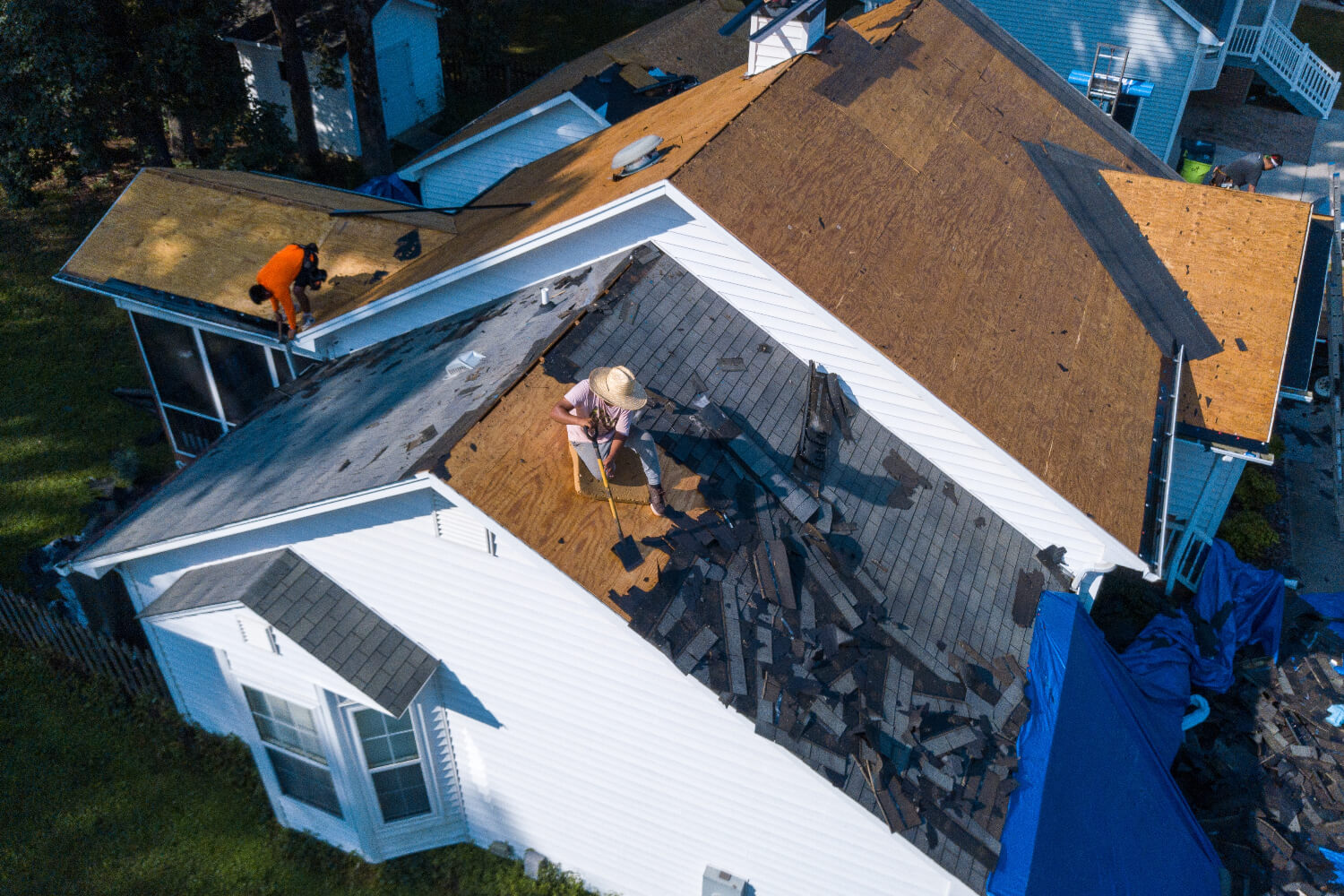
Tucson's extreme thermal cycling — 70-degree daily temperature swings in spring and fall — and the dense HVAC equipment loads on commercial buildings running cooling most of the year produce structural fatigue patterns at the roof level that are specific to this market. We document what is actually happening to the deck, the framing connections, and the drainage system before capital decisions are made.
Structural roof damage in the Tucson commercial market is driven by two mechanisms that do not receive enough attention in standard roofing assessments. The first is thermal fatigue from extreme daily temperature cycling. Tucson's spring and fall seasons produce daily temperature swings of 50 to 70 degrees — 40°F at dawn, 100°F by mid-afternoon, back to 45°F by midnight. Metal decks and structural steel members expand and contract through that range every day for months at a time. The cumulative fatigue effect on deck-to-joist connections, on parapet wall attachment points, and on through-roof penetration flashing assemblies is documented in the structural engineering literature but is rarely included in routine commercial roof inspections.
The second mechanism is HVAC equipment overloading relative to original design loads. Tucson's commercial building stock from the 1970s through the 1990s was designed for the HVAC unit configurations available at that time. Subsequent HVAC technology changes — larger packaged units, multiple split-system condensers, rooftop communications and technology equipment — have added point loads to roofs that were not designed for them. Raytheon's Tucson manufacturing and engineering facilities, University of Arizona research buildings, and large medical office complexes across the Banner and TMC campuses are all examples of building types where rooftop equipment density has grown beyond original structural intent.
We assess structural roof damage at the roofing level — what the roofer can see, document, and scope from the roof surface and through core inspection ports. We coordinate with structural engineers when the damage evidence requires engineering analysis beyond the roofing scope. The deliverable is a documented condition assessment that capital planners, facility managers, and structural engineers can all use.
Thermal Cycling Fatigue at Tucson's Extremes
The structural consequence of extreme daily thermal cycling in Tucson is most visible at three roof-level locations: parapet-wall-to-deck connections, drain-sump attachment points, and through-roof penetration flashing assemblies. Parapets expand and contract with daily temperature change relative to the structural frame — a 70-degree daily swing on a 20-foot parapet wall produces measurable relative movement. After 20 years of daily cycling, the connection between the parapet cap flashing and the wall coping can develop chronic gap patterns that open during heat expansion and close at night, working against sealing attempts.
Drain sumps that are attached to metal deck in the 1970s and 1980s construction vintage typically used detail methods that did not anticipate the thermal cycling stress. After extensive thermal fatigue, drain sump rings can pull away from the deck surface on one side while remaining attached on the other, producing a rocking motion with each thermal cycle that eventually opens a water pathway between the sump ring and the deck. We probe every drain attachment on our structural assessment walk and photograph any rocking or displaced attachment.
Through-roof penetrations — HVAC duct penetrations, pipe penetrations, electrical conduit entry points — are the location where differential thermal movement between the penetrating element and the roof assembly is highest. The flashing assembly at a penetration must accommodate both the thermal movement of the roof membrane and the thermal movement of the penetrating element, which may be aluminum, steel, PVC, or copper — each with a different thermal expansion coefficient. Penetration flashings that were not detailed for this differential movement fail early in the Tucson climate and are a primary source of recurring leaks.
HVAC Loading on Tucson Institutional and Manufacturing Roofs
Tucson's institutional and manufacturing building stock is among the most equipment-dense in terms of rooftop HVAC loading in the Southwest commercial market. University of Arizona research buildings in the main campus and UA Tech Park operate climate-controlled laboratory and clean-room environments that require significantly more cooling capacity than standard office or retail occupancy — and that cooling capacity lives on the roof in packaged units, split-system condensers, and cooling tower equipment that was not part of the original structural design load in many cases.
Raytheon Missiles and Defense operates multiple manufacturing and engineering facilities in the Tucson metro where classified clean-room and precision-assembly environments require sustained HVAC operation at high loads. Over the facility lifecycle, HVAC equipment has been updated and added; the original rooftop structural design for 1970s and 1980s vintage Raytheon facilities did not anticipate current equipment weights in all cases. We document point load locations on the roof, note any deck distortion or joist deflection visible at the unit attachment points, and flag locations that warrant structural engineering review.
Banner University Medical Center Tucson, TMC HealthCare, and the medical office complexes along the Broadway, Grant, and Speedway corridors have similar accumulated equipment loads. Medical facilities require continuous HVAC operation, which means rooftop equipment is replaced on a different cycle than non-critical commercial occupancy — and replacement units may not match the original footprint, curb dimension, or weight distribution. We include HVAC equipment documentation in every structural assessment: unit model, estimated weight, curb dimension, and any visible deck response at the attachment zone.
Drainage Elevation Shift and Ponding Documentation
Drain elevation shift is a structural roof condition that standard membrane inspections frequently miss. When a metal deck experiences differential thermal cycling — one section cycling at a different rate than adjacent sections due to equipment shading, different thermal mass, or different boundary conditions at walls and columns — the deck surface elevation changes relative to the drain attachment point. A drain that was at the low point of its drainage zone when installed may be 1/4 to 3/4 inch above the surrounding deck surface after 15 years of differential thermal cycling.
The consequence is ponding water in the area that used to drain to that location. On a Tucson commercial flat roof, ponding means accumulated monsoon-season water loading — typically 2 to 5 pounds per square foot per inch of standing water — applied to a structural system that was designed for the immediate drainage rates assumed in the plumbing design. Extended ponding loads accelerate insulation compression and can produce long-term structural deck deflection that makes the ponding problem self-reinforcing.
We survey drain elevation relative to surrounding membrane elevation on every structural roof assessment, using a level and measuring points at consistent distances from the drain bowl. Drains that have risen relative to their drainage zone are documented with measurement data, and we include a ponding remediation option in the scope — either a drain extension to restore the low-point relationship, or a membrane taper-insulation fill to re-slope the drainage zone to the existing drain elevation.
Frequently asked questions
What is the difference between a structural roof assessment and a standard roof inspection?
A standard roof inspection documents membrane condition, drainage function, and visible damage. A structural roof assessment adds evaluation of the deck condition (metal deck corrosion, panel uplift at connections), parapet-wall-to-frame connection fatigue, HVAC equipment loading relative to visible deck response, penetration flashing differential movement, and drain elevation shift from thermal cycling. We recommend the structural assessment for Tucson commercial buildings over 20 years old with significant rooftop equipment loads or a history of recurring drain and ponding problems.
Our Tucson building has multiple large HVAC units added over the years — should we be concerned about structural loading?
Possibly. The question is whether the combined current HVAC equipment weight at each unit's attachment point falls within the original structural design load for that location. We can document current equipment weights, curb locations, and any visible deck or joist response in an assessment report. Whether the loads are within design tolerance requires a structural engineer's analysis — we identify the locations that warrant engineering review and coordinate the documentation so the structural engineer has the information they need.
How do you assess drain elevation shift?
We use a straightedge and measuring tape at consistent measurement distances from the drain bowl — 24 inches and 48 inches on each of the four compass headings — to document the current slope relationship between the drain and the surrounding membrane. On roofs where we have multiple years of assessment records, we compare measurements across cycles to track whether drain-relative elevation is changing. Even a 3/8-inch rise relative to the surrounding deck at a Tucson roof drain can produce enough ponding to cause monsoon-season insulation saturation.
Do you coordinate with structural engineers on Tucson institutional buildings?
Yes. For University of Arizona campus buildings, Banner Health facilities, and Raytheon or Davis-Monthan AFB contracted work, structural engineering review is often a standard part of the pre-scope process. We build our structural roof assessment documentation to be useful to the structural engineer of record — HVAC load locations, deck condition photos at attachment points, drain elevation survey data, parapet connection photos — so the engineering review can proceed efficiently from our assessment.
Structural roof condition assessment for a Tucson commercial building?
We document deck condition, HVAC equipment loading, drain elevation shift, parapet connection fatigue, and penetration flashing performance — in a written report that capital planners, facility managers, and structural engineers can all use.
Ready to talk through a roof?
Tell us about the building and the roof problem. We'll document it and put a plan in writing — with an honest repair-vs-replace recommendation and no upsell pressure.
Documented, repair-first commercial & industrial roofing across Tucson and Pima County. Flat and low-slope systems for occupied buildings, planned around your operation.
Services
© 2026 Commercial Roofing Contractors Tucson. All Rights Reserved. Privacy Policy · Terms of Use