
Aerospace & Defense Facility Roofing in Tucson, AZ
Commercial roofing for aerospace and defense facilities in Tucson, AZ — Raytheon Missile Systems, Davis-Monthan AFB, and the AMARG Aircraft Boneyard.
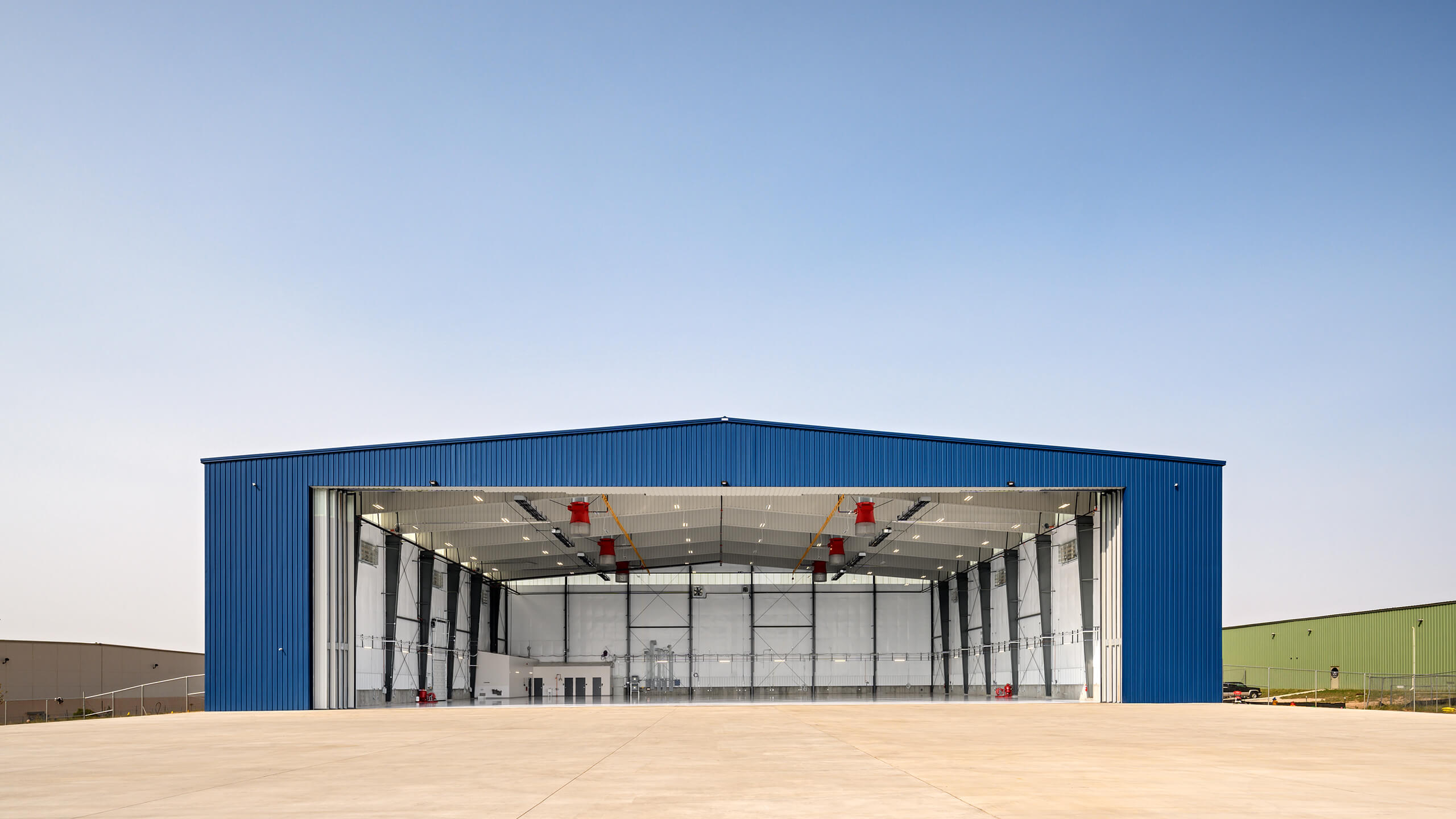
Major Aerospace and Defense Facilities in the Tucson Area
- Raytheon Missiles & Defense – Tucson (Primary Campus) (Missile Systems Manufacturing) — Raytheon's largest single facility, in Tucson, produces Tomahawk cruise missiles, Patriot PAC-3, AIM-9X Sidewinder, and other precision-guided munitions — over 13,000 employees on a massive southern Tucson campus
- Davis-Monthan Air Force Base / AMARG (Air Force Depot & Boneyard) — The Aerospace Maintenance and Regeneration Group stores and maintains 4,000+ military aircraft in the Sonoran Desert — the world's largest aircraft storage facility — with A-10 Warthog attack operations by the 355th Fighter Wing
- Marana Regional Airport / Pinal Air Park (Commercial Aircraft MRO) — One of the world's largest commercial aircraft storage and maintenance facilities, parked with 400+ retired commercial airliners for part-out and reactivation
Tucson's aerospace campus is headlined by Raytheon's enormous missile systems manufacturing complex — one of Arizona's largest employers — combined with Davis-Monthan's active operations and AMARG's storage facilities. The extreme Sonoran Desert UV environment makes TPO and PVC membrane degradation a primary maintenance concern for all aviation structures.
The roofing systems on aerospace and defense structures carry stakes beyond weather protection. A failure over an active manufacturing floor — whether that means a fighter jet assembly line, a missile guidance lab, or a satellite integration cleanroom — can trigger production shutdowns, contaminate precision components, or compromise facility certifications. The zero-tolerance standard these clients apply to their primary mission is the same standard we apply to the roof above it.
Our defense and aerospace roofing work includes planned replacement, emergency roof repair under time-critical operational constraints, and new construction roofing for facility expansions. We carry the insurance coverage, bonding capacity, and documented quality procedures that federal facility managers and prime contractor subcontract teams require. When a facility expansion schedule is tied to a DOD delivery milestone, "we'll get to it" is not a close-out answer — we staff to the schedule and document every phase.
Aerospace & Defense Roofing Questions
Yes. We work with facility security officers to complete the necessary base access credentialing for our crew members. Lead time for clearance varies by installation — we factor it into the project schedule upfront rather than discovering it during mobilization.
We provide full prevailing wage certified payroll (if applicable), material submittals for spec compliance, daily logs, third-party inspection coordination, LEED or sustainability documentation if required, and a final warranty package formatted for federal facility records systems.
We develop a phased work plan with the facility manager and base operations officer — sectioning the roof into work zones, maintaining dry-in protection on any open sections, and scheduling loud or disruptive work during approved windows. Our pre-construction checklist includes noise, vibration, dust, and chemical exposure considerations for every zone adjacent to active operations.
We work on the building envelope — roofs, walls, and flashings — which in most cases does not require classified access. For facilities where roof access itself requires a clearance, we identify that requirement early and work with the government contracting officer to plan accordingly.
TPO and PVC membrane systems are most common for new and re-roofing work due to their resistance to chemical splash and UV degradation. Standing seam metal is preferred on high-bay structures where long-term performance and minimal maintenance are prioritized. We always match the system to the specific exposure — a satellite integration cleanroom has different requirements than a motor pool.
Tucson's hospital campuses concentrate some of the most complex rooftop environments in the southern Arizona commercial construction market. Banner University Medical Center Tucson on Campbell Avenue serves as the region's Level 1 trauma center and academic medical campus — a sprawling collection of connected buildings with rooftop mechanical loads that include surgical exhaust fans, medical air compressors, generator stacks, and dozens of HVAC units serving patient floors that cannot tolerate construction-generated contaminants. TMC HealthCare on South Rincon Avenue and the Carondelet campuses — St. Joseph Hospital on North Wilmot and St. Mary's Hospital near Downtown — round out the core of Tucson's acute-care roof inventory. Each of these facilities operates under Joint Commission accreditation standards that govern how contractors work in and around occupied patient areas.
The Infection Control Risk Assessment process is not a formality on Tucson hospital projects — it is the document that drives scope sequencing, containment measures, and crew behavior from mobilization to closeout. We have completed ICRA coordination on hospital projects in Tucson and Pima County, and our project managers know how to work within the tier system the facility's infection-control officer assigns. Tier I work near administrative space is different from Tier III work above an occupied oncology or surgical floor. We write our production sequences to match the tier, not the other way around.
Rooftop equipment density on Tucson medical campuses is significant. Banner UMC Tucson's rooftop carries the mechanical load of a teaching hospital — cooling towers, precision air handlers, surgical exhaust stacks, emergency generator exhaust vents, and pneumatic tube system risers, all of which require individual flashing attention during any reroof project. We scope each penetration as a discrete
Infection Control on Tucson Hospital Roof Projects
The Joint Commission's Environment of Care standards require hospitals to document and control construction-related infection risks. Before we begin any roofing work on or adjacent to an occupied patient floor at Banner UMC Tucson, TMC HealthCare, or a Carondelet campus, we complete a formal ICRA with the facility's infection-control officer. That document specifies containment barriers, negative-pressure requirements at any roof access points connected to patient areas, HEPA filtration at dust-generating operations, and the daily sign-off protocol our foreman runs before production starts.
We designate an infection-control lead on every Tucson hospital project. That person attends the pre-construction ICRA meeting, signs the hospital's contractor acknowledgment form, and is responsible for verifying that containment measures are in place before the first crew member starts work each day. If a facility's infection-control officer or Environment of Care coordinator calls a stop-work order because of a protocol gap, we stop and we resolve the gap before resuming. That is not a negotiation — it is how hospital construction works in Tucson.
Northwest Medical Center on North La Cholla Boulevard and Banner Oro Valley Hospital on North La Canada Drive serve the northwest and north Tucson corridors respectively. Both facilities have patient populations with vulnerabilities that make construction infection control non-negotiable. We follow the same ICRA-driven protocol on these campuses as we do on the larger acute-care hospitals — containment tiers, documented daily sign-offs, and decontamination protocol for crew re-entering the building.
Rooftop Equipment Coordination at Tucson Medical Campuses
Carondelet St. Joseph Hospital on North Wilmot Road has one of the more complex rooftop mechanical installations among Tucson's mid-century hospital buildings. The original structure has been expanded and modified over decades, producing a layered rooftop environment with equipment from multiple generations of mechanical systems. We conduct a full penetration inventory before writing any scope — photographing, measuring, and logging each penetration against a roof zone diagram that the facility manager reviews before production begins.
Cooling towers on Tucson hospital roofs require coordination with the facility's water management team before we can work in their immediate vicinity. Legionella prevention protocols mean that any drain-and-clean cycle must be logged by the facility before contractor access is granted around the towers. We do not work around open cooling tower basins without the facility's water management documentation in hand. This is standard practice on properly-run hospital roofing projects in Tucson.
TMC HealthCare's rooftop carries HVAC equipment serving occupied patient floors, and scheduling for any work above occupied areas requires coordination with the facility's engineering director on census levels and surgical schedules. We schedule heavy mechanical work — jackhammering, pneumatic fastening at deck level — during documented low-census windows and document the scheduling approval in the pre-construction meeting notes.
Membrane Systems for Tucson Healthcare Buildings
White TPO is the predominant membrane specification on Tucson hospital construction built after 2000, and it performs well in the Sonoran Desert healthcare environment — its reflective surface reduces rooftop temperatures by 50 to 70 degrees compared to dark membranes, extending membrane service life under sustained UV Index 11 conditions, while its chemical inertness holds up against the range of exhaust emissions from surgical fans and laboratory systems. We specify 60-mil or 80-mil TPO depending on rooftop mechanical traffic frequency. Hospital roofs that receive monthly or quarterly mechanical contractor visits need 80-mil membrane and heavy-duty walkway pad systems installed on clear traffic routes.
Penetrations that carry hot or chemically aggressive exhaust — generator stacks, certain surgical exhaust fans, and laboratory building vent systems — get PVC flashing material at the specific penetration rather than standard TPO flashing. PVC carries better chemical and heat resistance than TPO at high-temperature flashing interfaces, and Tucson's ambient heat load amplifies the stress on any penetration that runs continuous hot exhaust.
The older Banner UMC Tucson buildings — portions of the main campus built in the 1970s and 1980s — and the original Carondelet St. Mary's building stock carry modified bitumen and built-up roofing systems that have been through multiple recover cycles. Some of these assemblies are now 40 or more years old. Full tear-off and replacement is the correct scope for these systems rather than another recover — the structural movement that Tucson's soil conditions and thermal cycling generate makes recovering a multi-decade BUR system a short-term capital decision.
Frequently asked questions
Do you coordinate with Joint Commission EOC requirements on Tucson hospital roof projects?
Yes. We have completed hospital projects under Joint Commission Environment of Care frameworks at Tucson medical facilities. Our project managers know the ICRA tier system, the EOC construction documentation requirements, and how to interface with a hospital's infection-control officer and safety coordinator before and during production. The required documentation — ICRA form, daily sign-off logs, contractor acknowledgment — is part of every hospital project package we deliver.
Can you work on an occupied Tucson hospital without disrupting patient care?
That is the baseline expectation on every hospital project we run. We do not create HVAC contamination events, we do not generate vibration or noise above occupied patient floors outside of pre-approved windows, and we do not leave any section of a hospital roof open overnight. If a scope element requires a temporary operational interruption — a shutdown of an exhaust fan or cooling tower — we identify it in pre-construction and schedule it during the facility's approved window, with written approval from the engineering director before we act.
How do you handle hot-work permits at Banner UMC or TMC HealthCare?
Each hospital campus in Tucson runs its own hot-work permit process. Our foremen know the approval chain at the facilities we work on. We do not begin any torch application, heat welding, or grinder operation without a signed hot-work permit from the facility's fire safety officer specific to the date and location. Permits are filed in the daily project log and available for inspection by the facility's Environment of Care coordinator at any time during production.
What is your response time for emergency roof leaks at a Tucson hospital?
Emergency dry-in response for Banner UMC Tucson and TMC HealthCare is within three hours from our Downtown Tucson office. For Banner Oro Valley and Northwest Medical Center on the north side, response time is three to four hours. After-hours calls go to our project manager on duty, not to voicemail. Buildings on our maintenance contracts receive priority dispatch during monsoon-season storm events.
Need a roofing scope for a Tucson hospital or medical campus?
Our project managers are experienced with ICRA documentation, hot-work permit protocols, and rooftop equipment coordination on occupied Tucson medical facilities. We will walk the roof, inventory penetrations, and produce a written scope that accounts for your facility's infection-control and scheduling requirements.
Ready to talk through a roof?
Tell us about the building and the roof problem. We'll document it and put a plan in writing — with an honest repair-vs-replace recommendation and no upsell pressure.
Documented, repair-first commercial & industrial roofing across Tucson and Pima County. Flat and low-slope systems for occupied buildings, planned around your operation.
Services
© 2026 Commercial Roofing Contractors Tucson. All Rights Reserved. Privacy Policy · Terms of Use