
Commercial Roofing in Catalina Foothills, AZ
Commercial roof inspections, replacements, and maintenance for Catalina Foothills commercial buildings — Foothills Mall, La Encantada, UMC Foothills campus, and the Skyline Drive and Campbell Avenue professional and medical-office corridor.
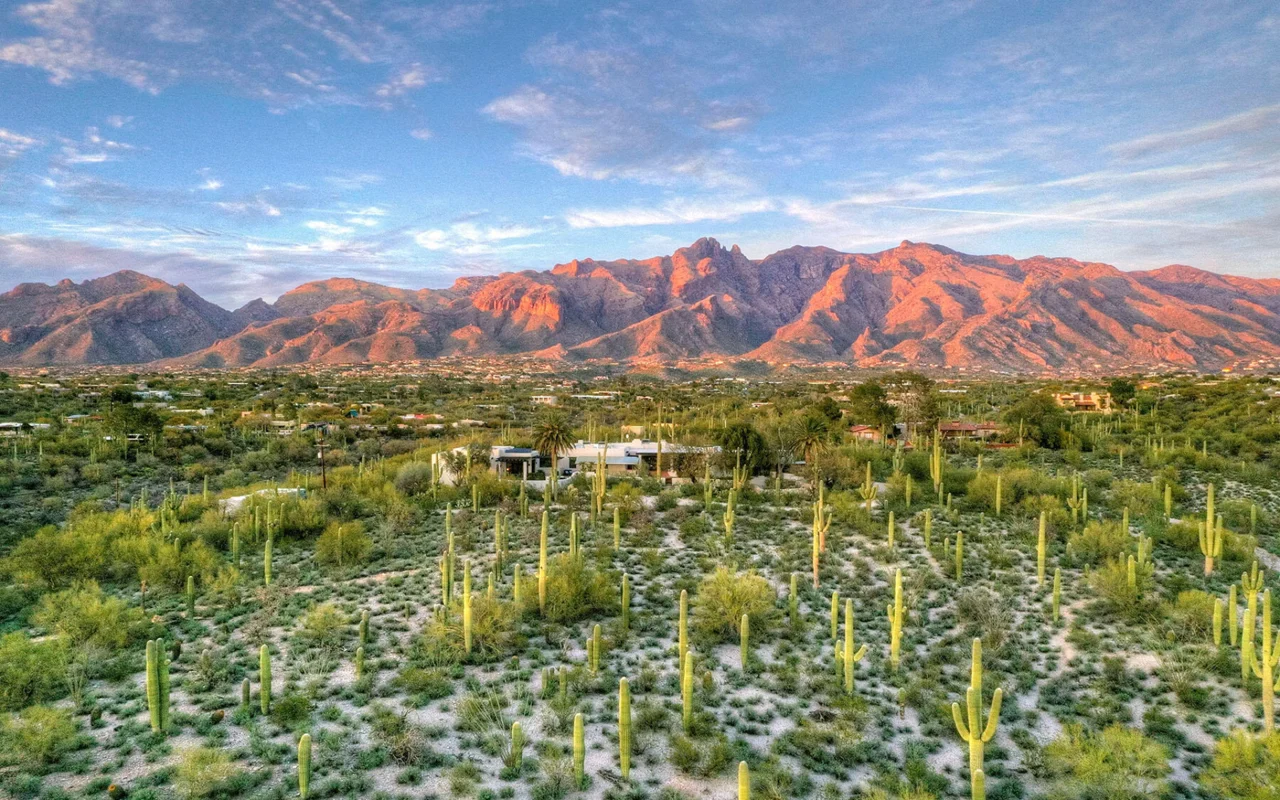
The Catalina Foothills commercial corridor — Foothills Mall, La Encantada, the UMC Foothills campus, and the Skyline Drive professional cluster — sits at 2,600 to 3,200 feet in the foothills of the Santa Catalina Mountains, with correspondingly elevated UV loads and the most intense orographic monsoon rainfall in the Tucson metro.
The Catalina Foothills is an unincorporated Pima County community along the southern base of the Santa Catalina Mountains, north of the Tucson city limits. Its commercial character is defined by three anchors: Foothills Mall on La Cholla Boulevard (the area's largest enclosed mall, currently in redevelopment as a mixed-use center), La Encantada on North Campbell Avenue (an open-air luxury retail center with complex architectural roofing elements), and the University of Arizona Health Network's Foothills campus — UMC Foothills — on North Campbell, which delivers outpatient and surgical services to north Tucson and Oro Valley. Surrounding these anchors is a substantial professional and medical-office corridor along North Campbell Avenue, East Skyline Drive, and North Oracle Road.
Roofing in the Catalina Foothills is technically demanding for reasons that go beyond the standard Tucson solar and monsoon environment. The elevation — ranging from approximately 2, commercial corridor to over 3, buildings — places these commercial roofs at the highest UV exposure of any Tucson metro commercial submarket. The Santa Catalinas rise directly behind the commercial zone and concentrate orographic monsoon rainfall on these buildings more intensely than any lower-elevation Tucson site. And the architectural complexity of Foothills commercial buildings — La Encantada's clay tile elements, the custom stone and metal accents on Skyline Drive professional buildings — means substrate analysis and flashing detailing require more time and documentation than standard flat commercial construction.
Catalina Foothills Commercial Inventory
Foothills Mall and La Cholla Boulevard corridor: Foothills Mall, originally constructed in 1982 and currently undergoing phased redevelopment into a mixed-use commercial center, represents one of the largest and most complex roofing projects in the north Tucson market. The original 1982 construction carried gravel-ballasted built-up roofing on a significant portion of the structure — the redevelopment phases are converting these to modern single-ply systems. Any remaining BUR sections from the original construction are now over 40 years old and require careful core assessment before any recover or repair is scoped.
La Encantada open-air retail center (North Campbell Avenue at Skyline Drive): A 2002-constructed premium open-air retail center with clay tile architectural roofing on pedestrian circulation elements and TPO or PVC membrane systems on the retail and restaurant building flat-roof sections. The mix of architectural roofing types — clay tile, metal accent elements, and commercial flat roofing — on a single property requires assessment and scoping for each system type separately. We do not perform clay tile repair, but we coordinate with tile specialists on projects where the junction of tile and flat membrane requires waterproofing documentation.
UMC Foothills campus (North Campbell Avenue): The University of Arizona Health Network's Foothills outpatient and surgical campus. Healthcare facility requirements apply: infection-control coordination, hot-work permits, off-hours scheduling for occupied floor adjacency, and documentation to UA Health standards. The Foothills campus has active surgical and outpatient clinical operations — work scheduling must account for patient circulation routes and HVAC system sensitivity to odor-generating roofing operations.
Skyline Drive and North Campbell Avenue professional corridor: Custom professional and medical-office buildings ranging from 2,000 to 50,000 square feet. Building vintage is 1980s through 2010s — the older Skyline Drive buildings are in active replacement cycles, while the newer 2000s and 2010s construction is in maintenance mode. Many of these buildings have sloped architectural elements alongside flat roofing, and some have green-roof or planted terrace elements that require waterproofing assessment separate from the primary flat-roof membrane.
Elevation and Orographic Monsoon at the Santa Catalina Base
The Santa Catalina Mountains rise from approximately 2,600 feet at the commercial corridor to over 9,100 feet at Mount Lemmon within a horizontal distance of roughly 8 miles. This dramatic relief drives some of the most reliable orographic monsoon rainfall enhancement in southern Arizona. During active monsoon season, convective cells that develop over the Catalinas release rainfall intensities in the Foothills commercial corridor that can far exceed the Tucson International Airport gauge readings used as the regional reference. Roof drain systems in the Catalina Foothills must be assessed and maintained for peak-flow events that are meaningfully higher than standard Tucson design values.
UV Index in the Catalina Foothills is the highest of any commercial submarket in the Tucson metro. At 3,000 feet elevation, UV Index values are approximately 10 to 12 percent above sea-level values for the same latitude and time of day. Combined with the clear-sky frequency of the Sonoran Desert climate, this produces cumulative UV exposure well above what manufacturer service-life tables calibrate against. We apply an elevation-adjusted degradation factor to all remaining-service-life assessments for Catalina Foothills commercial buildings.
Wind exposure at the Santa Catalina foothills is directional and significant. Katabatic drainage winds — downslope winds from the Catalinas — can produce sustained gusts above 40 mph at Foothills building sites during winter inversions and ahead of monsoon cells. ASCE 7 Exposure C classification applies to buildings in the open commercial corridors at the mountain base, driving perimeter and corner fastener densities to the high end of the pattern range. We verify exposure classification and building height against the current wind-uplift standard on every Catalina Foothills project.
Healthcare and Retail Coordination in the Foothills
UMC Foothills and the other medical-facility buildings in the Catalina Foothills require the full healthcare coordination protocol we apply to hospital-campus work across the Tucson metro: pre-construction meeting with facilities management, infection-control documentation, hot-work permit process, off-hours scheduling for occupied floor adjacency, and odor-generating work notification to clinical operations. The UA Health system has specific documentation requirements for contractor work on its campuses — we have an established process for meeting these requirements on Foothills projects.
La Encantada's retail operations require weekend and holiday scheduling coordination — the center's peak traffic periods are Saturday through Sunday and during the holiday retail season from November through January. We schedule disruptive roofing work (tear-off, hot-work, and operations that generate visible debris or odor) outside peak retail hours and provide tenant notification through the property management office.
Pima County Development Services handles permits for the unincorporated Catalina Foothills. Permit timelines for commercial projects in this submarket are typically 7 to 14 business days for straightforward single-ply replacement. Projects at healthcare facilities may require an additional review cycle for compliance with healthcare-occupancy provisions of the IBC. We prepare permits for both standard commercial and healthcare-occupancy applications in the Catalina Foothills.
Frequently asked questions
Can you work on UMC Foothills or other healthcare buildings in the Catalina Foothills?
Yes. Healthcare facility work in the Catalina Foothills requires infection-control coordination, hot-work permits, off-hours scheduling, and documentation to the UA Health system's facilities standards. We have a pre-construction meeting protocol for healthcare campuses that produces a written work plan approved by facilities management before crew mobilization.
How does Foothills elevation affect membrane selection?
Elevation in the Catalina Foothills drives UV Index values 10 to 12 percent above central Tucson at the same time of day — cumulative UV exposure over a roofing system's service life is meaningfully higher than manufacturer tables assume. We apply an elevation-adjusted degradation factor to remaining-service-life estimates, and we specify high-density polyiso or a polyiso-plus-cover-board stack to maintain effective insulation performance under the thermal conditions at these elevations.
Do you work on La Encantada or similar architectural retail properties?
Yes. Open-air retail centers with mixed roofing types — flat commercial membrane sections alongside clay tile, metal accent, and custom architectural elements — require assessment of each system separately. We scope the flat-membrane sections and coordinate with specialty contractors on the architectural roofing elements, with a written waterproofing assessment at all junctions between the membrane and the architectural roofing.
What permits are required for roofing in the Catalina Foothills?
The Catalina Foothills is unincorporated Pima County — all commercial roofing permits are issued through Pima County Development Services. Typical turnaround is 7 to 14 business days for straightforward replacement projects. Healthcare-occupancy buildings may require an additional review cycle. We prepare the permit package and manage the County submittal process on every Foothills project.
Need a Catalina Foothills commercial roof inspection or scope?
Our project managers cover the Foothills Mall corridor, La Encantada, the UMC Foothills campus, and the Skyline Drive professional buildings on regular north-Tucson routes. We will walk your roof, document the condition, and produce a written report for capital planning or warranty support.
Ready to talk through a roof?
Tell us about the building and the roof problem. We'll document it and put a plan in writing — with an honest repair-vs-replace recommendation and no upsell pressure.
Documented, repair-first commercial & industrial roofing across Tucson and Pima County. Flat and low-slope systems for occupied buildings, planned around your operation.
Services
© 2026 Commercial Roofing Contractors Tucson. All Rights Reserved. Privacy Policy · Terms of Use