
Wind Damage Roof Repair in Tucson
Wind damage documentation and repair for Tucson commercial flat roofs — monsoon microburst membrane edge lift, haboob abrasion, fastener pullout assessment, and insurance-grade scope packages for Arizona adjusters.
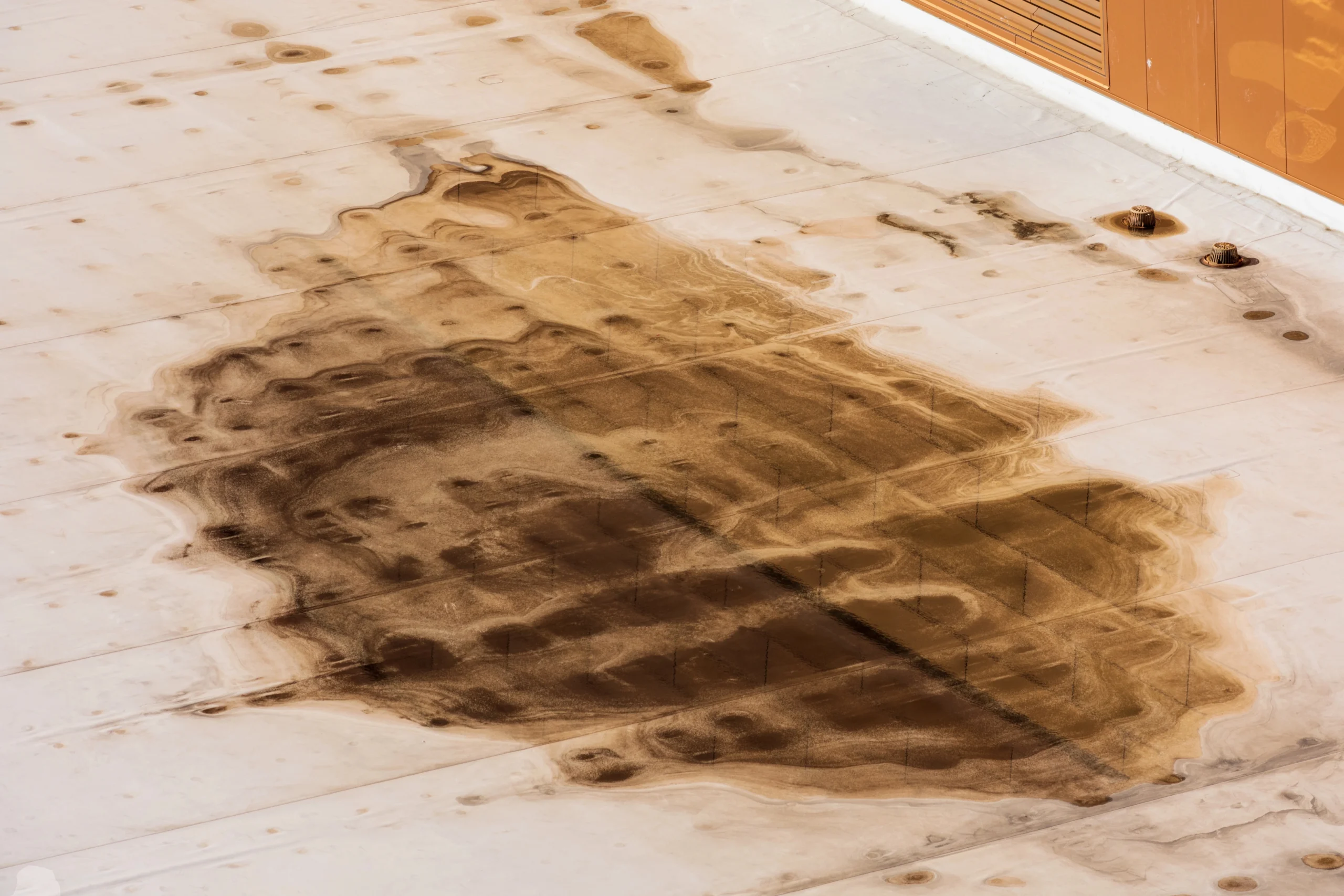
Tucson's wind damage on commercial flat roofs comes from two distinct sources: the monsoon microburst, which can produce 60-to-80-mph downdraft wind in a focused footprint over 10 to 20 minutes, and the haboob, which delivers a sustained wall of dusty abrasive wind across the full metro. We read both patterns and build documentation that shows which one caused what.
The July and August monsoon season delivers Tucson's most consequential wind events. Microbursts associated with convective cells over the Santa Catalina and Rincon Mountains produce concentrated downdraft wind that hits a building's rooftop at downward angles, then fans outward at surface level with horizontal velocity exceeding 60 mph across a footprint that may be only a few city blocks wide. The damage signature on a flat commercial roof is specific: perimeter membrane lift concentrated on the side facing the downdraft, corner zone pull-off where the horizontal component peaks, and displaced flashing caps across the parapet on the windward face.
Haboobs — the dust walls that precede monsoon storm cells — produce a different wind profile. The leading wall of a haboob can carry 40-to-60-mph sustained wind with a dense abrasive dust load that scours exposed membrane surfaces, packs sand into every seam gap and flashing lap, and mechanically stresses perimeter terminations through sustained lateral pressure rather than the brief high-intensity load of a microburst. A post-haboob roof that looks undamaged from below may have packed sand beneath every flashing termination that has any gap — which then traps moisture during the subsequent monsoon rain event.
We document both event types. The scope package identifies the wind source, the failure mode, the zone distribution of the damage, and the repair or replacement scope — in a format your Arizona adjuster or public adjuster can use to process the claim.
Microburst Wind Load Patterns on Tucson Commercial Roofs
Microburst wind loads on flat commercial roofs follow the ASCE 7 zone model but with a directional asymmetry that straight-line winds from frontal systems do not produce. The downdraft component of a microburst hits the roof field before the horizontal component reaches the perimeter — which means field membrane that is not fully adhered can be loaded from above as well as from the perimeter. We see mid-field membrane billowing damage from Tucson microbursts that we rarely see from frontal straight-line events in other markets.
Corner zones take the highest uplift under any wind loading scenario, but the microburst's concentrated footprint means the corner damage concentration is even more pronounced than ASCE 7 design loads predict for a frontal event. Buildings in the open commercial corridors north of Downtown — the Irvington industrial district, the Midtown medical office parks, the Foothills commercial buildings exposed to unobstructed upslope flow from the Catalinas — are in terrain exposure categories that carry the highest design wind speeds in the Pima County market.
Fastener pullout is the secondary failure mode after edge lift. Metal decks on Tucson commercial buildings that have been through 20-plus years of 70-degree daily thermal cycling develop enlarged fastener holes at attachment points — the deck expands and contracts around the fastener shank until the hole is oversized and the holding strength is reduced. When a microburst loads the perimeter zones, fasteners that were holding marginally pull through the deck rather than holding the membrane. We probe perimeter and corner fastener rows on every post-wind inspection and photograph each pullout confirmation.
Haboob Abrasion and Sand Infiltration
A Tucson haboob can carry several tons of Sonoran Desert dust per cubic mile of wall volume. The fine silica and clay particles in that dust are small enough to infiltrate any gap larger than a few thousandths of an inch — which includes the microscopic gaps in aged flashing laps, the interface between unseated seam edges and the membrane below, and the track of any prior repair that was not fully bonded at its edges. Post-haboob inspection on a Tucson commercial roof requires probing those locations rather than just looking for visible damage.
Sand infiltration beneath perimeter termination bars is a specific Tucson mechanism that is not documented in the standard wind damage literature because it does not occur in markets where dust concentrations are lower. When packed sand is present under a termination bar, the subsequent monsoon rain event drives water into the same gap the sand occupies, wetting the insulation below. The damage that shows up on the interior ceiling is attributed to the rain event, not the haboob — unless you know to look for the sand infiltration pathway during inspection.
We include haboob evidence documentation — sand packing locations, compromised lap locations, scoured membrane zones — separately from rain and wind damage in our multi-event scope packages. Arizona's monsoon season often produces a haboob followed by a rain event within hours; the two mechanisms together cause more damage than either would independently, and the documentation needs to reflect both.
Repair vs. Replace After Monsoon Wind Events
Perimeter edge lift limited to one or two building faces, with the field membrane intact and fastener pull test holding in the field zones, is typically a repair scope: reinstall the perimeter termination with updated fastener density to current code, replace displaced flashing caps, clear sand infiltration from compromised laps, and reseal any haboob-opened seam gaps. This is the most common post-monsoon-wind repair scope on Tucson commercial buildings that are within their first 15 years.
Widespread corner and perimeter pullout, mid-field membrane billowing damage, and confirmed sand infiltration beneath parapet flashings across multiple roof faces constitute a replacement candidate — not because any single mechanism was catastrophic, but because the combination of fastener pullout, membrane fatigue from billow cycling, and compromised flashing laps cannot be restored to a reliably watertight system through patch repair.
We document both scenarios the same way: zone diagram, photo log, fastener pullout count by zone, haboob evidence locations, and a written repair-vs-replace recommendation. The basis for the recommendation is stated plainly in the written scope. What happens with that documentation in the insurance process is between you, your adjuster, and any other parties involved.
Frequently asked questions
Our building had no visible damage after the haboob — do we still need an inspection?
Yes, if you want to know whether sand infiltration has created leak pathways before the next monsoon rain event. Haboob damage is frequently invisible from below — the mechanism is sand packing into flashing laps and seam gaps rather than membrane pull-off. The damage shows up as water intrusion during the rain event that follows the haboob, by which point the opportunity to document the haboob as the cause is gone.
How do you tell monsoon microburst damage from regular wind damage for insurance purposes?
The microburst has a specific signature: damage concentrated in a compact footprint rather than across the full windward face, a downdraft component that produces mid-field membrane loading in addition to perimeter lift, and a directional pattern that correlates with the National Weather Service Tucson office's WSR-88D radar data showing the cell's track and the downdraft location. We include NWS storm reports and radar data in the scope package to anchor the damage to the documented event.
The monsoon wind lifted our membrane edge at one corner — can we just patch that?
Possibly, but we inspect the full roof before recommending a localized repair. Corner damage from a monsoon microburst sometimes reflects a fastener pattern deficiency across the entire perimeter that is visible only at the corner because that is where the load peaked. Patching the corner without addressing the underlying fastener density issue leaves the building set up for the same failure in the next event.
Do you handle emergency dry-in after a monsoon wind event?
Yes. Emergency temporary dry-in is available after monsoon wind events that produce active interior leaks. Temporary repairs are scoped and documented separately from the damage assessment, so the emergency work does not compromise the insurance documentation. We can typically mobilize same-day or next-day for Tucson metro commercial buildings with active water intrusion.
Wind damage inspection for a Tucson commercial roof?
We walk the roof, probe the perimeter and corner zones for fastener pullout and sand infiltration, document microburst and haboob damage patterns separately, and produce a scope package your Arizona adjuster can work from.
Ready to talk through a roof?
Tell us about the building and the roof problem. We'll document it and put a plan in writing — with an honest repair-vs-replace recommendation and no upsell pressure.
Documented, repair-first commercial & industrial roofing across Tucson and Pima County. Flat and low-slope systems for occupied buildings, planned around your operation.
Services
© 2026 Commercial Roofing Contractors Tucson. All Rights Reserved. Privacy Policy · Terms of Use