
Pharmaceutical & Lab Roofing in Tucson, AZ
Tucson pharmaceutical and lab roofing that protects cleanroom HVAC, corrosive exhaust zones, and sensitive equipment — credentialed crews, zero-leak discipline.
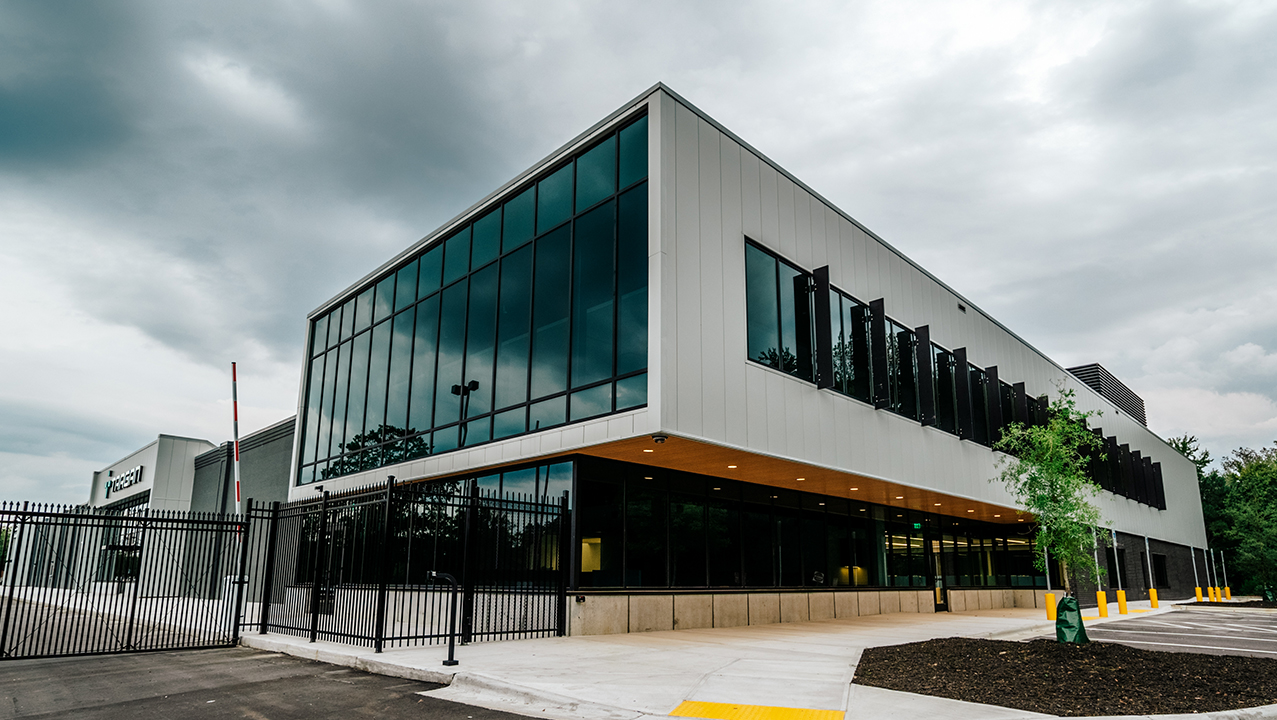
Tucson has quietly become a real bioscience town. The University of Arizona's research campus and the BIO5 Institute anchor the work, Tech Parks Arizona out on Rita Road runs lab and incubator space, and a growing cluster of diagnostics, biotech, and contract-testing tenants has filled buildings across the Innovation District and near Banner University Medical Center. The roofs over these operations are not ordinary low-slope decks. A single drip in the wrong place can scrap a batch, halt a study, or take a calibrated instrument offline — and the building underneath rarely tolerates an unplanned shutdown to make a repair.
That reality shapes how we approach every lab and pharmaceutical roof in town. The roof is part of the containment envelope and part of the clean-air system, not a separate thing bolted on top. We plan the work around what is happening below the deck, because on these buildings the consequence of a mistake is measured in lost research and regulatory exposure, not just a ceiling stain.
Zero Tolerance for Water Over Sensitive Space
Most building owners can live with a slow leak for a week until a crew gets there. A lab cannot. Water tracking down a structural member and dripping over a mass spectrometer, a cell-culture incubator, or a sterile fill line is a direct hit on the science and the compliance record. So we do not chase symptoms — we build assemblies and details that keep water out in the first place, and we treat every seam and penetration over a critical room as a detail that has to be right the first time.
Before we set foot on the roof we map what sits under each bay. Cleanrooms, vivariums, instrument suites, and cold storage get flagged, and the sequence is built so the highest-consequence zones are opened only when the weather window is solid and the dry-in is guaranteed by end of shift. We would rather slow a schedule than gamble a square foot of membrane over an ISO-classified space.
Cleanroom HVAC Curbs Are the Hard Part
The rooftop of a pharmaceutical or lab building is crowded. Air handlers holding cleanroom pressure, HEPA-filtered exhaust, fume-hood stacks, process piping, and the building-automation conduit all break the membrane plane, often in tight clusters. Each one is a curb and a flashing that has to seal perfectly, and the cleanroom units add a second constraint — the pressure relationship between adjacent rooms cannot be disturbed. If we are flashing near a supply or return that maintains a differential, we coordinate with the facility's mechanical team, schedule that work into a planned HVAC window where we can, and confirm the differential recovers and no debris entered the air path once we close up. A curb that merely looks watertight is not good enough next to equipment that holds a cleanroom at spec.
Corrosive Exhaust and Membrane Chemistry
Lab exhaust is the quiet killer of roof membranes. Solvent vapor, acid fumes, and other process exhaust ride out of the stacks, condense on the cap and the surrounding deck, and drip a corrosive film onto whatever membrane sits downwind. Standard single-ply warranties exclude exactly this. So in the fan-out zone around each exhaust stack we identify the actual chemistry with the facility's MEP team and specify a membrane rated for it — typically a reinforced PVC with the chemical resistance to take the exposure — rather than running one generic membrane edge to edge and hoping. We also specify corrosion-resistant flashing metals where the fumes are aggressive.
Credentials, Access, and Closeout
Regulated buildings do not let an uncleared crew onto the roof. Depending on the tenant there may be background checks, escort rules, gowning to cross certain spaces, or controlled-substance access restrictions in play. We start credentialing during preconstruction, usually a couple of weeks ahead, so the whole crew is cleared before the start date instead of losing a mobilization to a badge problem. On the desert side, we also build for Tucson's climate — high UV, intense summer heat, and the monsoon's hard, brief downpours — with reflective membranes and drainage that clears fast, because heat-driven aging and ponding both shorten roof life here.
Documentation closes the loop. Quality-driven facilities expect a real package: contractor qualifications, the site-specific safety plan, submittals reviewed by the facility engineer, daily reports, manufacturer installation records, system certification where it is required, and warranty registration. We deliver it in the format the facility's quality system wants, because on a pharmaceutical or lab building the paper trail is part of the deliverable, not an afterthought.
Why Standard Roofing Risk Tolerance Does Not Apply Here
On most commercial buildings, a roof problem is an inconvenience with a repair cost attached. On a lab or pharmaceutical building, a single failure can cascade. A leak over a GMP production area can force a batch into quarantine. Water in a vivarium or a cold-storage vault can compromise a study or a stored product line worth far more than the entire roof. Even a small intrusion over a calibrated instrument can mean recalibration, requalification, and days of lost work. We carry that weight into every decision, which is why we lean toward prevention and redundancy in the details rather than the leanest assembly that technically meets code.
That mindset shows up in how we phase the work. We open the smallest area we can dry in confidently, we keep tear-off tight to what the crew can close the same day, and we never expose a critical bay on a marginal-weather day just to keep a schedule moving. Slower and dry beats faster and exposed on a building where the contents under the deck are irreplaceable.
Multi-Tenant Lab Buildings and Research Campuses
A lot of Tucson's bioscience space is multi-tenant — incubator and flex-lab buildings where several research programs share one roof, each with its own HVAC, its own exhaust, and its own sensitivity. That complicates everything from access to penetration work, because a single afternoon of roof activity can touch three tenants with three different operating windows. We coordinate the schedule across tenants, map which exhaust serves which suite, and treat each program's space as its own no-surprise zone. On university-affiliated research buildings we are used to working through environmental health and safety offices and biosafety oversight, where the approvals and the documentation expectations run deeper than a typical commercial job.
Designing for the Desert Without Compromising the Envelope
Tucson's climate is hard on roofs in a specific way: relentless UV, long stretches of extreme summer heat, and a monsoon season that delivers most of the year's serious rain in short, intense bursts. Reflective single-ply membranes handle the heat and UV while helping hold the rooftop thermal load down, which matters on a building where the HVAC is already working hard to keep cleanrooms at spec. The monsoon is where drainage earns its place — we design for the peak downpour and the wind that drives it, because a slow average rain is not the event that floods a lab roof. The point is to satisfy the desert and the cleanroom at the same time, never trading one for the other.
From the research buildings on the University of Arizona campus to the diagnostics and biotech tenants filling space near Tech Parks Arizona and the Innovation District, the common thread is that the roof protects work that cannot simply be redone. We build and maintain these roofs to that standard, and we document them so the people responsible for the facility can prove it.
Ready to talk through a roof?
Tell us about the building and the roof problem. We'll document it and put a plan in writing — with an honest repair-vs-replace recommendation and no upsell pressure.
Documented, repair-first commercial & industrial roofing across Tucson and Pima County. Flat and low-slope systems for occupied buildings, planned around your operation.
Services
© 2026 Commercial Roofing Contractors Tucson. All Rights Reserved. Privacy Policy · Terms of Use