
Roof Recover Systems in Tucson, AZ
Recover-vs-replace decision framework and recover system design for Tucson commercial flat roofs — moisture core sampling protocol, insulation overlay specification, and honest guidance on when recovery saves capital in the Sonoran Desert.
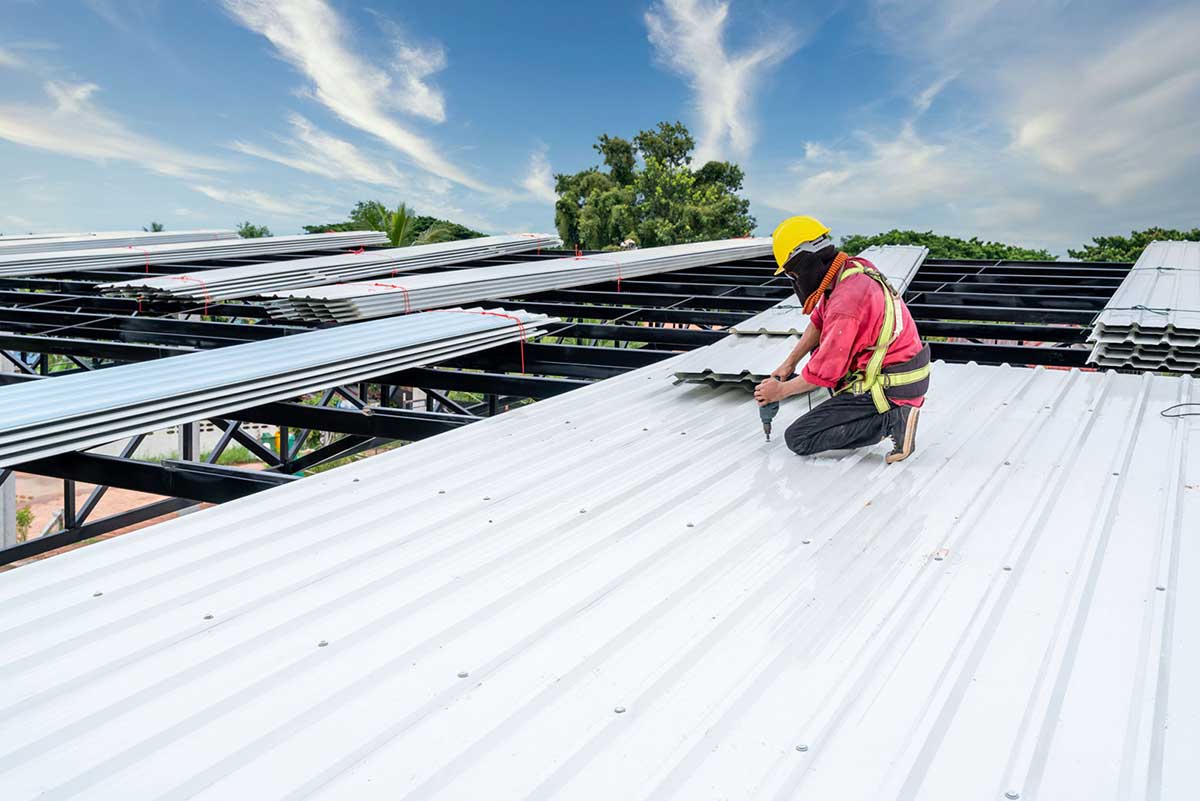
A recover system — new insulation overlay plus new membrane installed over an existing roof without tear-off — can extend a Tucson commercial building's roof asset by 15-20 years at roughly half the capital cost of full replacement. The physical condition of the existing insulation determines whether recover is an honest option. We pull cores to find out before we write a scope.
The recover-vs-replace decision is the most consequential scoping choice on any aging Tucson commercial flat roof. Get it right and you save the building owner 40-50% of replacement cost when the substrate qualifies, or you avoid installing a warranted new membrane over wet insulation that will void its warranty in the first monsoon season. Get it wrong in either direction and the downstream cost is real.
We have no financial incentive to push replacement over recover or recover over replacement. A recover project on a 100, or the Alvernon commercial corridor might run $8-11 per square foot installed versus $13-17 per square foot for full tear-off replacement. If recover is the honest scope, we scope it. If the insulation is wet — and in Tucson, monsoon-infiltrated insulation that has been under the membrane for years frequently is — we scope replacement, because covering a wet insulation problem with a new membrane does not solve it. It accelerates the deck corrosion underneath.
The decision rests on two physical conditions: the moisture content of the existing insulation, confirmed by core sampling, and the structural condition of the existing roof deck, confirmed by what we find under each core pull. Neither can be assessed from a surface walk.
Moisture Core Sampling on Tucson Commercial Roofs
We pull moisture cores at a density of one core per 4,000-5,000 square feet on roofs being evaluated for recover — minimum six cores on any roof we assess, regardless of size. Core locations are selected to sample all roof zones: field areas, areas near drains and scuppers, areas near reported interior leak points, parapet corners, and any zones with visible surface anomalies including blisters or previous patch repairs. On a 60,000 sq ft single-story Tucson warehouse, that means 12-15 core pulls during the inspection visit.
Each core is inspected visually — wet insulation in Tucson's polyiso or fiberglass-faced board changes color from white or tan to yellow, gray, or brown depending on moisture content and age — weighed before and after oven-drying to quantify moisture content, and photographed in place before the plug is sealed and replaced. Core locations are marked on the roof zone diagram and findings documented. The written report shows the core map, the moisture reading at each location, and the percentage of cores reading wet.
Our threshold: more than 25% of core locations reading wet means recover is not the honest scope. Wet insulation under a Tucson commercial roof does not dry out after a new membrane is installed — the Sonoran Desert's heat cycle drives absorbed moisture laterally through the insulation stack rather than evaporating it upward. Under a new membrane, wet insulation continues to deteriorate, undermines adhesion on adhered systems, and corrodes metal deck over time. Below the 25% threshold, targeted insulation replacement at wet locations combined with a recover membrane can produce a warranted system with full expected service life.
Recover System Design for Tucson Climate
A recover system in Tucson has three components: attachment method to the existing roof assembly, new insulation overlay, and new membrane. All three are specified to the Tucson climate and the manufacturer's recovery system design package.
Attachment: most recover systems on Tucson commercial buildings are mechanically attached — screws and plates driven through the new insulation overlay, the existing membrane, and existing insulation into the deck. Fastener pattern is designed to the building's wind-uplift requirement. Tucson's terrain and Sonoran Desert geography place most commercial buildings in ASCE 7 Exposure Category B or C depending on their location and surrounding development density — the Foothills and open warehouse corridors along Irvington and Alvernon require Exposure C calculations. We design fastener patterns to the actual building and location, not a generic table.
Insulation overlay and membrane: IECC 2018 with Arizona amendments requires minimum R-values for commercial roofs in Climate Zone 2B. We calculate the existing insulation's contribution — accounting for thermal drift at Tucson rooftop temperatures — and specify the overlay thickness needed to The recover membrane is TPO or PVC specified to IECC reflectivity requirements; silicone coating over the existing membrane is an alternative recover path on qualifying substrates where the membrane is still sound.
When Recover Makes — and Does Not Make — Sense in Tucson
Recover makes sense in Tucson when: moisture cores are dry at more than 75% of pull locations, the deck is sound under every core cut, the existing membrane has no active open seams or delaminated field sections, and the building has not had a prior recover layer installed. On a Tucson commercial building meeting all four conditions, a recover system at $8-11 per square foot versus $13-17 per square foot for full replacement delivers real capital savings with equivalent manufacturer warranty protection and IECC-compliant reflectivity.
Recover does not make sense when: wet core percentage exceeds 25%, the existing roof already carries a prior recover layer (Arizona code requires full tear-off after one recover), the deck shows deterioration, or the existing membrane is too degraded to provide a consistent substrate for recover attachment. In Tucson's market, there is also a silicone coating path between full replacement and a traditional recover — on roofs where the membrane is sound but the warranty has expired, silicone coating can extend service life without the cost of a new insulation overlay and mechanically attached membrane.
One Tucson-specific pattern to watch for: buildings where a coating or recover was applied over insulation that was marginally wet at the time of application. Tucson's heat cycle can sustain moisture in the insulation stack for years without surface evidence. We have assessed Tucson commercial buildings where a mid-2000s recover appeared in good condition from the surface but core samples showed substantially degraded insulation underneath — the monsoon infiltration that triggered the original recover never dried out. This is why we pull cores before writing any scope.
Frequently asked questions
What does a Tucson commercial roof recover system cost versus full replacement?
A qualifying recover on a Tucson commercial flat roof typically runs $8-11 per square foot installed, compared to $13-17 for full tear-off and replacement on the same building. The savings come from eliminating tear-off labor and landfill disposal — Tucson landfill tipping fees and the cost of removing membrane and insulation from buildings in tight urban locations like the 4th Avenue corridor or the UA Tech Park campus add real cost to full replacement. The recover savings are only real when the substrate is genuinely dry and the scope is honest.
Can a Tucson building that already had one recover get another recover?
No. Arizona building code, following IBC, limits commercial flat roofs to one recover layer over the original roof system. If a prior recover layer exists, the next scope requires full tear-off to deck. We identify prior recover layers during core investigation — the core shows two membrane layers — and include that finding in the written report before a scope is written.
How do you patch the core holes after the inspection?
We replace the core plug and seal it with compatible peel-and-stick flashing tape appropriate to the membrane type. The repair is watertight and leaves no permanent damage to the membrane. We photograph each patched core as part of the inspection documentation — the photo record documents both the core finding and the patched condition.
Recover or replace — need a clear answer for your Tucson building?
We will pull moisture cores at representative locations, document the results, and produce a written recover-vs-replace recommendation with system options and installed cost estimates for both paths.
Ready to talk through a roof?
Tell us about the building and the roof problem. We'll document it and put a plan in writing — with an honest repair-vs-replace recommendation and no upsell pressure.
Documented, repair-first commercial & industrial roofing across Tucson and Pima County. Flat and low-slope systems for occupied buildings, planned around your operation.
Services
© 2026 Commercial Roofing Contractors Tucson. All Rights Reserved. Privacy Policy · Terms of Use