
DST Roofing Services in Tucson, AZ
Commercial roofing for Delaware Statutory Trust (DST) properties and 1031 exchange investors throughout Tucson, AZ.
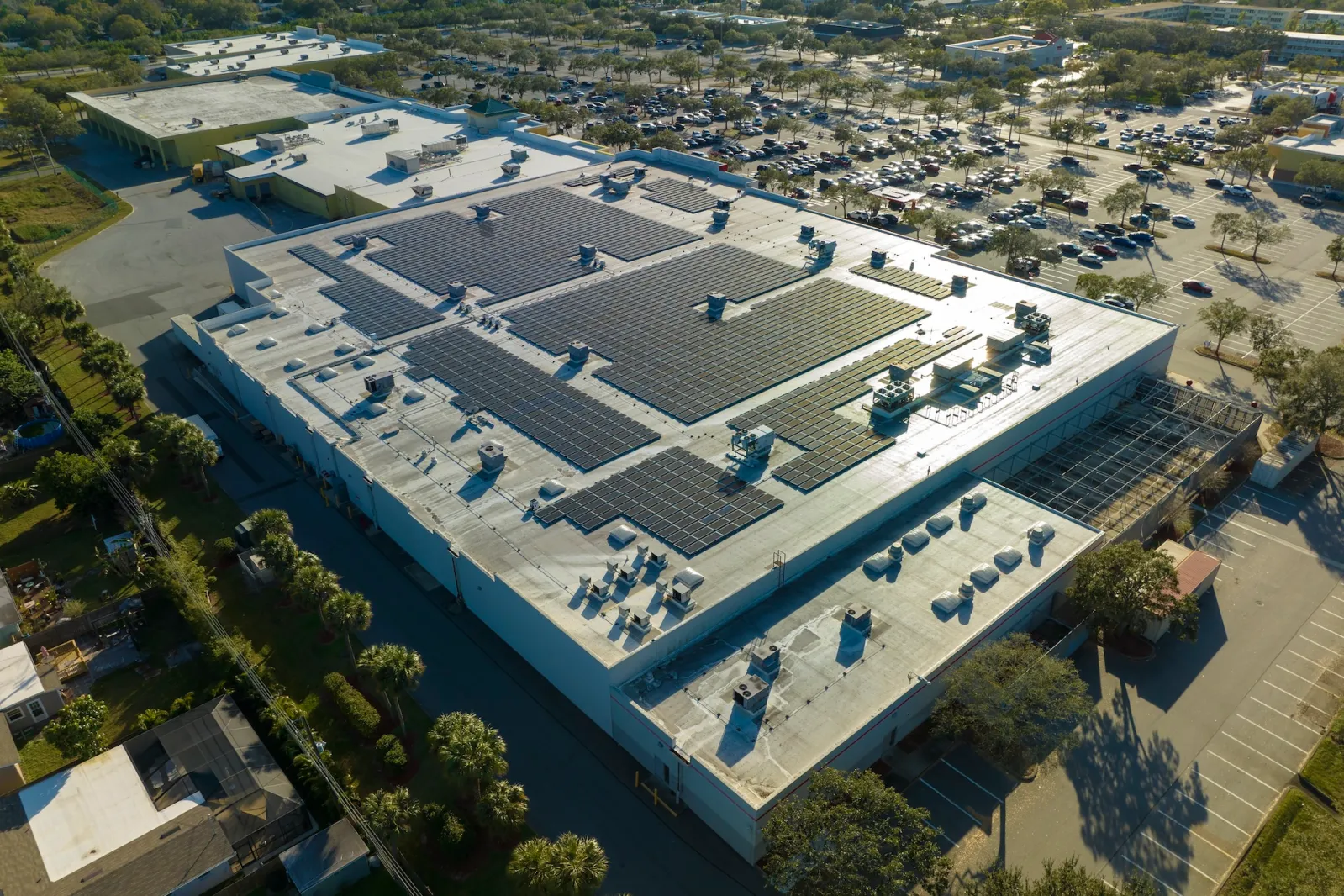
Delaware Statutory Trust sponsors acquiring commercial and industrial assets in the Tucson market encounter a desert roofing environment that demands specific expertise that general-purpose national roofing consultants frequently lack. Tucson's combination of intense summer monsoon precipitation, extreme UV radiation, wide diurnal temperature swings, and prolonged dry periods creates roof degradation patterns that are distinct from both the humid Southeast and the moderate Pacific Coast markets where many DST sponsors maintain their primary roofing relationships. When a 1031 exchange buyer is absorbing equity from a sold California or Pacific Northwest property into a Tucson DST offering, the sponsor's pre-acquisition due diligence must reflect the desert Southwest's specific roofing risk profile rather than a generic national template.
The Arizona monsoon season, which typically runs from mid-June through September, delivers the most concentrated roofing stress of the year. Tucson can receive intense rainfall within a brief period during a single monsoon event — precipitation rates that flat and low-slope commercial roofs may not drain fast enough to manage if their drain fields are partially clogged with the debris that accumulates during the preceding dry months. A roof inspection conducted in April or May, before monsoon season, should specifically assess drain capacity, overflow scupper conditions, and the state of any membrane areas where ponding has previously occurred and left visible discoloration or surface irregularity. This is the pre-acquisition inspection timing that gives a DST sponsor the most actionable data for both the offering memorandum reserve model and the year-one maintenance budget.
UV degradation is the primary long-term deterioration mechanism for commercial roof membranes in Tucson. The Sonoran Desert receives more annual sun hours than almost any other major US market, and the combination of UV intensity and surface heat — flat roof surfaces can reach temperatures well above ambient air temperature during a July afternoon — accelerates the aging of bituminous membranes, single-ply TPO and EPDM systems, and any elastomeric coatings applied over aging base systems. DST sponsors should pay particular attention to the reflectivity and remaining elasticity of roof membranes on Tucson acquisitions, because a membrane that appears serviceable in terms of seam integrity and surface coverage may be in its final years of UV-degraded elasticity — meaning that the first significant hail impact or thermal movement event could produce failures across a large area simultaneously.
Hail in Tucson is a genuine risk during monsoon season that sponsors from coastal markets may not anticipate. Tucson's position at approximately 2,400 feet elevation and its location along the monsoon convective corridor means that summer thunderstorms can produce hail events that cause significant damage to single-ply membrane systems and standing seam metal roofs alike. DST offering memorandums should not model hail risk as a negligible line item for Tucson assets — it is a real exposure that affects insurance underwriting, reserve requirements, and the expected frequency of capital repair events during a five-to-ten-year hold period.
The 1031 exchange timeline for Tucson DST acquisitions is subject to the same 45-day identification and 180-day close windows as any other market, and the compressed due diligence timeline creates real consequences if roof conditions are not properly assessed. A DST sponsor based outside Arizona may not have a Tucson roofing contractor in their network and may rely on a national inspection service that lacks local desert roofing expertise. The difference between a condition report prepared by a contractor who understands Sonoran Desert roof degradation patterns and one prepared by a generalist who applies national inspection templates is the difference between a reserve model that will hold for a ten-year DST and one that will fail in year three when unanticipated membrane replacement costs hit the capital account.
Tucson's commercial real estate market has seen sustained DST interest in medical office, industrial, and government-adjacent assets near Davis-Monthan Air Force Base and the University of Arizona Health Sciences Center. Assets with military or university-adjacent tenancy carry specific roofing considerations — military tenants in particular have explicit building condition standards that they document in inspection reports and lease administration communications, and a roofing deficiency that a private-sector tenant would accept as a minor issue can generate formal documentation and formal landlord notice requirements from a military or federal agency tenant. DST sponsors acquiring properties with federal or military adjacent tenants should ensure their pre-acquisition roof inspection is thorough enough to identify any condition that might generate a formal tenant notice during the hold period.
Hold period maintenance planning for Tucson DST assets should include a pre-monsoon season inspection and drainage clearance as an annual budgeted item. The debris accumulation during Tucson's dry months — which constitutes the majority of the calendar year — can substantially reduce drain capacity before monsoon season begins. A roof that experienced no significant problems in the prior year can sustain ponding damage during a single intense monsoon event if its drain field was not cleared before the season. This is a low-cost, high-value maintenance activity that should be specified in the asset management agreement rather than left to ad hoc scheduling, and the associated cost should be reflected in the annual operating budget that appears in the DST's offering memorandum.
Thermal movement is another desert-specific concern that affects roofing material longevity on Tucson commercial properties. The temperature differential between a cool desert night — which can drop into the 50s even in summer — and a peak afternoon surface temperature on a flat roof in direct Tucson sun creates material expansion and contraction cycles that stress seams, flashings, and roof penetration seals. Buildings with large roof areas and limited movement accommodation built into the original roofing system design are particularly vulnerable to seam fatigue failures over time. A pre-acquisition inspection should assess the condition of lap seams and T-joint intersections on single-ply systems specifically, because thermal movement failure typically begins at these points and progresses outward if not caught early.
DST sponsors who understand Tucson's roofing environment and establish local contractor relationships before closing their acquisitions are building a foundation for the hold period that national competitors who rely on remote management frequently cannot match. Emergency response speed, pre-monsoon maintenance completion, and the ability to obtain competitive bids on capital repairs all depend on a contractor relationship established before the asset is in distress rather than at the moment when distress occurs. For Tucson DST sponsors making their case to broker-dealers and registered investment advisors, demonstrating that local operational relationships are in place before the offering memorandum is distributed is an underwriting quality signal that distinguishes serious operators from sponsors who treat operational infrastructure as an afterthought.
- What desert-specific issues should be prioritized in a Tucson DST pre-acquisition roof inspection?
- UV degradation of membrane elasticity, monsoon drain capacity, seam condition at thermal expansion stress points, hail damage history, and overflow scupper adequacy are the highest-priority items for a Tucson commercial roof inspection supporting DST acquisition due diligence.
- How should monsoon hail risk be reflected in a Tucson DST offering memorandum?
- Hail risk should be modeled as a recurring exposure rather than a remote event, with a reserve line item for storm-damage repairs and documentation that the roof system meets current insurance carrier standards for hail impact resistance in Arizona's monsoon corridor.
- What is the recommended maintenance schedule for a Tucson DST property during the hold period?
- An annual pre-monsoon inspection with drain clearance and seam condition check is the minimum standard, with a post-monsoon condition assessment to catch any damage before the dry season conceals evidence of active moisture infiltration.
- Can you deliver a roof condition report within the 1031 identification window for a Tucson acquisition?
- Yes — we prioritize 1031 and DST assignments and deliver complete written reports with photographic documentation within five to seven business days of site access, fitting within the 45-day identification deadline.
- How do military or federal tenant properties in Tucson affect roofing due diligence requirements?
- Federal and military tenants document building condition formally and generate official landlord notices for maintenance deficiencies — our inspection reports are thorough enough to identify any condition that might trigger a formal tenant notice, protecting the asset manager from compliance surprises during the hold period.
Frequently asked questions
Can you work on a live Tucson data center without interrupting cooling systems?
Yes, but it requires the facility manager's active involvement in production scheduling. We build our sequence around the cooling system's maintenance windows and planned low-load periods. We never unilaterally shut down or disturb any mechanical penetration without the facility's written approval for that specific action on that specific date. In Tucson's summer, when cooling systems have no thermal margin, we defer work around active cooling infrastructure to the October-through-April window whenever possible.
How do you handle fiber conduit penetrations at a Tucson data center roof?
We log every fiber conduit penetration before production begins. Each one gets stripped to the deck, a properly-sized pitch pan or curb flashing installed to manufacturer specification, and a secondary water stop placed inside the conduit bore to prevent monsoon-season water intrusion through the conduit path itself. We photograph the completed detail and include it in the penetration manifest delivered at closeout. Crew members are instructed to not route tools or equipment across conduit bundles.
Does Tucson's monsoon season create specific risks for data center roofs?
Yes. A data center roof that has been baking under Sonoran Desert heat all summer faces its greatest water-infiltration risk during the first intense monsoon events of July — membrane seams thermally stressed, sealants dried, parapet flashings near the end of their cycle. Pre-monsoon inspection and drain clearing in June is the most cost-effective protective measure for any Tucson data center. We document drain condition, probe-test exposed seams, and produce a written pre-monsoon punch list as part of our annual maintenance program.
Do you handle data centers at the UA Tech Park?
Yes. UA Tech Park buildings on Rita Road range from standard commercial office to mission-critical computing and defense-sector R&D environments. We coordinate work schedules with individual tenant security requirements, obtain required contractor registrations before mobilization, and document access coordination in the project pre-construction record. UA Facilities Management requirements apply to buildings managed under the Tech Park's university oversight framework.
Need a roofing scope for a Tucson data center or tech facility?
Our project managers will walk the roof, inventory penetrations, and produce a written scope that accounts for your
Ready to talk through a roof?
Tell us about the building and the roof problem. We'll document it and put a plan in writing — with an honest repair-vs-replace recommendation and no upsell pressure.
Documented, repair-first commercial & industrial roofing across Tucson and Pima County. Flat and low-slope systems for occupied buildings, planned around your operation.
Services
© 2026 Commercial Roofing Contractors Tucson. All Rights Reserved. Privacy Policy · Terms of Use