
Expansion Joint Repair in Tucson, AZ
EPDM and TPO expansion joint cover repair and replacement for Tucson commercial flat roofs — addressing extreme thermal swing movement, failed bellows covers, and full joint replacement when covers cannot be patched.
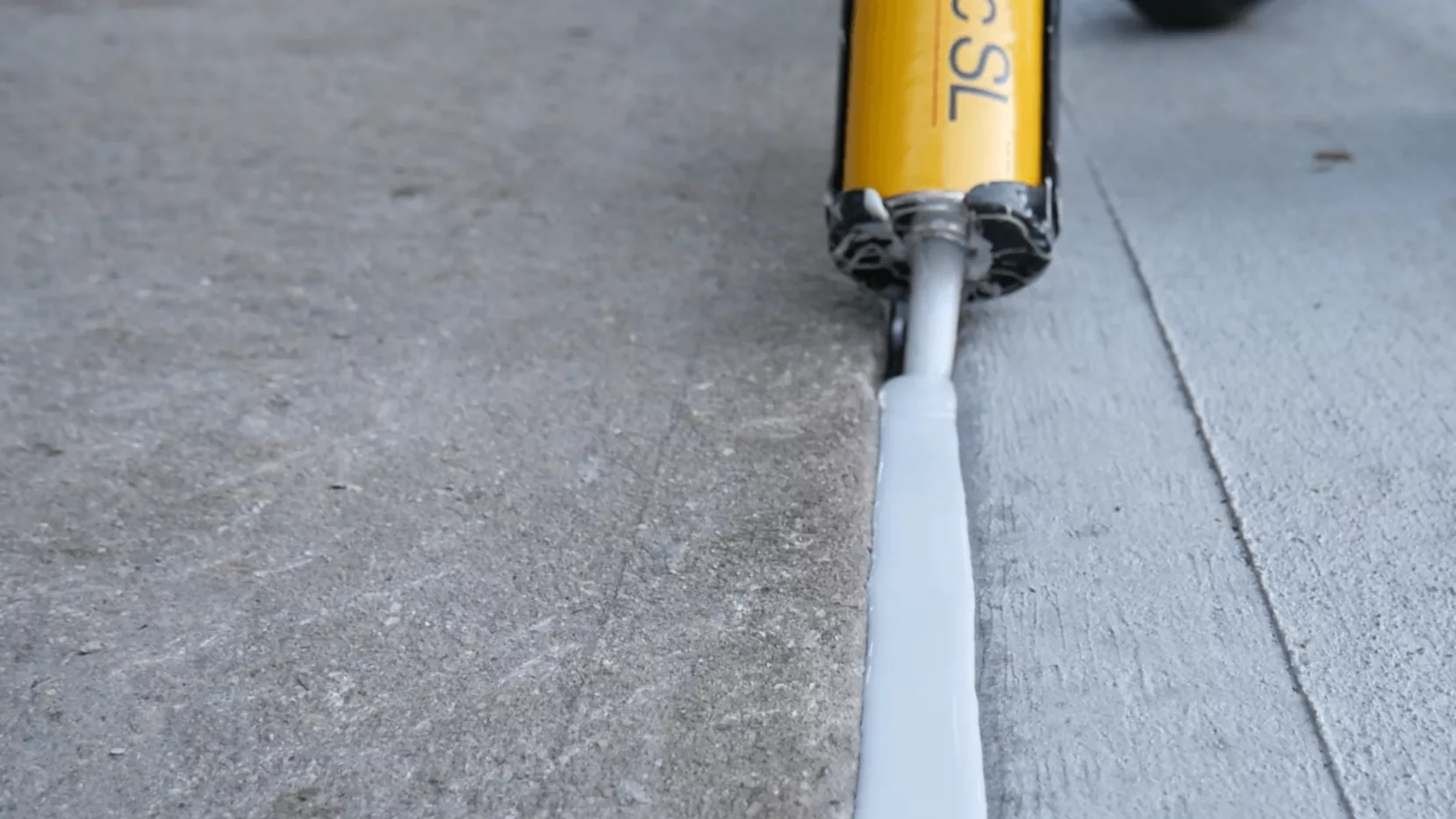
Tucson's daily temperature swings — as large as 70 degrees between a winter night and the following afternoon — put expansion joint covers through more movement cycles per year than most other markets. A cover that cannot keep up with that movement fails, and no fill material can substitute for a properly specified bellows system.
Expansion joints in commercial buildings exist because no building material — concrete, steel, masonry, or roofing membrane — can accommodate the full range of thermal movement a large structure experiences without cracking or tearing. The joint is a designed gap, typically one to three inches wide, that allows adjacent building sections to move independently. The expansion joint cover is the flexible assembly that spans that gap at the roof surface and keeps water out while the joint opens and closes beneath it.
Tucson's thermal environment makes expansion joint performance critical. Daily temperature swings of 70 degrees occur on winter days following warm afternoons, and spring and fall regularly produce 40- to 50-degree swings from dawn to midday. These are not seasonal shifts — they are daily cycles, which means a Tucson expansion joint cover that operates for 20 years completes far more open-close cycles than the same cover in a climate with more moderate diurnal variation. A cover specified for the thermal movement range of a northern climate is undersized for Tucson's daily cycling, and it will fail at the bellows faster than the manufacturer's service life would predict.
We repair and replace expansion joint covers on Tucson commercial buildings using EPDM and TPO bellows cover systems engineered for the actual movement range the building experiences — not just the thermal movement the joint was originally specified for at design. Every expansion joint repair we do starts with measuring the joint width at different times of day or in different seasons to understand the movement range before we specify the replacement cover.
EPDM and TPO Expansion Joint Cover Systems
EPDM bellows covers are the most common system on Tucson commercial buildings built through the 1990s. The bellows — a flexible loop of EPDM that spans the joint opening — accommodates horizontal movement by extending or compressing. The cover is mechanically terminated on both sides of the joint with metal bars embedded in the roofing membrane. In Tucson, EPDM bellows on south and west-facing joints receive direct UV radiation that accelerates the rubber's hardening and loss of flexibility. A bellows that has hardened under Sonoran UV can no longer accommodate the joint's daily movement range, and it tears at the flex point.
TPO heat-weldable expansion joint covers — available from Carlisle, Johns Manville, and other TPO manufacturers — are the current standard specification for buildings on TPO membrane systems. The cover is heat-welded to the field membrane on both sides of the joint, with a pre-formed TPO bellows spanning the gap. Because the cover is welded rather than mechanically fastened, it integrates with the membrane cleanly and eliminates the termination bar as a failure point. On Tucson buildings where we are replacing a hardened EPDM bellows on a TPO roof, we specify the TPO heat-weldable cover so the entire assembly is one membrane type and one thermal expansion coefficient.
For joints on Tucson buildings with modified bitumen or silicone-coated systems, we use preformed expansion joint covers in a membrane-compatible formulation. These systems are less flexible than single-ply bellows covers and require careful movement range estimation — the Sonoran Desert's large daily thermal swing means the cover must be sized for the full diurnal cycle, not just the seasonal range.
Tucson's Thermal Swing and What It Demands of Joint Covers
Tucson's thermal environment is unlike the clay-movement challenge of other southwestern cities. The primary expansion joint driver in Tucson is thermal cycling — not seasonal moisture-driven structural movement, but the daily heating and cooling of concrete and steel building frames. At 2,400 feet elevation in ASHRAE Climate Zone 2B, Tucson produces a building-frame temperature differential over a 24-hour period that is among the largest in the continental United States. A large commercial building frame can move 3/4 inch or more at an expansion joint over a single day in spring or fall — and that movement occurs daily for decades.
We assess thermal movement risk on every expansion joint repair project by reviewing the building's frame material (steel frames have higher thermal coefficients than concrete, producing more daily movement at the same temperature swing), the building's orientation (south-facing expansion joints in Tucson receive direct solar loading that creates asymmetric heating of the two building sections relative to the joint), and the visible evidence of prior movement in the existing joint (covers that are consistently compressed on one side indicate one building section is moving more than the other).
For buildings where daily thermal cycling is the primary driver of joint failure — rather than age degradation of the cover material alone — we specify a cover system with bellows depth and width that accommodates the measured movement range plus a safety factor. We also discuss the building's rooftop insulation with the owner, because insulation that reduces the rooftop surface temperature reduces the thermal movement that the expansion joint has to absorb.
When Joints Need Full Replacement vs. Cover Repair
Cover repair — patching a torn bellows, re-terminating a pulled bar, or reseating a displaced cover — is appropriate when the failure is isolated and the cover material still has adequate flexibility and thickness to perform. We probe the EPDM or TPO cover material at the repair area and at representative points along the joint to verify the material has not hardened to the point where it will simply tear again under Tucson's daily thermal cycling.
Full cover replacement is indicated when the bellows material has hardened or cracked along its full length (EPDM hardens as UV destroys the polymer chains; on Tucson's UV-loaded roofs this can occur significantly earlier than in northern markets), when termination bars have corroded or pulled out of the membrane over more than 30% of the joint length, or when the joint width has changed from the original specification due to long-term differential thermal settlement.
We do not fill expansion joints. A filled joint becomes a cracked membrane — the structural joint continues to move regardless of what is placed in it, and the fill tears the adjacent membrane when it fails. We see filled joints on Tucson buildings where prior contractors applied urethane caulk or spray foam to an expansion joint. The fill fails within one to two thermal seasons and leaves the joint in worse condition because the fill bonded to both sides and tore the membrane when it separated. The repair for a filled joint is to remove all fill material, restore the joint gap, and install a proper bellows cover system.
Frequently asked questions
How do I know if a crack in my roof membrane is at an expansion joint versus a field membrane failure?
Field membrane cracks follow random paths — stress points, seam lines, areas of settlement. Expansion joint failures follow the joint line exactly because the crack is propagating along the structural joint below. If you have a linear crack that runs parallel to a visible building joint or a break in the roofline, it is almost certainly at an expansion joint.
My building was built in the 1990s and I do not think it has expansion joints. Is that possible?
Yes. Expansion joint requirements depend on building length, material, and structural system. Some Tucson commercial buildings from that era were built without roofing expansion joints and have since developed field membrane cracks at structural transitions. If your building has recurring cracks at the same locations, those locations may need expansion joint covers installed retroactively.
Can expansion joint covers be installed over an existing roof without a full reroof?
Yes, in most cases. The cover system is terminated into the existing membrane with mechanical bars and sealant, or heat-welded if the existing membrane is TPO or a compatible single-ply. We require that the membrane on both sides of the joint be in sound condition — installing a bellows cover over a deteriorated membrane relocates the failure rather than solving it.
How long do replacement expansion joint covers last in Tucson?
EPDM bellows covers last 12 to 18 years in Tucson before UV hardening reduces flexibility below functional levels — shorter than the 15 to 20 year life in northern markets because of the Sonoran UV exposure. TPO heat-weldable covers on new TPO systems typically track the life of the surrounding membrane. Annual inspection that includes a probe test of the bellows material and a visual check of the termination bars catches degradation early enough to plan the replacement rather than react to a failure.
Recurring crack at the same location on your Tucson roof?
That crack is likely at a structural joint. We measure the actual thermal movement range, specify a bellows cover system built for what the building does in the Sonoran Desert, and install a detail that does not need to be refilled every two seasons.
Ready to talk through a roof?
Tell us about the building and the roof problem. We'll document it and put a plan in writing — with an honest repair-vs-replace recommendation and no upsell pressure.
Documented, repair-first commercial & industrial roofing across Tucson and Pima County. Flat and low-slope systems for occupied buildings, planned around your operation.
Services
© 2026 Commercial Roofing Contractors Tucson. All Rights Reserved. Privacy Policy · Terms of Use