
Government and Municipal Building Roofing in Tucson, AZ
Commercial roofing for city halls, courthouses, fire stations, police stations, and public facilities throughout Tucson, AZ.
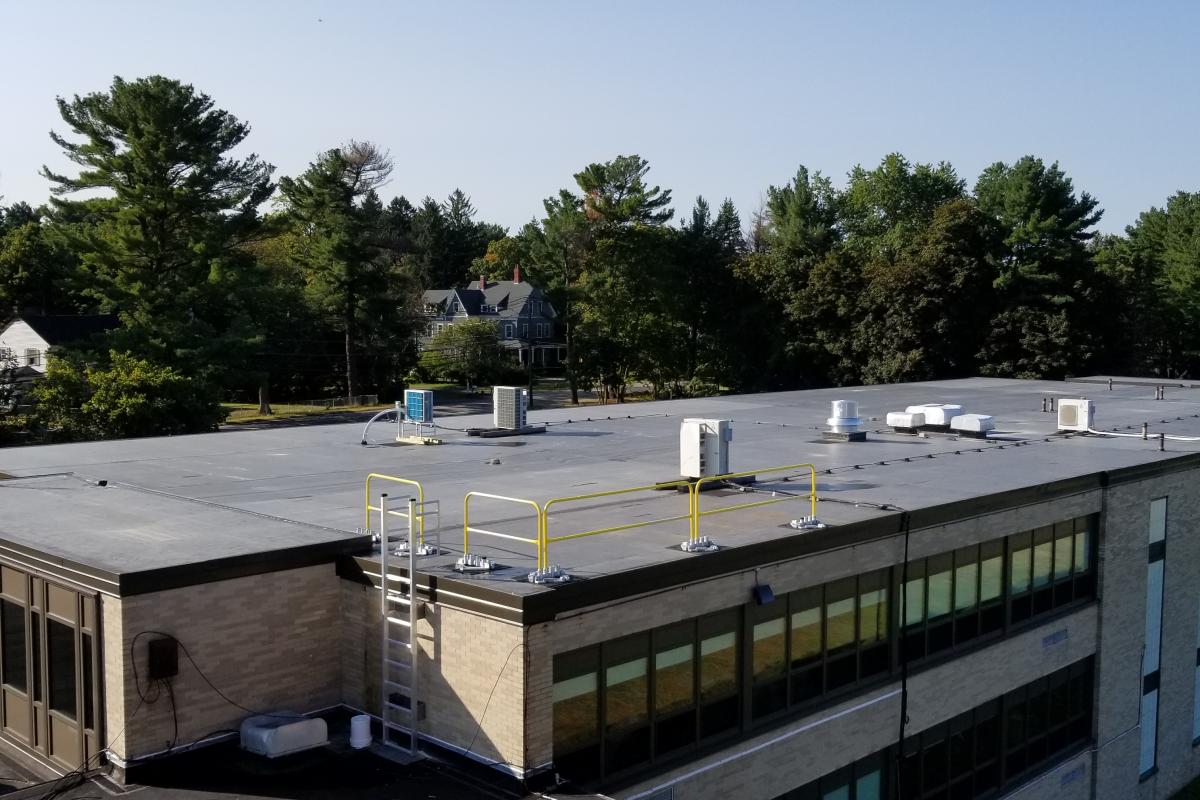
Tucson's municipal buildings represent some of the most demanding roofing environments in the Southwest, where summer temperatures regularly push past 110 degrees Fahrenheit and monsoon rains arrive with little warning between July and September. Pima County facilities, including the historic Pima County Courthouse on West Congress Street and the sprawling Tucson City Hall complex, face the dual challenge of intense UV degradation and sudden moisture intrusion that few commercial roofing contractors outside the region fully anticipate. Government roofing work in Tucson requires an understanding of both desert climatic realities and the procedural requirements embedded in Arizona's public procurement statutes, which govern how every bid, contract, and change order flows through the city and county approval process.
The City of Tucson procurement office follows a competitive sealed bid process for roofing projects that exceed established thresholds, typically requiring formal Invitation for Bids published through the city's procurement portal and advertised in local media for a minimum period. Contractors must hold an Arizona ROC license, provide current certificates of insurance meeting city minimums, and submit bonds including a bid bond at the time of proposal and performance and payment bonds upon award. The Pima County Facilities Management Department operates under similar requirements, and projects touching federal facilities in Tucson — including buildings at Davis-Monthan Air Force Base or those managed by federal agencies downtown — bring additional layers of federal acquisition requirements into play.
Prevailing wage compliance is a recurring topic in Tucson government roofing contracts, particularly for projects receiving any form of federal funding or assistance. Arizona does not have a standalone state prevailing wage law, but federal Davis-Bacon Act obligations attach to federally assisted construction, meaning roofing contractors working on Tucson Housing Authority properties, federally funded library renovations, or projects under Community Development Block Grant funding must pay federally determined wage rates and maintain certified payroll records. Failure to maintain proper payroll documentation has caused contract disputes and debarment proceedings for contractors working in the Pima County region, making compliance infrastructure a genuine business requirement rather than a paperwork formality.
Tucson Fire Department stations, particularly the older facilities built in the 1960s and 1970s scattered across midtown Tucson, present roofing challenges tied to aging structural decks and the cumulative effects of decades of thermal cycling. The extreme temperature differential between a black built-up roof surface during summer peak hours and the ambient temperature at 3 a.m. creates expansion and contraction stress that accelerates membrane fatigue and fastener back-out in mechanically attached systems. Roofing specifications on Tucson Fire Department properties increasingly call for reflective cool roof membranes, a requirement aligned with the City of Tucson's energy efficiency commitments and the State of Arizona's interest in reducing peak electrical demand on the regional grid during summer months.
The Tucson-Pima Public Library system operates multiple branch facilities across the metro area, including the main Joel D. Valdez Main Library downtown, and library roofing projects often carry an additional layer of public scrutiny given the community role these buildings play. Libraries in Tucson tend to feature complex roof geometry with multiple drainage points, mechanical equipment penetrations serving HVAC systems sized for heavy occupancy loads, and skylights that require careful integration into any re-roofing scope. The city's facilities staff typically specifies a minimum warranty term for government roofing contracts, with 20-year manufacturer warranties on membrane systems and separate contractor workmanship warranties that must survive multiple inspection cycles before final closeout.
Historic preservation adds complexity to roofing projects at Tucson's older government buildings. El Presidio Historic District structures downtown, as well as properties listed on the National Register of Historic Places or subject to the State Historic Preservation Office review, require material selection and detailing that maintains the building's historic character. The Arizona State Historic Preservation Office coordinates review for state-owned properties, and federal undertakings trigger Section 106 consultation under the National Historic Preservation Act. Roofing contractors working in this space need familiarity with Secretary of the Interior's Standards for the Treatment of Historic Properties, which can significantly constrain system selection and detailing choices even when the underlying roof structure is failing.
Bonding requirements for Tucson and Pima County government roofing contracts extend beyond the standard performance and payment bond package. Some city contracts require a maintenance bond covering a period of one to two years after final acceptance, ensuring that the contractor remains financially responsible for defects that emerge during the initial service period. The Arizona Registrar of Contractors' licensing requirements include financial responsibility standards, and contractors bidding on large government projects should verify that their current bond capacity is sufficient for simultaneous projects without exceeding the limits their surety has established, as government contract administrators increasingly run capacity checks before awarding work.
Energy mandates in Tucson's government building program have become more pronounced following the city's adoption of climate action commitments. The Tucson Airport Authority, Pima County, and the City of Tucson facilities departments have all incorporated energy efficiency criteria into roofing specifications, favoring systems with demonstrated solar reflectance index values that contribute to whole-building energy performance. For flat roof replacements on public safety buildings, courts, and administrative offices, these requirements often mean specifying single-ply TPO or PVC membranes with reflective finishes rather than traditional dark-surfaced systems, even when the upfront installed cost is modestly higher. The long-term operational savings in cooling costs for large Tucson government facilities have proven the economic case for reflective roofing in this climate.
Contractors pursuing government roofing work in Tucson benefit from building relationships with both the City of Tucson Procurement Division and the Pima County Contracts and Procurement Department well before solicitations are published. Pre-bid meetings on government roofing projects often include roof access for inspection, providing experienced contractors a firsthand look at existing conditions that translate into more accurate pricing and fewer change order disputes during construction. Tucson's government building stock continues to age, and the pipeline of roofing replacement and remediation projects remains robust across city halls, justice facilities, police substations, and the growing portfolio of transit and infrastructure buildings that serve the region's expanding population.
- What bonding is required for a government roofing contract in Tucson?
- Tucson and Pima County government contracts typically require a bid bond at the time of proposal submission, followed by performance and payment bonds upon contract award. Some contracts also include a maintenance bond of one to two years after final acceptance to cover defects that emerge during the initial service period.
- Does Davis-Bacon apply to roofing projects at Tucson city facilities?
- Arizona does not have a state prevailing wage law, but federal Davis-Bacon Act requirements attach to any project receiving federal financial assistance, including federally funded renovations, HUD-assisted housing authority properties, and CDBG-funded public facilities. Contractors must review each project's funding sources to determine whether certified payroll and prevailing wage obligations apply.
- How does the monsoon season affect government roofing schedules in Tucson?
- Tucson's monsoon season runs from mid-June through September and brings sudden, intense rainstorms that can deposit several inches of rain in a single event. Government roofing contracts often include weather day provisions, and experienced contractors sequence tear-off and installation to minimize open-roof exposure during the monsoon window.
- Are cool roof requirements mandatory for Tucson government buildings?
- The City of Tucson and Pima County have incorporated energy efficiency and cool roof criteria into their standard roofing specifications, particularly for flat roof replacements on large facilities. These requirements typically mandate minimum solar reflectance index values and align with broader city climate action commitments.
- How does historic preservation review affect roofing at older Tucson government buildings?
- Buildings listed on the National Register of Historic Places or subject to State Historic Preservation Office oversight require material and detailing choices consistent with the Secretary of the Interior's Standards, which can limit system selection and require specialized review before work begins. Federal undertakings at historic properties also trigger Section 106 consultation, which adds time to project planning.
Frequently asked questions
Can you coat a BUR roof instead of replacing it?
Sometimes — and in Tucson it is often the right call when the substrate qualifies. We pull moisture cores before making any recommendation. If the insulation is dry, the gravel contact is intact, and there is no active blistering, a silicone coating system with the appropriate BUR primer is frequently the most cost-effective path: typically one-third the cost of tear-off and replacement, with a 10-15 year warranty from the coating manufacturer. If the insulation is wet, coating is not the answer and we say so.
How does Tucson's climate affect BUR faster than other markets?
Sustained UV at Index 11-plus for roughly five months of the year oxidizes the surface bitumen at a faster rate than in northern or coastal markets. The monsoon season then stress-tests seams and flashings that have been UV-cycled all summer. The combination accelerates alligatoring, flashing degradation, and gravel contact breakdown faster than manufacturer service-life tables — which are typically calibrated to moderate-climate exposure — predict. Annual inspection and maintenance is not optional on Tucson BUR systems; it is what determines whether the system reaches the end of its useful life on a planned schedule or fails on a monsoon emergency.
Is new BUR installation an option for Tucson commercial buildings?
Rarely, and we do not recommend it as a first choice. New BUR installation in the Tucson market has been largely supplanted by TPO and silicone coating systems that provide better reflectivity performance in the IECC Climate Zone 2B compliance environment. We can spec and install new BUR where a building's situation specifically requires it — but for most Tucson commercial buildings, a reflective single-ply system or a silicone restoration coating is the more defensible recommendation.
Aging BUR on a Tucson commercial building?
We will walk the roof, pull core cuts, and produce a written assessment — replace vs. coat vs. recover — with system options, installed cost bands, and warranty paths. No obligation.
Ready to talk through a roof?
Tell us about the building and the roof problem. We'll document it and put a plan in writing — with an honest repair-vs-replace recommendation and no upsell pressure.
Documented, repair-first commercial & industrial roofing across Tucson and Pima County. Flat and low-slope systems for occupied buildings, planned around your operation.
Services
© 2026 Commercial Roofing Contractors Tucson. All Rights Reserved. Privacy Policy · Terms of Use