
Hail Damage Roof Repair in Tucson, AZ
Insurance-grade hail damage documentation and repair for Tucson commercial flat roofs — distinguishing monsoon hail impact from pre-existing UV degradation, working with adjusters, and permanent membrane repair after storm events.
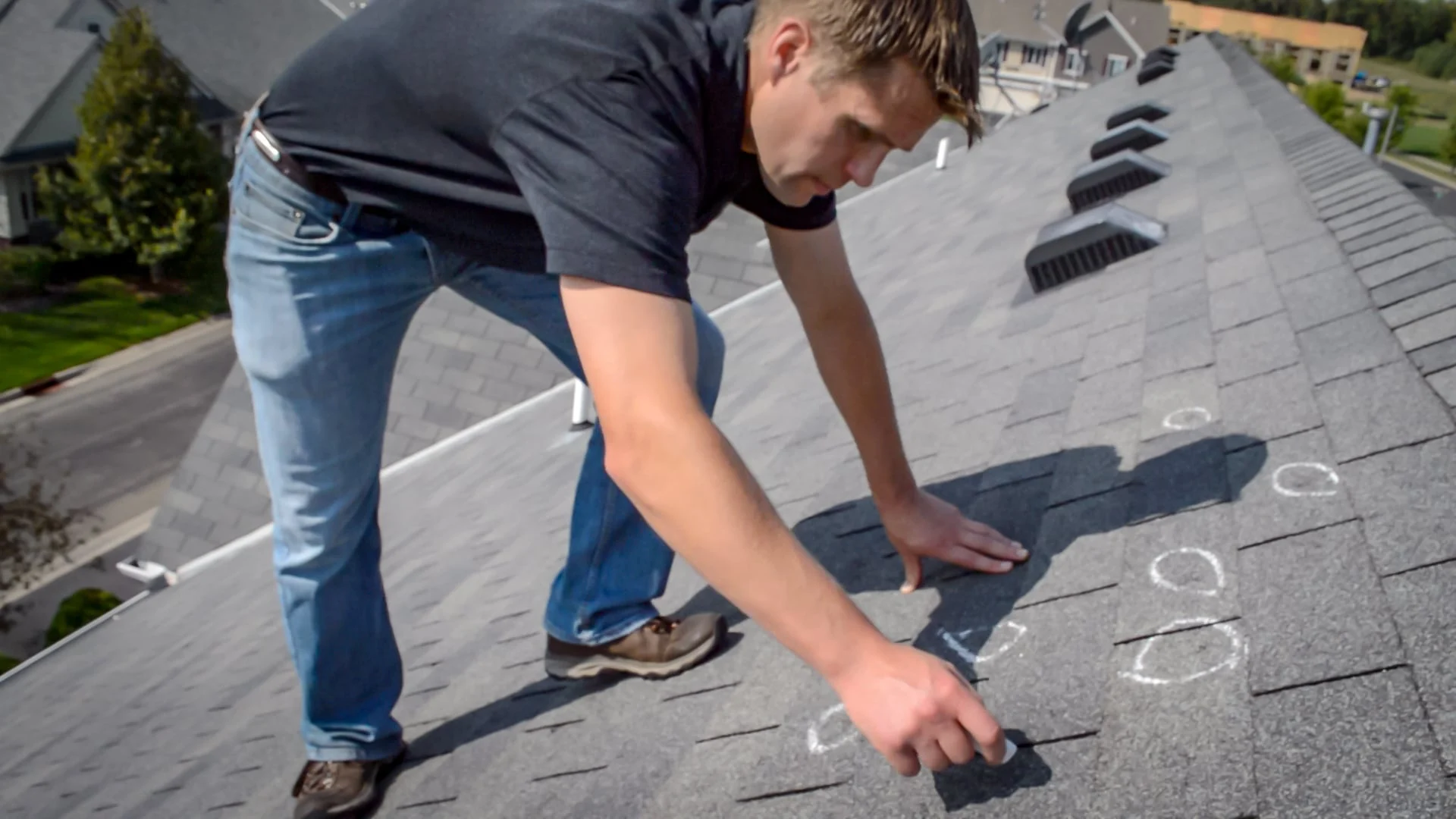
Tucson monsoon cells can produce significant hail with little warning — and a membrane already stressed by months of Sonoran UV loading is more vulnerable to hail damage than a fresh installation. Post-storm documentation that distinguishes event damage from pre-existing degradation is what determines whether a claim gets paid.
Tucson's hail exposure is less frequent than the national hail belt to the northeast, but the monsoon season delivers concentrated events that can produce golf-ball-sized hailstones on isolated storm tracks across Pima County. The Rincon Mountains and Santa Catalina foothills act as orographic triggers for convective development — storms that form over the mountains and move toward the city can intensify rapidly, and the narrow geographic track of a Sonoran monsoon cell means one building in a commercial corridor takes a direct hail hit while a building two blocks away receives nothing. The NWS Tucson office documents multiple hail events annually in the Tucson metro, with the highest-frequency window running mid-July through mid-September.
The complicating factor in Tucson hail claims is the pre-existing condition baseline. A commercial membrane that has been under Sonoran Desert UV for ten or twelve years shows oxidation, seam stress, and granule displacement that an adjuster unfamiliar with the Tucson market might attribute to impact damage rather than background degradation. We document pre-adjuster conditions — photographing and describing every area of UV-related degradation separately from any hail impact evidence — so the claim distinguishes what the storm did from what the sun did across the years.
We do not do storm-chasing sales work. We document what a hail event actually caused, we distinguish it accurately from pre-existing conditions, and we repair what the storm damaged. Our relationship with adjusters who work the Tucson commercial market depends on that accuracy — an inflated claim is not a favor to a building owner whose carrier will have a long memory.
Insurance-Grade Documentation in Tucson
A commercial hail claim requires documentation establishing three things: that a hail event occurred, that the event caused the observed damage, and that the observed damage is distinct from pre-existing conditions. The first is established by NWS Tucson storm reports and hail verification services. The second requires photographs that show hail impact signature — spatter patterns on HVAC condenser fins, dented pipe boots, fractured granules on modified bitumen, bruising and splits on TPO and PVC membrane.
Distinguishing event damage from UV degradation is where Tucson hail claims generate disputes. We photograph and describe every area of membrane degradation during our pre-adjuster walk, noting whether each condition is consistent with hail impact (concentrated bruising at impact points, radial fracture patterns, clean splits at impact craters) or with UV degradation (chalking, oxidation, seam stress cracking, long-line lap separation). Both are documented accurately because our track record with Tucson adjusters depends on precision, not advocacy.
We measure hail density — impacts per 10 sq ft — at multiple roof locations using painted test squares that the adjuster can replicate during their independent walk. Adjusters use density readings to cross-reference against storm path data from NWS Tucson and private weather services.
Common Hail Damage Patterns on Tucson Commercial Roofs
TPO and PVC membranes: The white and light-gray reflective membranes standard in Tucson are generally more visible for hail impact documentation than dark membranes — bruising, spatter patterns, and impact craters contrast against the light surface. Tucson's high UV load means membranes that have been in service 10 or more years have reduced elongation and are more susceptible to impact fracture than new installations. Stones above 1.5 inches regularly produce visible fractures on aged reflective single-ply.
Modified bitumen: Granule displacement is the primary hail indicator on modified bitumen systems. Impact craters without granule coverage expose the base sheet to UV and accelerate degradation. We measure exposed area and compare to non-impacted sections of the same membrane to establish the storm-specific damage rate.
Metal components: Parapet coping caps, metal edge flashings, pipe boots, skylight frames, and HVAC equipment all show spatter damage that serves as hard-surface hail evidence. In Tucson, we photograph all metal components on every post-hail walk because adjusters in the Arizona commercial market weight hard-surface evidence heavily — it is harder to dispute than membrane conditions that have a UV-degradation alternative explanation.
Drain obstruction from hail debris: Significant hail events deposit ice and debris on Tucson commercial roofs that can restrict drains and produce ponding through subsequent monsoon rainfall in the same storm event. We document drain condition as part of every post-hail assessment and address emergency drain clearing before the next forecasted rainfall.
Working with Tucson-Area Adjusters
We schedule adjuster walks at the adjuster's availability and have our project manager — not a salesperson — present for the full walk. Technical questions about membrane impact signatures, UV degradation baselines, and the Sonoran Desert's effect on membrane aging require technical answers.
When an adjuster's scope and our scope differ, we document the discrepancy in writing and request a re-walk or third-party umpire inspection. Most scope discrepancies arise from adjusters not accounting for how UV-pre-stressed Tucson membranes respond to hail impact differently from freshly installed membranes in other markets. We know how to have this conversation in a way that produces resolution.
We produce all repair documentation in the format the carrier file requires — itemized scope, unit pricing, materials schedule, and post-repair photos keyed to the pre-repair documentation. This is what allows a claim file to close cleanly and the carrier relationship to remain intact for the next event.
Frequently asked questions
How quickly should we document the roof after a monsoon hail event?
Within 48 hours. Most commercial policies have notice provisions requiring prompt reporting, and dated pre-adjuster documentation is what protects you if the carrier argues later damage was not caused by the event. Tucson monsoon hail events can be followed quickly by additional storm activity — each additional event without documentation complicates the claim. We prioritize post-hail walks and can typically get a project manager on your roof within one to two business days of a documented event.
What if the adjuster says all the damage is pre-existing UV degradation?
We document both impact damage and UV degradation independently on every post-hail roof walk. If our pre-adjuster documentation shows conditions not present before the storm, that record supports your position in the dispute. We will walk the roof again with the adjuster and work through the documentation point by point.
Do you work with Arizona commercial carriers?
We have worked with the major commercial carriers active in the Tucson market. Each carrier has different documentation preferences for Arizona commercial hail claims, and we adapt our report format to match what their adjusters need to close the file.
Can you install temporary dry-in after a hail event while the claim is being processed?
Yes. If the roof has active penetrations from hail impact, we install temporary EPDM patch or spray polyurethane foam on those penetrations to stop water entry while the claim is being adjusted. The temporary repair is documented separately so it does not complicate the permanent repair scope.
Monsoon hail just hit your building? Get on the roof in 48 hours.
We document pre-adjuster conditions, walk with your adjuster, and produce the repair scope and post-repair record that closes the claim cleanly.
Ready to talk through a roof?
Tell us about the building and the roof problem. We'll document it and put a plan in writing — with an honest repair-vs-replace recommendation and no upsell pressure.
Documented, repair-first commercial & industrial roofing across Tucson and Pima County. Flat and low-slope systems for occupied buildings, planned around your operation.
Services
© 2026 Commercial Roofing Contractors Tucson. All Rights Reserved. Privacy Policy · Terms of Use