
Retail and Shopping Center Roofing in Tucson, AZ
Commercial roofing for strip malls, shopping centers, anchor stores, and standalone retail buildings throughout Tucson, AZ.
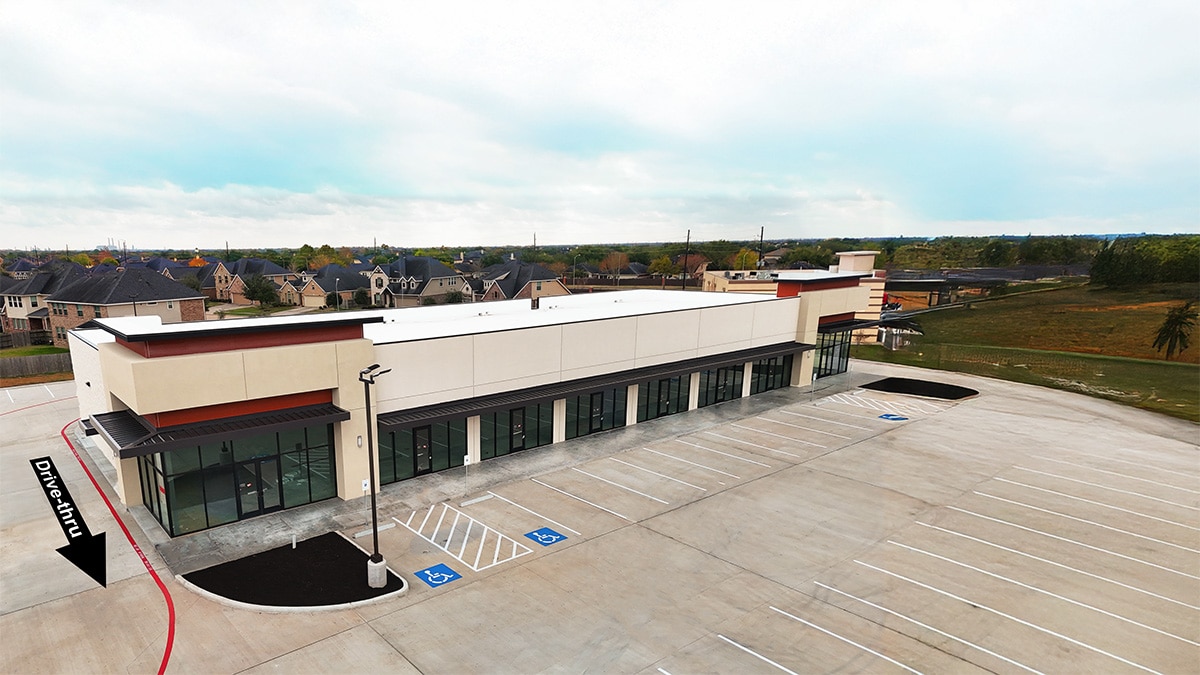
Tucson's retail landscape stretches across miles of sun-bleached corridors, from the big-box anchors lining Oracle Road to the strip centers packed along Speedway Boulevard and the regional draws clustered around Tucson Mall. Every one of those rooftops faces the same unrelenting adversary: 299 days of sunshine per year paired with monsoon seasons that can dump two inches of rain in a single afternoon. For retail property owners and shopping center managers, that combination demands roofing systems engineered specifically for desert extremes, not adapted from specs written for milder climates.
Flat and low-slope roofs dominate Tucson's commercial retail stock, and the most common failure mode is not wind damage but thermal cycling. A black membrane on a Tucson strip mall can hit 180°F on an August afternoon and drop 60 degrees overnight. TPO membranes rated for high-temperature performance are the preferred specification for Oracle Road-area retail for exactly this reason. We install 60-mil and 80-mil TPO with heat-welded seams, which eliminate the adhesive failure points that plague older EPDM systems baking under Pima County sun.
Monsoon drainage is the second design priority for any Tucson retail roof. The Rillito Watershed and broader Santa Cruz flood plain make retailers on the west and north sides of the metro acutely aware of what happens when drains back up. We install primary interior drains paired with overflow scuppers sized to the roof area and the 100-year storm event for this zip code. Emergency overflow protection is not optional in a market where a 45-minute cloudburst can leave standing water knee-deep on a clogged flat roof.
Anchor tenants at shopping centers like Park Place Mall and La Encantada impose specific roofing standards written into their lease agreements. National retailers, particularly grocery chains and home-improvement stores operating in the Tucson metro, require written warranties from manufacturer-certified contractors, and they reserve the right to inspect completed work. Our crews carry Carlisle and GAF certification, which satisfies the warranty language in most institutional leases without requiring the property owner to negotiate exceptions.
HVAC penetrations present the single greatest source of leak callbacks on Tucson retail roofs. A typical strip mall along Grant Road or Ina Road carries one rooftop unit per 1,200 to 1,500 square feet of leasable area, plus exhaust fans, conduit runs, and satellite equipment. Every penetration is a potential entry point during monsoon season. We use prefabricated pitch pans filled with pourable sealant for irregular penetrations and factory-fabricated curb flashings for all HVAC units, eliminating the field-fabricated sheet metal work that accounts for a majority of post-installation leaks in this market.
Tenant disruption is a business-critical concern on busy Tucson retail corridors. A restaurant tenant on Foothills Drive cannot close for a week while a roof replacement proceeds overhead. We schedule demolition and membrane installation in phased sections timed around store hours, use vacuum-assisted debris removal to keep common areas clean, and assign a site lead whose sole responsibility is coordinating daily work start and stop times with store managers. Noise-sensitive tenants, including medical and optical retail, receive 48-hour advance notice before any heavy equipment is positioned above their space.
CAM cost management matters enormously in Tucson's retail market, which carries higher-than-average vacancy in some corridors. Landlords competing to attract and retain tenants cannot afford surprise roof assessments that blow up common-area maintenance budgets mid-year. Preventive maintenance agreements, including twice-annual inspections, drain cleaning before monsoon season, and membrane patch programs, extend roof service life and allow accurate 5-year capital reserve projections. We provide written condition reports after every inspection that property managers can attach directly to their annual CAM reconciliation documentation.
Coatings programs represent a cost-effective alternative to full replacement for Tucson retail roofs still structurally sound but showing surface weathering. Silicone roof coatings applied over existing TPO or modified bitumen extend service life by 10 to 15 years while reflecting enough solar energy to meaningfully reduce cooling loads on large retail footprints. For big-box tenants along Irvington Road or Kino Parkway running rooftop HVAC equipment 12 months a year, that reflectivity improvement translates to lower operating costs that support lease renewal conversations.
Retail brand standards increasingly include sustainability language that touches roofing specifications. National tenants signing new leases in Tucson's newer mixed-use corridors near Marana and Sahuarita sometimes require cool-roof compliance or ENERGY STAR-rated membrane products. We carry current product submittals for all major TPO and PVC lines with confirmed ENERGY STAR ratings, so lease compliance documentation is available before groundbreaking rather than assembled under deadline pressure after a tenant's architect raises the issue.
- How does Tucson's monsoon season affect commercial roofing timelines?
- The North American Monsoon, which typically runs from late June through mid-September, compresses the ideal roofing installation window into the spring and late fall months. We schedule large retail projects between February and early June when weather windows are predictable. Emergency work during monsoon season is always available, but new installations are best phased to avoid membrane welding in humid, late-afternoon storm conditions.
- What roofing membrane is best for Tucson's extreme UV exposure?
- TPO membranes with ENERGY STAR ratings and UV-stabilized formulations perform best in Tucson's high-UV desert climate. We specify 60-mil or 80-mil TPO with a white reflective surface for all new retail installations, which reduces membrane surface temperatures compared to older gray or tan EPDM systems. Heat-welded seams eliminate the adhesive joints that degrade quickly under prolonged UV bombardment.
- Can retail tenants stay open during a commercial roof replacement?
- Yes, in the vast majority of cases tenants remain open throughout a Tucson retail roof replacement. We use phased work schedules keyed to store hours, install temporary waterproofing at day's end, and coordinate debris removal to keep storefronts and parking areas accessible. The exception is when structural decking replacement is required, which can create noise and vibration levels incompatible with certain retail uses.
- How are rooftop HVAC units handled during a re-roofing project?
- Existing HVAC curbs are either raised to accommodate new membrane thickness or the units are temporarily disconnected, the curbs rebuilt to code height, and units reset by a licensed HVAC subcontractor. We coordinate directly with the property's mechanical contractor or the tenant's service company to minimize equipment downtime. All curb flashings are manufacturer-fabricated to ensure warranty eligibility on the new membrane.
- What does a retail roof maintenance agreement typically include in Tucson?
- A standard maintenance agreement covers two inspections per year, drain clearing before monsoon season, membrane patch repairs for defects under a specified size, and a written condition report after each visit. Emergency response within 24 hours for active leaks is included, which is particularly important for anchor tenants with sensitive inventory or equipment. Annual agreements allow property managers to budget maintenance costs predictably within their CAM reconciliation.
Frequently asked questions
Can you coat a BUR roof instead of replacing it?
Sometimes — and in Tucson it is often the right call when the substrate qualifies. We pull moisture cores before making any recommendation. If the insulation is dry, the gravel contact is intact, and there is no active blistering, a silicone coating system with the appropriate BUR primer is frequently the most cost-effective path: typically one-third the cost of tear-off and replacement, with a 10-15 year warranty from the coating manufacturer. If the insulation is wet, coating is not the answer and we say so.
How does Tucson's climate affect BUR faster than other markets?
Sustained UV at Index 11-plus for roughly five months of the year oxidizes the surface bitumen at a faster rate than in northern or coastal markets. The monsoon season then stress-tests seams and flashings that have been UV-cycled all summer. The combination accelerates alligatoring, flashing degradation, and gravel contact breakdown faster than manufacturer service-life tables — which are typically calibrated to moderate-climate exposure — predict. Annual inspection and maintenance is not optional on Tucson BUR systems; it is what determines whether the system reaches the end of its useful life on a planned schedule or fails on a monsoon emergency.
Is new BUR installation an option for Tucson commercial buildings?
Rarely, and we do not recommend it as a first choice. New BUR installation in the Tucson market has been largely supplanted by TPO and silicone coating systems that provide better reflectivity performance in the IECC Climate Zone 2B compliance environment. We can spec and install new BUR where a building's situation specifically requires it — but for most Tucson commercial buildings, a reflective single-ply system or a silicone restoration coating is the more defensible recommendation.
Aging BUR on a Tucson commercial building?
We will walk the roof, pull core cuts, and produce a written assessment — replace vs. coat vs. recover — with system options, installed cost bands, and warranty paths. No obligation.
Ready to talk through a roof?
Tell us about the building and the roof problem. We'll document it and put a plan in writing — with an honest repair-vs-replace recommendation and no upsell pressure.
Documented, repair-first commercial & industrial roofing across Tucson and Pima County. Flat and low-slope systems for occupied buildings, planned around your operation.
Services
© 2026 Commercial Roofing Contractors Tucson. All Rights Reserved. Privacy Policy · Terms of Use