
Healthcare Facility Roofing in Tucson, AZ
Commercial roofing for hospitals, medical office buildings, surgical centers, and healthcare facilities throughout Tucson, AZ.
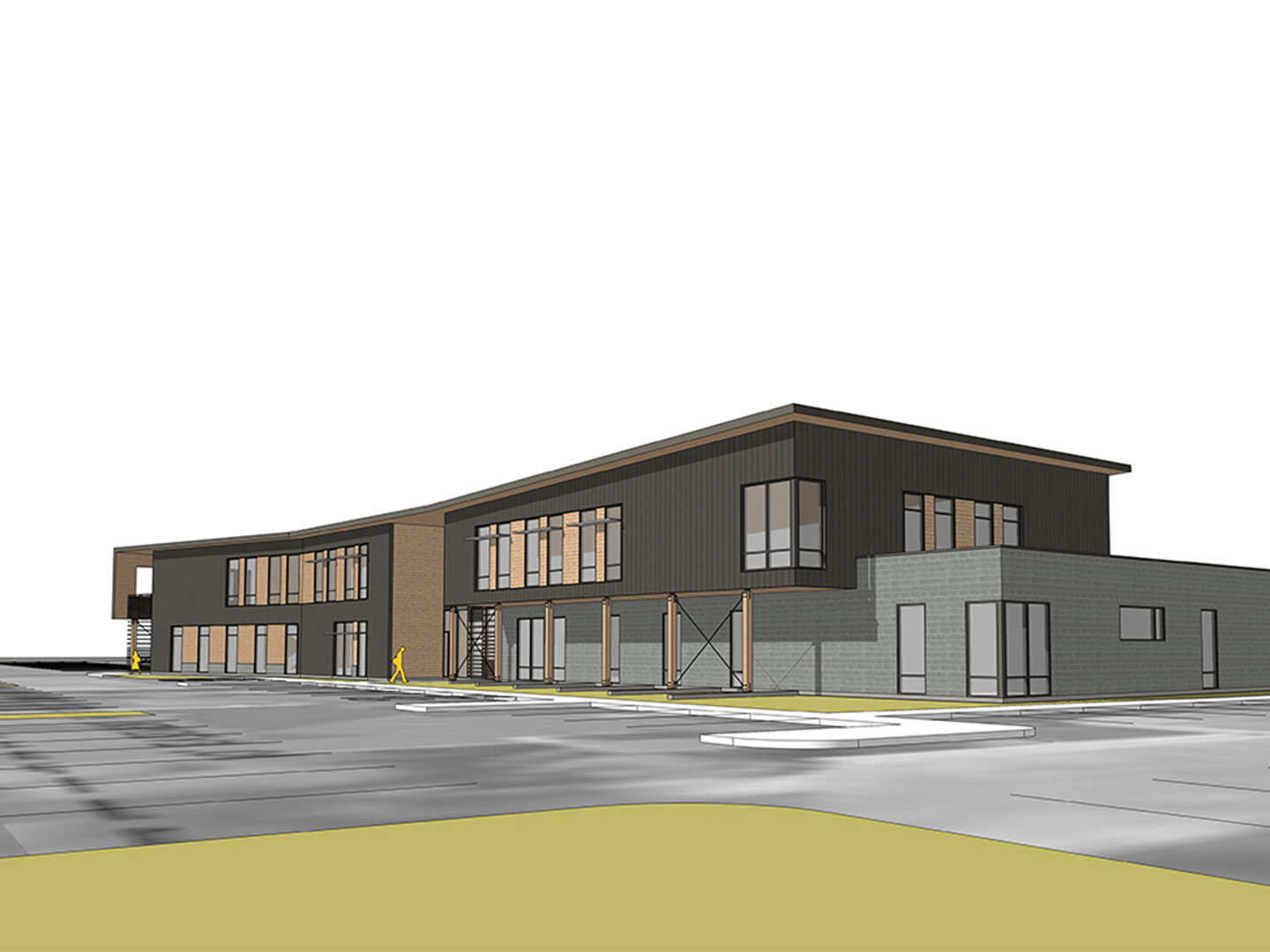
Banner – University Medical Center Tucson, the flagship academic medical center of Banner Health's southern Arizona operations and the primary teaching hospital affiliated with the University of Arizona College of Medicine, exemplifies the roofing complexity faced by major healthcare campuses throughout the region. A hospital roof is not merely a waterproofing layer—it is an integral component of a life-safety system that must maintain continuous protection over operating rooms, intensive care units, sterile processing departments, and critical care patient areas that cannot be temporarily abandoned, sealed off, or subjected to the water infiltration risk that even minor construction errors create in occupied commercial buildings.
Twenty-four-hour occupancy is the fundamental constraint that distinguishes hospital roofing from every other commercial roofing category. Banner UMC Tucson, like every acute care hospital, has patient care areas that are occupied and staffed every minute of every day throughout a construction project. There is no after-hours window during which noise, vibration, or temporary disruption of rooftop mechanical systems is acceptable without clinical impact assessment and infection control review. We conduct pre-project operational impact assessments with hospital facilities engineers and infection preventionists to identify all clinical adjacencies above and below the work area before finalizing construction sequences.
Infection control risk assessments are a mandatory pre-construction requirement at Arizona acute care hospitals. The ICRA process, governed by guidelines from the Association for Professionals in Infection Control and the requirements of Joint Commission accreditation standards, classifies construction activities by their potential to generate dust, vibration, and disruption that could affect immunocompromised patients. Roofing tear-off operations above occupied clinical spaces are among the highest-risk construction activities under the ICRA classification matrix. We participate in ICRA review, implement required dust containment and air pressure barrier measures, and document ICRA compliance in our project safety plans in formats acceptable to the hospital's infection prevention officer.
Membrane penetration management on hospital roofs is critical because each penetration represents a potential entry point for water—and water infiltration into a hospital environment triggers regulatory reporting obligations, joint commission deficiency findings, and potential patient care disruption that has institutional consequences far beyond the physical repair cost. We maintain a penetration registry for every hospital project we complete, documenting the location, type, size, and flashing detail of every penetration with photographic confirmation of installation quality. This registry becomes part of the facility's permanent roof documentation and is referenced during future maintenance and modification work.
Tucson's monsoon climate creates specific hospital roof management challenges. The brief, intense rainfall events characteristic of Arizona's summer monsoon can overwhelm aged drain systems in minutes and create ponding that is unacceptable above operating suites and pharmacy compounding areas. We assess drain capacity and overflow provisions against the Tucson design storm intensity before finalizing any hospital roof replacement scope, and we include drain upsizing or supplementary overflow scupper installations whenever existing drainage is inadequate to handle the 25-year storm intensity without exceeding the one-inch ponding threshold that causes structural loading concern.
Sterile field and clean room protection during roofing operations above critical hospital areas requires construction protocols that go beyond standard commercial practice. Vibration from tear-off equipment above sterile processing departments can dislodge ceiling tile particles that compromise sterile field integrity. We use selective demolition methods—sawing rather than impact tools where clinical spaces below require vibration minimization—and sequence roof deck exposures to avoid simultaneous wet weather risk above areas that cannot tolerate any water infiltration. These protocols are developed in collaboration with the hospital's facilities engineering team and are incorporated into the project safety plan reviewed by the infection control committee.
Rooftop HVAC equipment on Banner UMC Tucson and similar large hospital campuses is critical clinical infrastructure. Rooftop air handling units supply conditioned air to operating rooms, NICU, and isolation rooms that must maintain precise temperature, humidity, and pressure relationships as conditions of safe patient care. Any roofing work that could interrupt rooftop equipment operation or introduce contaminants into the HVAC system requires coordination with the hospital's facilities engineer and advance notification to clinical department managers whose patient care operations depend on the affected mechanical systems. We develop equipment shutdown and isolation protocols for every piece of rooftop mechanical equipment in the construction area before mobilizing.
Regulatory compliance documentation for hospital roofing extends beyond standard building permit requirements. Joint Commission accreditation requires that hospitals maintain documentation of all work performed on the physical environment, including roofing and waterproofing systems. CMS Conditions of Participation require that hospital physical environments be maintained in a condition that does not pose risks to patients. We provide project documentation packages formatted for Joint Commission physical environment compliance records, including ICRA documentation, contractor qualification evidence, and as-built drawings that satisfy the Environment of Care chapter documentation standards.
Long-term roof system management for Banner's Tucson campus and similar large healthcare facilities requires a multi-year capital planning approach that coordinates roofing replacement schedules with the hospital's broader facility master planning process. Hospital facilities departments plan capital expenditures on five to ten year horizons aligned with strategic facility plans, and roofing capital needs must be integrated into these planning cycles rather than addressed reactively when systems fail. We develop condition-based capital plans for hospital clients that identify replacement priorities by clinical risk, provide life-cycle cost analyses that support capital committee decision-making, and integrate with the hospital's CMMS asset management system to track roof condition against other facility assets.
- What is an ICRA and why does it apply to hospital roofing projects?
- An Infection Control Risk Assessment is a structured process required by Joint Commission and CMS standards that evaluates the infection risk posed by construction activities to vulnerable hospital patients. Roofing projects above occupied clinical areas are classified as Type C or D construction activities under the ICRA matrix, requiring the highest levels of dust containment, air pressure management, and construction traffic control. We participate in hospital ICRA review and implement required controls as a standard part of our project pre-planning.
- How do you protect operating rooms and sterile processing during roofing work above them?
- We use selectively phased demolition with vibration minimization methods above sterile areas, maintain positive-pressure air barriers at all construction access points, and avoid creating simultaneous weather exposure above critical clinical spaces. Specific ICRA-required barriers and controls are determined during the pre-project ICRA review with the hospital's infection prevention officer and may include temporary hard-wall containment, HEPA-filtered exhaust systems, and dedicated construction personnel entry and exit paths.
- What documentation do you provide for Joint Commission Environment of Care compliance?
- We provide ICRA documentation showing risk classification and required controls, contractor qualification evidence including licensure and safety training records, project completion documentation with as-built drawings, manufacturer warranty certificates, and material specifications in the formats required by the hospital's Environment of Care committee and facilities management system.
- How is HVAC equipment on a hospital roof managed during reroofing work?
- All rooftop equipment in the construction area is inventoried before project start, with clinical impact assessments for any unit that may require temporary shutdown. Equipment shutdown sequences and durations are approved by the hospital's facilities engineer and clinical leadership. We maintain coordination logs documenting when equipment was isolated, by whom, and when it was restored to service, creating a verifiable record of equipment management for Joint Commission and risk management purposes.
- How does the Tucson monsoon season affect hospital reroofing project scheduling?
- We schedule major membrane exposure and tear-off operations outside the July through September monsoon season whenever the hospital's capital planning timeline allows. When summer construction is unavoidable, we implement enhanced daily weather monitoring, maintain on-site temporary waterproofing capacity sufficient to protect all exposed clinical roof areas, and establish escalation protocols with the hospital's facilities duty officer so that emergency weather response decisions are made rapidly.
Frequently asked questions
Can you coat a BUR roof instead of replacing it?
Sometimes — and in Tucson it is often the right call when the substrate qualifies. We pull moisture cores before making any recommendation. If the insulation is dry, the gravel contact is intact, and there is no active blistering, a silicone coating system with the appropriate BUR primer is frequently the most cost-effective path: typically one-third the cost of tear-off and replacement, with a 10-15 year warranty from the coating manufacturer. If the insulation is wet, coating is not the answer and we say so.
How does Tucson's climate affect BUR faster than other markets?
Sustained UV at Index 11-plus for roughly five months of the year oxidizes the surface bitumen at a faster rate than in northern or coastal markets. The monsoon season then stress-tests seams and flashings that have been UV-cycled all summer. The combination accelerates alligatoring, flashing degradation, and gravel contact breakdown faster than manufacturer service-life tables — which are typically calibrated to moderate-climate exposure — predict. Annual inspection and maintenance is not optional on Tucson BUR systems; it is what determines whether the system reaches the end of its useful life on a planned schedule or fails on a monsoon emergency.
Is new BUR installation an option for Tucson commercial buildings?
Rarely, and we do not recommend it as a first choice. New BUR installation in the Tucson market has been largely supplanted by TPO and silicone coating systems that provide better reflectivity performance in the IECC Climate Zone 2B compliance environment. We can spec and install new BUR where a building's situation specifically requires it — but for most Tucson commercial buildings, a reflective single-ply system or a silicone restoration coating is the more defensible recommendation.
Aging BUR on a Tucson commercial building?
We will walk the roof, pull core cuts, and produce a written assessment — replace vs. coat vs. recover — with system options, installed cost bands, and warranty paths. No obligation.
Ready to talk through a roof?
Tell us about the building and the roof problem. We'll document it and put a plan in writing — with an honest repair-vs-replace recommendation and no upsell pressure.
Documented, repair-first commercial & industrial roofing across Tucson and Pima County. Flat and low-slope systems for occupied buildings, planned around your operation.
Services
© 2026 Commercial Roofing Contractors Tucson. All Rights Reserved. Privacy Policy · Terms of Use