
Life-Cycle Cost Analysis
Multi-decade commercial roof system cost modeling for Tucson buildings — Sonoran Desert UV degradation rates, silicone restoration LCC vs. full tear-off, and system option comparisons on a 20-to-40-year capital horizon.
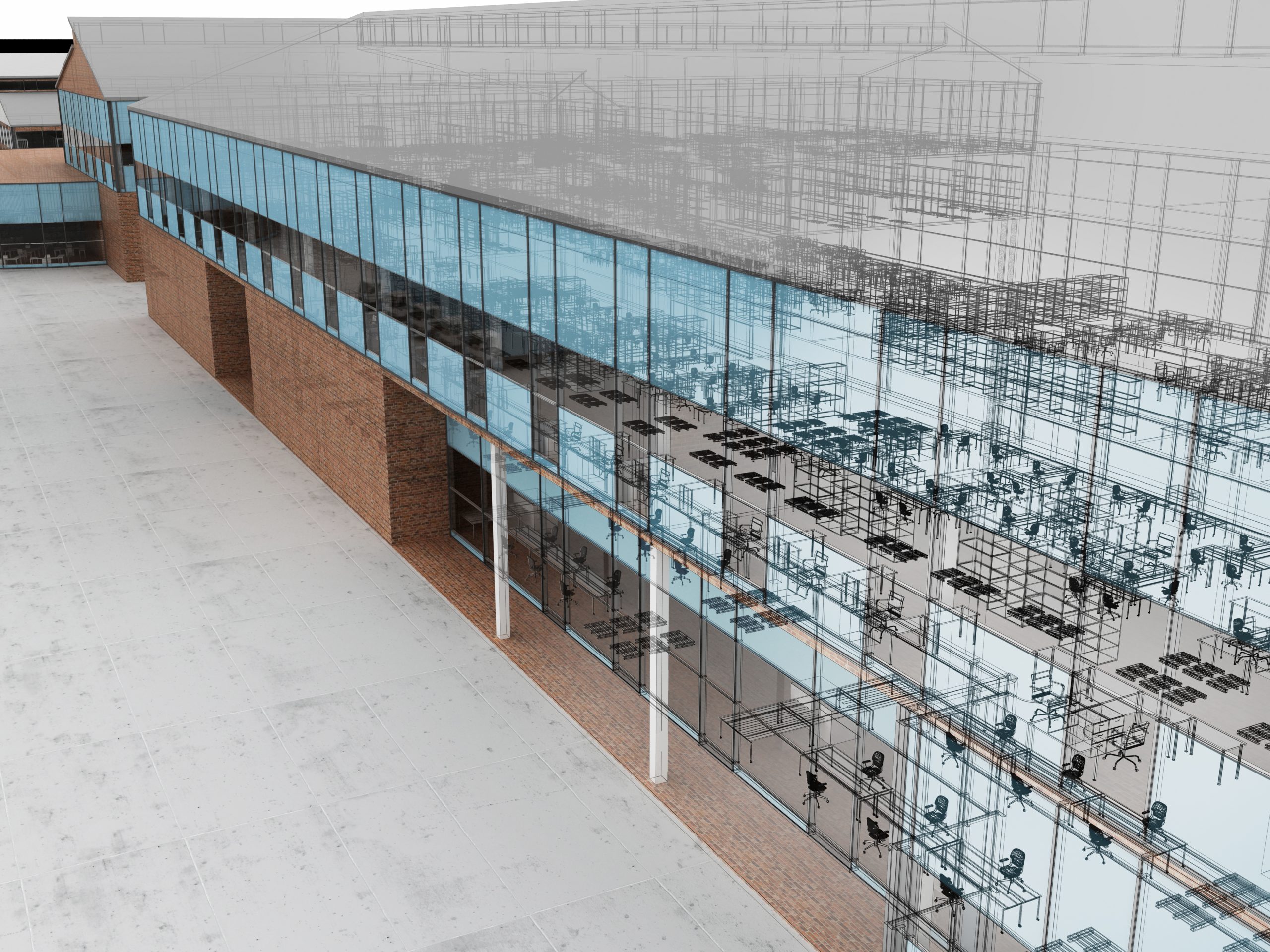
We model commercial roof systems over 20-to-40-year capital horizons for Tucson buildings — installed cost, maintenance, warranty costs, UV-accelerated repair events, and replacement or silicone restoration — so owners can compare options on total cost of ownership rather than bid-day price.
The cheapest commercial roof on bid day in the Tucson market is rarely the cheapest roof over a 30-year capital horizon. A 60-mil mechanically attached TPO system at $7.00 per sq ft installed might require a full replacement at year 15 in Sonoran Desert UV conditions because seam degradation under Climate Zone 2B UV load runs ahead of the manufacturer's moderate-climate service-life table. An 80-mil fully adhered TPO system at $8.00 per sq ft with a semi-annual maintenance program — including UV-seam documentation submitted to the manufacturer — might run to year 22 and into a silicone restoration option at roughly one-third of full replacement cost. The bid-day difference is $75,000 on an 80,000 sq ft roof. The lifecycle difference could be $350,000 or more.
Life-cycle cost analysis makes this comparison explicit and documented. We model the major cost events for each system option under consideration — installation, semi-annual maintenance over the warranty term, UV-accelerated emergency repair frequency specific to Sonoran Desert exposure, warranty cost, and end-of-life replacement or silicone restoration — and present total net present value over the modeling horizon the owner specifies.
Tucson commercial buildings have enough climate-specific cost history to model with real accuracy. We know the repair frequency on 60-mil mechanically attached TPO in Pima County UV-belt exposure because we have maintained buildings on that system through Sonoran heat cycles and monsoon seasons. We know that modified bitumen buildings in the midtown Tucson corridor installed in the late 1990s are generating replacement cycles now at $14 to $18 per sq ft installed. This Tucson-specific cost history makes our LCC models more accurate than what a national cost-reference guide would produce for this climate.
What Goes Into the Model for Tucson Buildings
Year-0 installation cost: Quoted from our scope against the same building specification for each system option under comparison, using actual current Tucson and Pima County pricing — not published reference guides. This includes membrane with IECC-required reflectivity value, insulation specification accounting for polyiso thermal drift at Sonoran rooftop temperatures, fasteners, flashings, drains, walkway pads, permits, and manufacturer warranty premium.
Annual maintenance cost: The documented maintenance cost for each system under the required manufacturer NDL maintenance program, plus our observed average corrective maintenance cost per square foot per year for that system type in Pima County UV and monsoon conditions. Sonoran Desert UV exposure inflates corrective maintenance costs above national averages for any surface-exposed system — we use Tucson-specific rates, not national reference averages.
Major repair events: Based on our maintenance records and project history, we model the expected capital events at years 7 to 10 (first major seam repair cycle on Sonoran-exposed TPO — earlier than moderate-climate tables predict), years 13 to 16 (second cycle, often requiring more extensive flashing replacement and possible insulation spot replacement at UV-stress zones), and years 18 to 22 (end-of-warranty-period assessment where silicone restoration eligibility is evaluated). Each event is probability-weighted against the actual building's inspection history where available.
Silicone restoration or replacement at end of life: We model two terminal scenarios — full tear-off replacement and silicone restoration coating over dry substrate. The silicone restoration scenario reduces future capital by 55 to 70 percent on a qualified Sonoran substrate and extends service life 10 to 15 years. The scenario is conditional on substrate qualification at the time of application; we flag the uncertainty and show sensitivity analysis on the probability that the substrate fails to qualify.
Net present value: All future costs discounted at the owner's specified discount rate. Most Tucson institutional owners use 5 to 7 percent discount rates for capital LCC models; we default to 6 percent unless otherwise specified.
System Options We Compare in the Tucson Market
60-mil mechanically attached TPO vs. 80-mil fully adhered TPO: The most common comparison on Tucson Class A commercial and medical-office buildings. The 80-mil fully adhered system has higher year-0 cost, longer warranty term (often 25 vs. 20 years), and lower average maintenance cost because fully adhered attachment reduces the seam-stress failure rate from Sonoran thermal cycling. On a 30-year LCC for a Tucson commercial building, the 80-mil fully adhered system is often lower total cost despite a higher bid-day price — the gap is larger in this climate than in moderate markets because the UV and thermal stressors that close the gap faster on the 60-mil system are more intense here.
White TPO or PVC vs. silicone restoration coating over existing membrane: For Tucson buildings where the existing membrane is intact and the insulation core data shows less than 15 percent saturation, a Sonoran-grade silicone restoration coating is the most cost-effective capital option on a 15-year horizon. The LCC comparison has to account for the probability that the existing substrate fails to support the coating application — we model this as a conditional branch in the analysis with explicit probability weighting based on the building's inspection history.
Single-ply recover vs. full tear-off on aging modified bitumen: For Tucson midtown and downtown buildings on aging modified bitumen or BUR systems, a single-ply recover (TPO or PVC mechanically attached over a cover board over the existing membrane) avoids tear-off and landfill disposal cost while delivering a new warranted system. The LCC comparison against full replacement depends heavily on insulation condition at the existing system — a recover over compressed, UV-cycled insulation without an added cover board does not perform the same as one over a sound substrate.
Presenting LCC Results to Tucson Owners and Capital Committees
We format LCC results for two audiences: the facilities manager who needs to understand what the model assumes and why, and the capital committee or asset manager who needs to approve capital spend. The facilities manager gets the full assumption table, sensitivity analysis, and the data behind each cost event. The capital committee gets a one-page summary: system options, 30-year NPV for each, the break-even horizon where higher initial spend starts returning positive NPV, and a recommendation.
For Tucson institutional owners — University of Arizona procurement, Pima County capital planning, Banner Health facilities — we can format the LCC model output to match the internal capital request template the owner uses. An LCC model that does not match the internal template gets revised by someone who does not know commercial roofing, and the revision often introduces errors that undermine the analysis. We match the format before delivery.
Frequently asked questions
How accurate is a 30-year LCC model for a Tucson commercial roof?
More accurate as a relative comparison between system options than as a prediction of absolute future costs. The model's value is ranking options — this system is likely to cost 18 to 25 percent less in total NPV than that system in Sonoran Desert conditions — not predicting your 2050 replacement cost to the dollar. We are explicit about the uncertainty range on every forward cost event and run sensitivity analyses on the Sonoran-specific assumptions that matter most: UV repair frequency, silicone restoration eligibility probability, and substrate qualification risk.
What data do you need from the owner to build the model?
Building footprint dimensions, current roof system type and approximate age, any condition documentation from prior inspections, historical maintenance and repair invoices if available, the owner's capital discount rate, and the intended planning horizon. We can build a model with limited owner data, but accuracy improves with actual cost history from the building — particularly repair invoices, which let us calibrate the corrective maintenance rate to the building's specific exposure rather than the market average.
Does the silicone restoration option always come out ahead in Tucson on a 15-year horizon?
Not always. The silicone restoration scenario depends on substrate qualification — dry insulation and an intact membrane that supports proper coating adhesion. If core data shows saturation above 15 percent, coating over the wet insulation voids the new warranty and traps moisture that accelerates deck corrosion under Sonoran heat. In those cases, full replacement is always the correct capital call regardless of the bid-day cost difference. We pull the cores before we model the restoration scenario.
How does the Sonoran Desert specifically affect LCC model inputs relative to other markets?
Three Tucson-specific factors inflate costs above national averages: UV exposure intensity (corrective maintenance and seam-repair events occur earlier in the system life cycle than moderate-climate tables predict), daily thermal cycling amplitude (higher flashing replacement frequency at parapets and expansion joints), and monsoon event intensity (drain maintenance and emergency dry-in costs are higher than in low-precipitation markets). We apply Tucson-specific cost history to each of these rather than using national reference rates.
Need a life-cycle cost model for a Tucson commercial roofing decision?
We will model the system options you are considering — including the silicone restoration vs. tear-off comparison for qualified Sonoran substrates — on a 20-to-30-year capital horizon and present the NPV comparison your capital committee can defend.
Ready to talk through a roof?
Tell us about the building and the roof problem. We'll document it and put a plan in writing — with an honest repair-vs-replace recommendation and no upsell pressure.
Documented, repair-first commercial & industrial roofing across Tucson and Pima County. Flat and low-slope systems for occupied buildings, planned around your operation.
Services
© 2026 Commercial Roofing Contractors Tucson. All Rights Reserved. Privacy Policy · Terms of Use