
Owner's Representative Roofing Services
We act as technical owner's representative on Tucson commercial roofing projects we are not bidding — reviewing contractor scopes, observing installation at high-risk milestones, and confirming warranty closeout on Pima County commercial buildings.
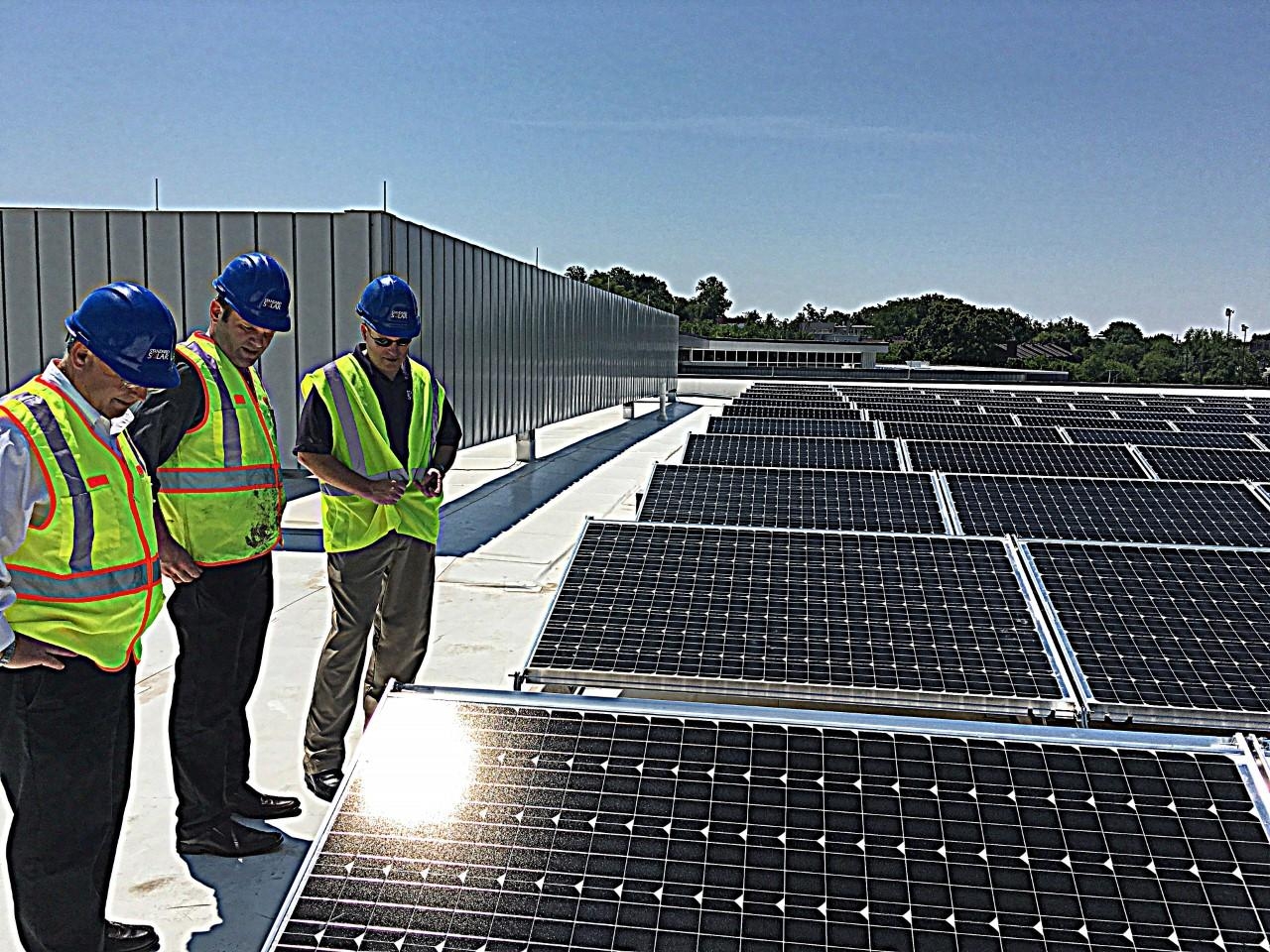
An owner's representative on a commercial roofing project is the person on the owner's side of the table who can read a manufacturer submittal, walk a roof during installation, identify a flashing detail deviation before it becomes a warranty failure, and escalate to the right person at the contractor or manufacturer when a deficiency needs to be resolved in real time.
Most Tucson building owners do not have this person internally. The property manager is managing tenant relationships. The asset manager is managing capital allocations. The facilities coordinator is managing every building system simultaneously. None of them necessarily knows why a parapet flashing that does not achieve the required turn onto the vertical face voids the manufacturer NDL warranty at the next inspection — or why a contractor who dry-in-skips an open roof section overnight during a July monsoon window has created an unquantified liability event.
We fill this role on projects where we are not the installing contractor. The arrangement is clean: we are retained by the owner at a fixed-engagement or hourly rate, we have no financial relationship with the installing contractor, and our only interest is that the project is installed correctly, documented completely, and closed out with a manufacturer warranty that will hold up through the Sonoran Desert's UV and monsoon cycle.
What Owner's Rep Engagement Covers on Tucson Projects
Pre-construction: We review the contractor's submitted scope, manufacturer submittals, and proposed material samples against the contract documents. On Tucson commercial projects, pre-construction submittal review most often surfaces: membrane reflectivity values that do not satisfy Arizona IECC 2018 Climate Zone 2B requirements, insulation substitutions that do not account for polyiso thermal drift at Sonoran rooftop temperatures, and proposed flashing details that do not match the manufacturer's published library for the specified system. These get resolved before installation begins.
During construction: We conduct field observation visits at defined milestones — insulation installation before membrane cover, membrane installation progress during the field and perimeter work, flashing detail completion at parapets and penetrations, drain installation. We also observe the monsoon dry-in protocol during the July-through-September window: any section torn off without being dried in the same day is a deficiency we document and report to the owner that day. Field observation is targeted to the points where deviations most commonly occur in this climate.
Closeout: We participate in the punch walk, verify that contractor-identified punch items match our field observation notes, confirm the manufacturer inspection is scheduled with the correct credentialed inspector, and review the closeout package — warranty document, photo log, roof zone diagram, maintenance contract, IECC reflectivity compliance documentation — before the owner accepts substantial completion.
The High-Risk Deviations We Find on Tucson Projects
Reflectivity value substitution: Contractors who swap a specified TPO or PVC product for a membrane with lower solar reflectance create an IECC 2018 compliance deficiency and reduce the membrane's expected service life in Sonoran UV conditions. This substitution often happens at the material-delivery stage without owner notification. We verify the submitted product data sheet against the specification at delivery.
Monsoon dry-in shortcuts: During July through September, the risk of interior water damage from an open roof section during a convective cell is real and rapid. Contractors who cannot maintain daily dry-in discipline for sections torn off in the morning are creating uninsured risk for the owner. We document the daily dry-in status on every visit during monsoon season.
Parapet flashing turn dimensions: Most manufacturer NDL warranties for Tucson commercial buildings require membrane to turn a minimum dimension onto the parapet vertical face. In Tucson's daily thermal cycling — ambient swings of 40 to 70 degrees — undersized parapet flashing turns fail in shear stress faster than in moderate climates. We verify flashing turn dimensions at every parapet during the flashing-completion observation.
Insulation R-value substitution under cover board: Contractors sometimes substitute a lower-density or lower-R insulation board than specified, covered by the correct cover board so the deviation is not visible at the surface inspection. We verify the insulation specification at delivery and at any accessible penetration or inspection port during installation.
When Owner's Rep Is Worth the Engagement Cost in Tucson
Projects above $250,000 installed value in Tucson generally have enough at risk to justify owner's rep engagement. A warranty-voiding installation deficiency on an 80,000 sq ft Tucson replacement means the owner carries an unwarranted roof through the full Sonoran UV and monsoon cycle without manufacturer backstop — for 20 years. The engagement cost is a rounding error relative to that exposure.
Healthcare buildings — Banner Health campuses, TMC HealthCare, St. Joseph's, Banner UMC South — have additional urgency. A construction deficiency on an occupied medical or hospital-adjacent roof that generates an interior leak during active clinical operations creates liability exposure that dwarfs the roofing project cost. We have a pre-construction protocol specifically for hospital-campus projects that covers hot-work permits, infection-control coordination, and off-hours scheduling.
Federal facility projects at DMAFB and Raytheon defense facilities require contractor credential verification and security documentation. Owner's rep engagement on these projects includes verification that the installing contractor's documentation satisfies DD Form 254 requirements and that any material staging or construction-access plan has cleared base security protocols before crew mobilization.
Frequently asked questions
How many site visits does owner's rep typically involve on a Tucson commercial project?
For a standard Tucson commercial replacement (60,000 to 100,000 sq ft, three to four weeks of production): typically four to six field observation visits plus pre-construction submittal review and punch walk participation. Projects during monsoon season add visits because the daily dry-in documentation requirement produces a higher observation cadence. Larger or more complex projects add visits at the decision points where risk is highest.
Can you do owner's rep on a project where you also wrote the RFP?
Yes. Writing the RFP and acting as owner's rep during construction are both owner-side roles with no conflict. Continuity from RFP through construction actually reduces scope drift risk because the same team that wrote the specification is verifying compliance against it — including the Sonoran Desert-specific items like reflectivity requirements and monsoon dry-in protocol.
What is your authority on site?
Advisory. We can direct the owner to stop work — we do not issue stop-work orders to the contractor directly. If we observe a critical deficiency, we document it in writing, notify the owner's designated representative immediately, and recommend a specific corrective action. In practice, a written deficiency notice from an independent technical observer is usually sufficient to get contractor attention without the formal stop-work escalation.
Do you coordinate with the manufacturer's field rep during construction?
Yes. On Tucson projects with active manufacturer warranty paths, we coordinate with the manufacturer's regional field rep to confirm the installation is tracking toward warranty eligibility. Most manufacturers will conduct a mid-project field visit on large projects if requested — this is worth doing on projects above $400,000 where the warranty closeout represents a significant financial stake for the owner.
Need a technical owner's rep on a Tucson roofing project?
We will review submittals for IECC reflectivity compliance and Sonoran Desert insulation specification, observe the installation at high-risk milestones including monsoon dry-in discipline, and confirm that the closeout package actually supports the manufacturer warranty you paid for.
Ready to talk through a roof?
Tell us about the building and the roof problem. We'll document it and put a plan in writing — with an honest repair-vs-replace recommendation and no upsell pressure.
Documented, repair-first commercial & industrial roofing across Tucson and Pima County. Flat and low-slope systems for occupied buildings, planned around your operation.
Services
© 2026 Commercial Roofing Contractors Tucson. All Rights Reserved. Privacy Policy · Terms of Use