
Commercial Roof Zone Mapping in Tucson
Roof zone diagrams for Tucson commercial buildings — the permanent reference system that makes every inspection, repair, and capital report useful and comparable across ownership transitions and institutional staff changes.
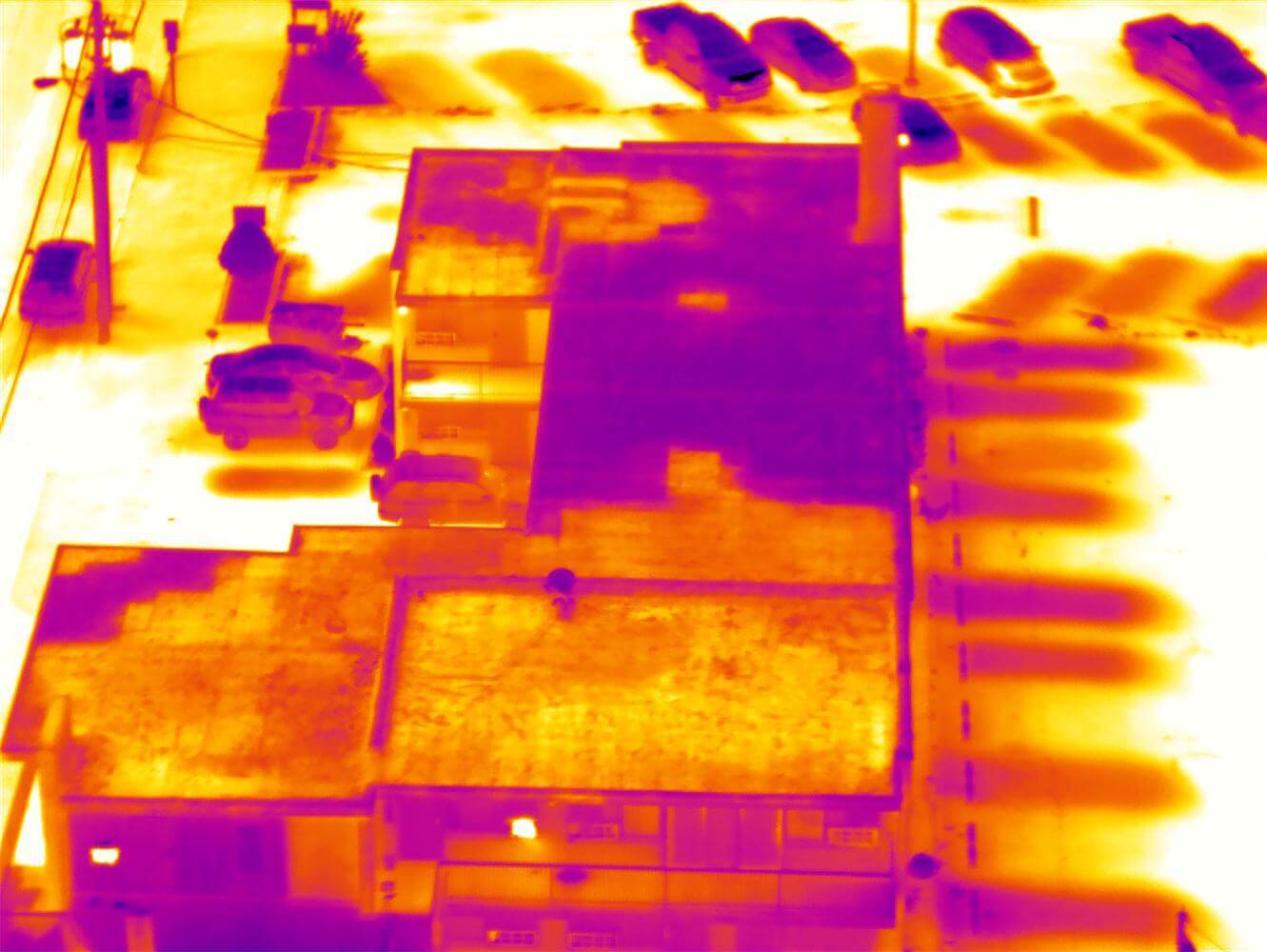
Every inspection report, condition record, and capital document we produce for a Tucson commercial building is anchored to a zone diagram specific to that building. The diagram does not depend on institutional memory — it survives staff transitions at Pima
A photograph of a parapet flashing failure is not useful documentation if you cannot locate it on the roof. An inspection report that references moisture intrusion at the southeast mechanical curb is not useful if the building has four mechanical curb clusters and no reference system for which one the report is describing. Zone diagrams solve this problem by creating a numbered reference system for every section of the roof — a reference that every subsequent report, repair record, and capital document can anchor to.
Zone mapping is the first step on every building we add to our inspection program. Before the first inspection report is produced, we create a zone diagram keyed to the building's actual roof layout — physical dimensions, drain and scupper locations, mechanical equipment positions, parapet geometry, expansion joints, roof access points, and any rooftop features that define physical boundaries within the roof area. Zones are numbered sequentially and sized to meaningful physical boundaries: an expansion joint separates zones, a drain cluster defines a zone, a mechanical equipment island defines a zone.
In Tucson's institutional building market, zone mapping has operational significance beyond documentation tidiness. UA Facilities Management maintains records across hundreds of buildings on the main campus and UA Tech Park. Pima County's asset management programs track facilities across the county. Raytheon's campus facilities team coordinates with federal contractor requirements for documented asset records. DMAFB contractor coordination programs require documentation that can be reviewed by changing base operations personnel who have no prior relationship with the building. The zone diagram is what makes that documentation navigable by someone who has never been on the roof.
How Zone Diagrams Are Built
We start with the building's roof plan if one is available — from the original permit set, the as-built drawings, or the facility team's records. For buildings on UA campus or Pima County properties where facility records are maintained, the as-built drawings are often available through the facilities management system. For private commercial buildings where no plans exist, we measure the roof geometry on-site. The diagram is drawn to scale with roof section areas labeled in square feet per zone, drain and scupper locations marked, rooftop equipment positions marked, and access points noted.
Zone numbering follows a consistent convention: zones run north-to-south and west-to-east, numbered sequentially so that zone 1 is always the northwest-most primary section. Sub-zones within a main zone are designated with letter suffixes — zone 3A for the field membrane, 3B for the parapet return within that section, 3C for the drain detail. This gives us both zone-level and sub-zone-level reference for conditions that need individual tracking. Parapet sub-zones are particularly useful in Tucson, where parapet flashing deterioration and field membrane condition often diverge significantly on the same roof section due to the differential UV exposure of vertical versus horizontal surfaces.
For buildings with multiple roof levels — a main roof plus a lower mechanical penthouse, a covered walkway, or a connected building wing — each level gets a separate zone diagram with a building-level prefix. Main roof zones are '1-' prefixed, lower-level zones are '2-' prefixed, preventing zone-number collisions across a complex building footprint. This matters on Tucson medical and research buildings, which often have connected structures at different elevations with separate roof systems.
Photo-Keyed Documentation
Every photo in every inspection report is labeled with the zone number and a brief defect descriptor. Photos are organized in the report by zone number so a reader navigates the report geographically — find zone 7 on the diagram, go to the zone 7 section of the photo log, see every photo from that zone in sequence. This organization is what makes the report usable by a capital committee member, an insurance adjuster, or a manufacturer warranty field inspector who has not been on the roof.
We photograph every zone on every inspection, including zones in good condition. The absence of defect is documentation. In Tucson, where seam degradation from UV exposure can advance significantly between annual inspections, a clean zone 7 seam photograph from the pre-monsoon inspection is useful when the post-monsoon inspection finds seam separation in the same zone — the trend data shows when the deterioration appeared, which supports both the repair decision and any insurance claim that the monsoon event generates.
For Tucson buildings where UV-exposed parapet flashings are the primary maintenance concern, we photograph every parapet run by zone on every inspection. The year-over-year record of parapet flashing condition is the most useful capital-planning data on these buildings — it shows the rate at which flashing membrane is oxidizing and contracting, which determines how far ahead of failure the replacement needs to be scheduled.
Permanence Across Tucson's Institutional Turnover
Tucson's institutional building market experiences significant staff and management turnover. University of Arizona Facilities Management handles construction and maintenance for over ten million square feet of campus building — staff assignments change, project managers rotate between buildings, and institutional knowledge about any specific building's roof condition is often held by individuals who leave before the condition becomes critical. Pima County facilities programs face similar continuity challenges across their distributed portfolio.
The zone diagram and the full inspection history indexed to it do not depend on any individual's memory of the building. A new Pima County facilities manager assigned to a building we have maintained for six years receives the full condition record — zone diagram, inspection history, repair log — in a format they can navigate without a briefing from their predecessor. The capital recommendation we produce at the end of that six-year record is not a claim about what the building needs; it is a documented trend derived from a consistent reference system that the new manager can verify against the photographs.
We maintain the zone diagram and the full inspection record for every building in our program regardless of ownership or management transitions. When a building in our program changes hands — a common occurrence in Tucson's private commercial market and in the transition of leased government facilities — the condition record is available to the new owner's due-diligence team or facility manager on request. The zone diagram does not change with ownership. The same reference system applies to the new owner's first inspection as it did to the prior owner's last one.
Frequently asked questions
Do you produce zone diagrams for buildings you did not install?
Yes. The zone diagram is a documentation tool, not a record of who installed the roof. When we take over an inspection program for a building where we were not the installer — which is the typical case for existing Tucson commercial buildings entering our program — the first service is producing the zone diagram and conducting the baseline inspection keyed to it. The diagram is based on the actual current roof configuration, which may differ from any prior as-built drawings.
What happens to the zone diagram after a roof replacement?
The diagram is updated at replacement closeout to reflect any changes to the roof's physical configuration — new drain locations, equipment repositioning, added penetrations, or changes to parapet geometry. The prior diagram and inspection history are archived in the replacement closeout package as the pre-replacement condition record. The updated diagram then starts the new inspection cycle. For Tucson buildings with silicone coating projects rather than full replacements, we note the coating application on the zone diagram and update the condition baseline, but the zone reference system does not change.
How is the zone diagram useful when DMAFB or institutional records are audited?
Federal contractor programs at DMAFB and institutional asset management programs at Pima County or UA require documentation that can be reviewed by parties who were not present during the original inspection. A zone-keyed condition record with photographs indexed to a consistent reference system supports that audit function — the reviewer can locate any finding on the diagram, see the photograph that documents it, and verify the scope-column recommendation against the photographic evidence. A narrative report without a zone reference system does not support that review.
Can you integrate zone diagrams with a building management or facilities system?
The zone diagram and zone-keyed inspection record are exportable as PDFs with consistent zone nomenclature that can be used as asset IDs in a CMMS or facilities management system. UA Facilities Management, Pima County facilities programs, and private CMMS platforms handle the import on their side — we provide the documentation in the format the system requires. Contact us at 520-523-6122 to discuss the specific format your facilities system needs.
Get a zone diagram and inspection baseline for your Tucson building.
We produce the zone diagram on the first visit and start the inspection record that makes every subsequent report comparable and usable — through ownership transitions, staff changes, and monsoon seasons. Call 520-523-6122 or use the form.
Ready to talk through a roof?
Tell us about the building and the roof problem. We'll document it and put a plan in writing — with an honest repair-vs-replace recommendation and no upsell pressure.
Documented, repair-first commercial & industrial roofing across Tucson and Pima County. Flat and low-slope systems for occupied buildings, planned around your operation.
Services
© 2026 Commercial Roofing Contractors Tucson. All Rights Reserved. Privacy Policy · Terms of Use