
REIT Roofing Services in Tucson, AZ
Commercial roofing programs for REITs and institutional real estate investors managing commercial property portfolios throughout Tucson, AZ.
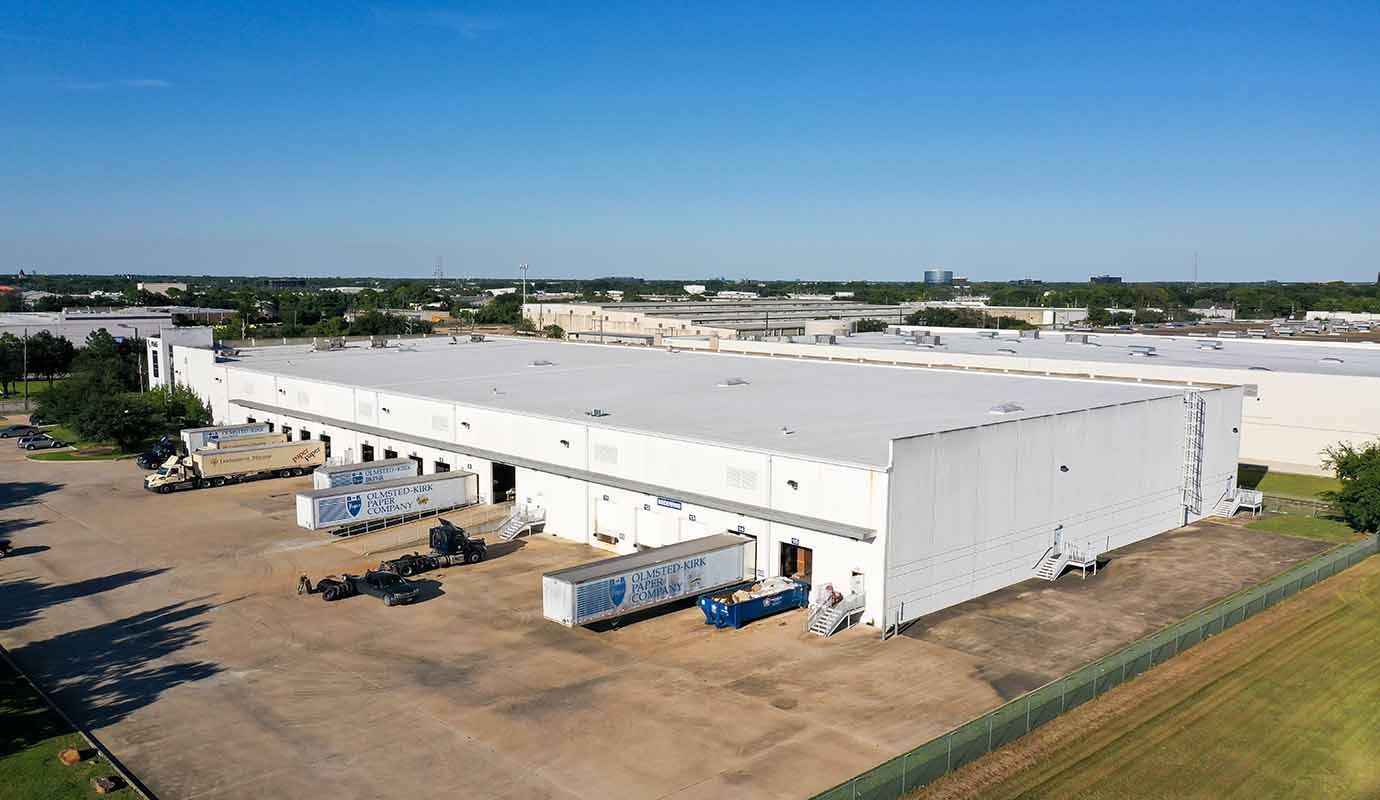
Broadstone Net Lease and other diversified net-lease REITs have expanded their single-tenant retail and industrial presence in Tucson, Arizona, attracted by the city's defense industry employment base, University of Arizona anchor, and steadily growing logistics sector along the I-10 corridor. Tucson's commercial real estate market occupies a secondary position relative to Phoenix, but for REITs focused on value-add net lease and industrial opportunities, that secondary status translates into better initial cap rates and meaningful upside as population growth and the semiconductor supply chain expansion reach southern Arizona. In this context, roofing decisions are not simply maintenance issues — they are asset management variables with direct implications for underwriting accuracy and long-term NOI performance.
Tucson's desert climate creates roofing challenges that are fundamentally different from coastal or Great Lakes markets. The Sonoran Desert subjects commercial roofing systems to some of the most intense UV radiation in North America, with clear-sky solar exposure exceeding 350 days per year. Ultraviolet degradation is the primary failure mechanism for standard TPO and EPDM membranes in Tucson, breaking down the polymeric matrix and causing surface chalking, brittleness, and eventually cracking at seams and penetrations. Most single-ply manufacturers offer enhanced UV-stabilized formulations at a cost premium, and REIT asset managers specifying new roofing installations in Tucson should verify that these formulations are being installed rather than standard-grade membranes priced for temperate climates.
Thermal cycling in Tucson's high desert is extreme by commercial roofing standards. Summer surface temperatures on dark membranes can exceed 180 degrees Fahrenheit, while clear desert nights in winter can drop to the low 20s, creating daily temperature swings that drive repeated expansion and contraction across every linear foot of membrane and flashing. These cycles concentrate stress at seams, terminations, and penetrations — the same locations where most low-slope roof failures originate. Tucson's commercial building stock, including the large-footprint retail centers and industrial buildings that anchor REIT portfolios here, requires more frequent seam and penetration inspections than comparable buildings in moderate climates.
The monsoon season introduces a second climate stressor that is frequently underestimated by REIT asset managers who associate Arizona with dry conditions year-round. From July through September, Tucson receives over half of its annual 12 inches of precipitation in intense convective storms that can deposit an inch of rain in 30 minutes. Roof drains and scuppers sized for typical rainfall rates can be overwhelmed by monsoon events, creating ponding that stresses membrane seams and forces water into failed flashing at a rate that exceeds what the same roof would experience with slow, sustained precipitation. Property condition assessments performed in Tucson should specifically evaluate drain capacity adequacy for monsoon-intensity events, not just standard Arizona precipitation assumptions.
Roof condition's impact on NOI in Tucson's net-lease REIT portfolio operates through several channels. For triple-net leases, tenants bear direct maintenance costs, but roof structure and waterproofing are typically landlord obligations even in NNN arrangements. When a roof fails prematurely due to deferred maintenance or incorrect specification at installation, the REIT bears replacement costs that were not in the acquisition underwriting. For gross-lease and modified-gross industrial and retail assets, a failing roof creates direct expense line exposure. In either case, UV-degraded or monsoon-damaged roofs that generate tenant complaints or lease amendment conversations erode the quality of income streams that net-lease investors are underwriting.
Master service agreements with Tucson-area commercial roofing contractors give REIT asset managers the response capability to address monsoon damage and UV degradation systematically rather than reactively. The Tucson contractor market includes firms experienced with the UV-stabilized systems and coatings appropriate for the desert environment, and an MSA that specifies these systems for all replacement and maintenance work eliminates the risk that a one-off emergency contractor installs a standard-grade membrane that will fail in 8 years instead of the 20-year design life. Portfolio programs also enable the REIT to schedule preventive coating applications on roofs approaching the 10-year mark, extending useful life and deferring the capital outlay of full replacement.
Ten-year CAPEX models for Tucson commercial portfolios should incorporate an accelerated degradation factor relative to manufacturer warranty tables that were developed for temperate climate norms. A TPO membrane with a 20-year manufacturer warranty in Cleveland may have an effective useful life of 14 to 16 years under Tucson UV conditions if installed with standard formulation and without a UV-protective coating maintenance program. Asset managers who use climate-adjusted life expectancy tables when building Tucson-specific CAPEX models produce more accurate reserve projections and avoid the reserve shortfall conversations that arise when roofs fail before their projected replacement dates.
Property condition assessments before Tucson acquisitions close should be conducted in fall or spring, when surface temperatures are accessible for hands-on seam testing without the extreme heat of summer making inspection dangerous and equipment unreliable. The PCA should include tensile strength testing at seams to identify UV-embrittled membrane that is still visually intact but has lost structural integrity, a drain capacity analysis, and a thermal imaging scan conducted at night following a sunny day to capture heat retention patterns in wet or compromised insulation layers. Tucson's monsoon history and UV exposure both justify a more thorough PCA roofing scope than a buyer might commission in a less challenging climate.
Tucson's commercial roofing market is maturing alongside the city's growth as a secondary industrial hub. Defense sector expansion at Davis-Monthan Air Force Base, semiconductor supply chain investment in southern Arizona, and ongoing University of Arizona-related commercial development are all adding new roof area to the REIT-owned inventory. Property owners who establish professional roofing programs — with documented inspection histories, climate-appropriate material specifications, and contractor relationships secured through multi-year MSAs — are building asset portfolios that will underwrite favorably when exit opportunities arise in this growing market.
- How do portfolio roofing programs work for REITs in the Tucson market?
- Tucson REIT portfolio programs typically establish an MSA with a contractor experienced in desert commercial roofing, specifying UV-stabilized membrane systems for all new work, annual post-monsoon and spring seam inspections, and preventive coating applications at defined roof age intervals. The MSA also covers monsoon emergency response, ensuring that active damage is assessed and temporary waterproofing is installed within hours of a damaging storm.
- How does UV degradation affect NOI for Tucson commercial REIT assets?
- UV degradation shortens effective membrane life, which accelerates the replacement cycle and increases CAPEX frequency. For NNN-leased assets, unexpected replacement costs erode the spread between in-place lease income and actual operating costs. For gross-leased assets, tenant disruption during roof failures creates abatement exposure. Preventive coating programs that extend membrane life by 5 to 7 years beyond UV-degraded replacement timelines directly protect NOI by deferring capital expenditure.
- What should a 10-year CAPEX model include for a Tucson commercial portfolio?
- The model should apply a climate-adjusted useful life factor to all installed membranes, reducing standard warranty life by 20 to 30 percent for UV exposure. It should include a preventive coating budget for roofs in years 8 through 12, full replacement budgets for roofs exceeding adjusted useful life, annual post-monsoon inspection costs, and a drain capacity evaluation budget for any assets with documented ponding history.
- What does a PCA need to cover for roofing on a Tucson commercial acquisition?
- A Tucson PCA should include seam tensile strength testing to detect UV embrittlement, a drain capacity analysis for monsoon-intensity events, a nighttime thermal imaging scan for moisture detection, and a UV degradation assessment of the installed membrane system. The PCA should be timed for fall or spring to avoid extreme summer heat that makes physical inspection unsafe and thermal scanning less reliable.
- Why is an MSA particularly valuable for Tucson commercial portfolios?
- Monsoon season creates short-window emergency demand that overwhelms contractor capacity across the entire Tucson market simultaneously. An MSA with committed monsoon emergency response terms ensures that a REIT's assets are inspected and temporarily waterproofed before smaller or uncontracted property owners consume available crew capacity. The MSA also ensures that UV-appropriate material specifications follow the portfolio to every project, regardless of which technician is dispatched.
Frequently asked questions
Can you work on a live Tucson data center without interrupting cooling systems?
Yes, but it requires the facility manager's active involvement in production scheduling. We build our sequence around the cooling system's maintenance windows and planned low-load periods. We never unilaterally shut down or disturb any mechanical penetration without the facility's written approval for that specific action on that specific date. In Tucson's summer, when cooling systems have no thermal margin, we defer work around active cooling infrastructure to the October-through-April window whenever possible.
How do you handle fiber conduit penetrations at a Tucson data center roof?
We log every fiber conduit penetration before production begins. Each one gets stripped to the deck, a properly-sized pitch pan or curb flashing installed to manufacturer specification, and a secondary water stop placed inside the conduit bore to prevent monsoon-season water intrusion through the conduit path itself. We photograph the completed detail and include it in the penetration manifest delivered at closeout. Crew members are instructed to not route tools or equipment across conduit bundles.
Does Tucson's monsoon season create specific risks for data center roofs?
Yes. A data center roof that has been baking under Sonoran Desert heat all summer faces its greatest water-infiltration risk during the first intense monsoon events of July — membrane seams thermally stressed, sealants dried, parapet flashings near the end of their cycle. Pre-monsoon inspection and drain clearing in June is the most cost-effective protective measure for any Tucson data center. We document drain condition, probe-test exposed seams, and produce a written pre-monsoon punch list as part of our annual maintenance program.
Do you handle data centers at the UA Tech Park?
Yes. UA Tech Park buildings on Rita Road range from standard commercial office to mission-critical computing and defense-sector R&D environments. We coordinate work schedules with individual tenant security requirements, obtain required contractor registrations before mobilization, and document access coordination in the project pre-construction record. UA Facilities Management requirements apply to buildings managed under the Tech Park's university oversight framework.
Need a roofing scope for a Tucson data center or tech facility?
Our project managers will walk the roof, inventory penetrations, and produce a written scope that accounts for your
Ready to talk through a roof?
Tell us about the building and the roof problem. We'll document it and put a plan in writing — with an honest repair-vs-replace recommendation and no upsell pressure.
Documented, repair-first commercial & industrial roofing across Tucson and Pima County. Flat and low-slope systems for occupied buildings, planned around your operation.
Services
© 2026 Commercial Roofing Contractors Tucson. All Rights Reserved. Privacy Policy · Terms of Use