
Multifamily Roofing in Tucson
Commercial flat-roof replacement and maintenance for Tucson multifamily buildings — UA-adjacent student housing, Foothills mid-rise, and Sahuarita and Vail garden-style apartment communities — with resident-notification protocols and monsoon dry-in discipline.
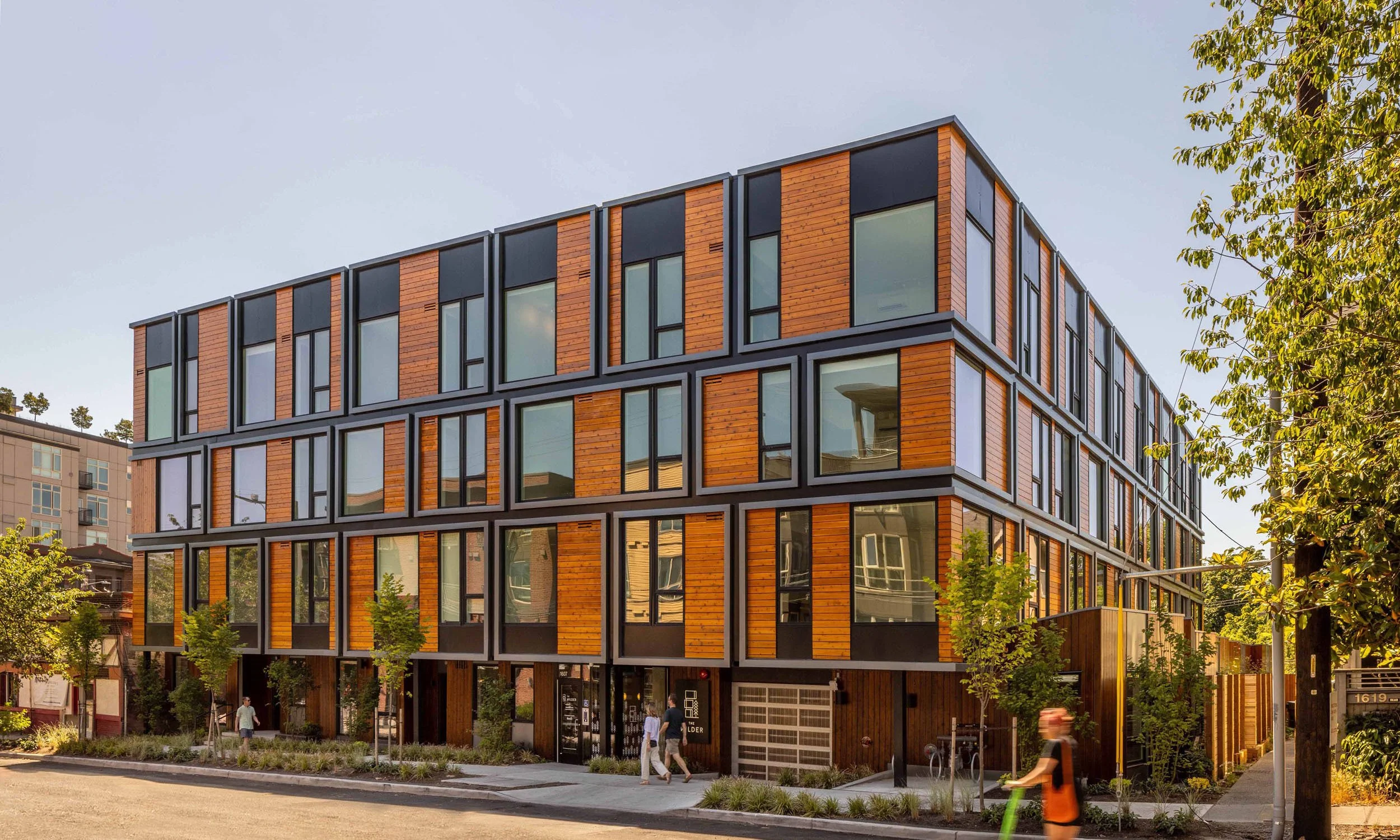
Tucson's multifamily inventory spans three distinct markets: high-occupancy student housing adjacent to the University of Arizona campus along University Boulevard and Highland Avenue, mid-rise residential and mixed-use buildings in the Foothills and downtown submarkets, and the expanding garden-style apartment communities in Sahuarita and Vail serving Tucson's southern growth corridor.
Multifamily roofing in Tucson presents a combination of constraints that distinguish it from commercial office or retail work. Residents live in the building around the clock, which means there is no 'off-hours' window when the space below the active work area is unoccupied. The UA-adjacent student-housing corridor along University Boulevard, Highland Avenue, and the streets immediately north of campus packs high-occupancy buildings into dense urban blocks — material staging, parking for crew vehicles, and debris removal all compete with the surrounding residential neighborhood.
Foothills mid-rise residential — the condominium and apartment towers along North Campbell Avenue, East Skyline Drive, and the Ventana Canyon corridor — brings a different constraint: elevation, architectural quality, and homeowner association oversight that extends to every aspect of how a contractor operates on the property. A 10-story residential building in the Catalina Foothills has HOA management that reviews the project plan, schedules the resident notification, and monitors contractor compliance throughout the project. The roof replacement is as much a community-relations exercise as a construction project.
Sahuarita and Vail garden-style apartment communities — driven by residential growth along the State Route 83 and I-19 corridors south of Tucson — represent a third category: large-footprint two- and three-story garden-apartment buildings on standard flat-roof construction with lower per-unit density but wide geographic distribution across the growing southern Pima County market. These communities have property management companies that often oversee multiple properties and want consistent documentation and scheduling protocols across their entire Tucson portfolio.
UA-Adjacent and Dense Urban Multifamily
Student housing adjacent to the University of Arizona operates at near-100-percent occupancy during the academic year (late August through May) and at reduced but not zero occupancy during summer. The UA academic calendar creates a short window — typically mid-May through late July — when occupancy drops enough to permit intensive roof work without maximum resident disruption. We identify this window for UA-adjacent multifamily owners when discussing project timing and build the production schedule around it.
Material staging and debris removal in the UA neighborhood requires coordination with the City of Tucson for any street or alley use. Many UA-adjacent multifamily buildings have no on-site laydown area — material must be staged on the street or in the alley under a temporary use permit. We manage the permit process as part of project setup. Debris containment during tear-off uses vacuum-equipped equipment that avoids open-top dumpsters staged in resident parking or pedestrian areas.
Resident notification for UA-adjacent properties goes through the property manager and then to individual unit tenants. We provide the property manager with a written resident notification template — covering the project scope, expected daily work hours, parking impacts, and the emergency contact number — at least 10 days before production start. Same-day work scope updates go to the property manager each afternoon for communication to residents the following morning.
Foothills Mid-Rise and HOA-Governed Residential
Mid-rise residential buildings in the Catalina Foothills and Foothills submarkets typically operate under HOA governance with a board that must approve the roof-replacement contractor, the project schedule, and the resident-communication plan before mobilization. The HOA review process varies by community — some require only board approval, others require unit-owner notification and a comment period. We allow six to eight weeks for HOA review and approval in our pre-construction timeline for Foothills mid-rise projects.
Elevation in the Foothills submarket — 2,800 to 3,200 feet — means higher UV Index values than the Tucson basin average and more intense monsoon rainfall from orographic lift off the Santa Catalinas. We account for elevation in our remaining-service-life assessments and in the monsoon dry-in section-sizing protocol. For a 200-unit Foothills mid-rise in July or August, the monsoon protocol is the same as every other Tucson project: no section open overnight, daily tear-off sized to same-day dry-in capacity.
Foothills mid-rise buildings often have amenity decks — pool decks, outdoor terrace surfaces, or roof-level common areas — that interface with the roofing system at transitions and drains. We document all amenity-deck transitions during the inspection walk and include their condition and the proposed transition detail in the project scope. Amenity-deck drainage failures are a separate failure mode from field-membrane failure and require a different repair approach.
Sahuarita and Vail Garden-Style Apartment Roofing
Garden-style apartment communities in Sahuarita and Vail are typically constructed in two- and three-story wood-frame buildings with lightweight concrete or OSB roof decks and standard flat-roof membrane systems. Most communities in this submarket were built in the 2000s through 2020s and are reaching their first major reroof or intensive-maintenance milestone. The key challenge is scale — a 300-unit garden-style community in Sahuarita may have 40 separate residential buildings across a large campus, each requiring individual inspection and scope.
We assess garden-style multifamily portfolios with a building-by-building condition report that prioritizes replacement by moisture saturation, membrane degradation, and remaining service life — so that a property management company with a fixed annual capital budget can allocate repairs to the buildings with the most urgent conditions first. Moisture-core data and infrared scan results drive the prioritization, not visual inspection alone.
Permit requirements for Sahuarita and Vail multifamily roofing follow Town of Sahuarita or unincorporated Pima County jurisdiction depending on parcel location. We identify applicable jurisdiction for each building before permit submittal and manage the process as part of project setup.
Frequently asked questions
When is the best time to schedule a UA-adjacent multifamily reroof in Tucson?
Mid-May through late July is the optimal window for UA-adjacent student housing — occupancy drops after the spring semester and before fall move-in. This window also partially overlaps with early monsoon season (late July), so we stage production to complete the most critical sections before July 15 and transition to monsoon dry-in protocol for any remaining work. We plan the full production schedule around the academic calendar before contract signing.
How do you handle HOA approval for Foothills mid-rise residential reroofs?
We allow six to eight weeks for HOA review and approval in our pre-construction timeline. We provide the HOA board with the project scope, the contractor license and insurance documentation, the production schedule, and the resident-notification plan in a format suitable for board review. If the community requires unit-owner notification and a comment period, we build that into the timeline. We do not set a mobilization date before HOA approval is in hand.
How do you prioritize buildings in a large Sahuarita or Vail apartment portfolio?
We prioritize by moisture-saturation data from core pulls and infrared scanning, membrane degradation severity, drain condition, and remaining service life estimate. The building-by-building condition report assigns a priority tier to each building so the property management company can allocate capital to the most urgent conditions first. We present the prioritization in writing with the data that supports each building's tier assignment.
How do residents stay informed during a multifamily reroof?
Resident notification goes through the property manager. We provide a written resident notification template at least 10 days before production start, covering work hours, parking impacts, and the emergency contact for roof-related concerns. Same-day scope updates go to the property manager each afternoon for next-day communication to residents. Any unexpected water event is reported to the property manager immediately by phone, regardless of severity.
Get a multifamily roof assessment for your Tucson apartment community.
Our project managers will walk and core every building, produce a prioritized condition report, and build a production schedule around your resident calendar, HOA requirements, and the UA academic year.
Ready to talk through a roof?
Tell us about the building and the roof problem. We'll document it and put a plan in writing — with an honest repair-vs-replace recommendation and no upsell pressure.
Documented, repair-first commercial & industrial roofing across Tucson and Pima County. Flat and low-slope systems for occupied buildings, planned around your operation.
Services
© 2026 Commercial Roofing Contractors Tucson. All Rights Reserved. Privacy Policy · Terms of Use