
Standing Seam Metal Roofing in Tucson, AZ
Standing seam metal roofing for Tucson commercial buildings — Galvalume and Kynar-painted systems engineered for Sonoran Desert UV loads, thermal expansion at 175°F rooftop temperatures, and 40-year substrate warranty paths.
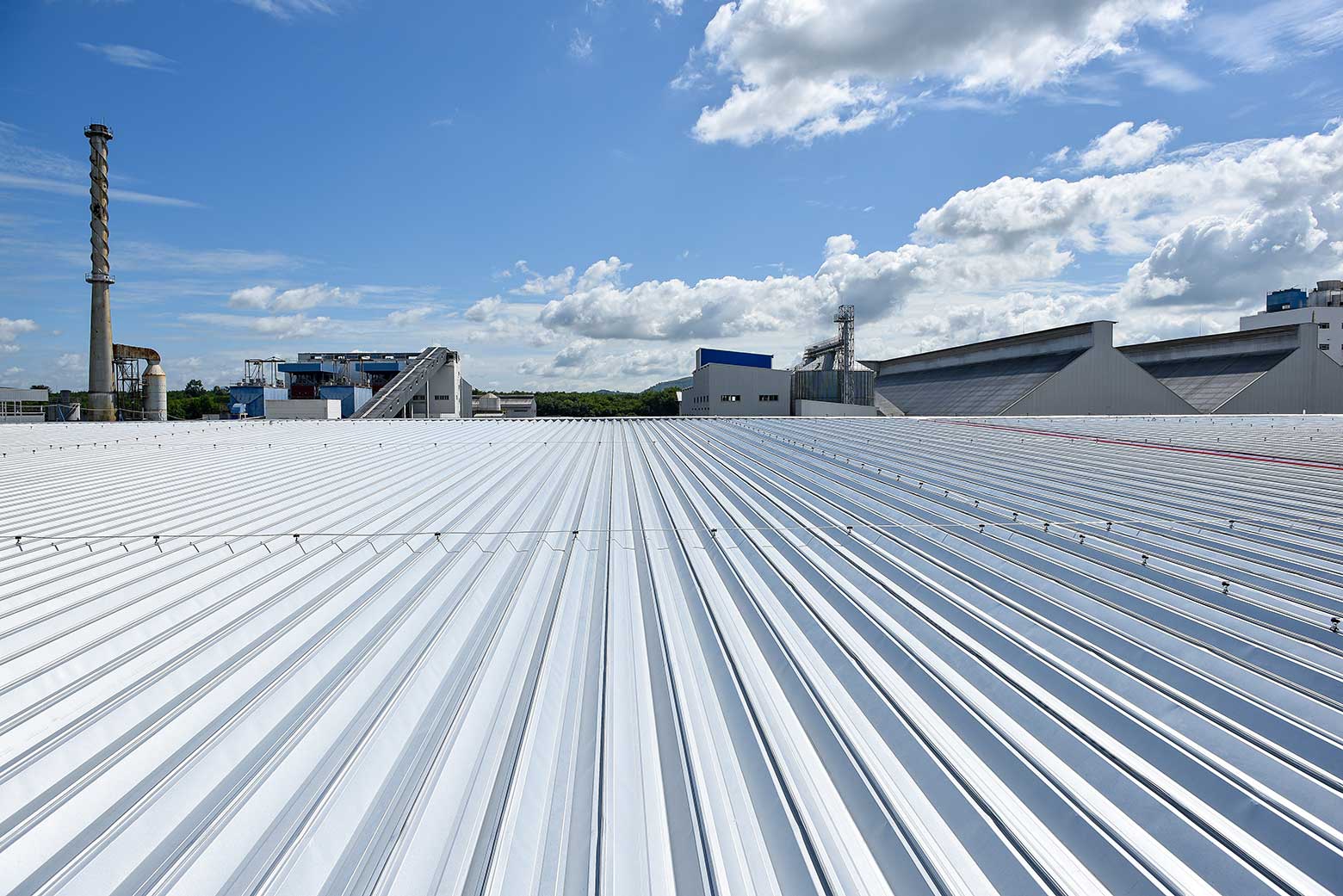
Standing seam metal roofing performs differently in the Sonoran Desert than in any other North American commercial market. UV Index 11-plus exposure, rooftop surface temperatures above 175°F, and a monsoon season that stress-tests every seam and clip within weeks of installation all demand specification decisions that go beyond standard manufacturer defaults. We scope and install standing seam systems calibrated to what Tucson actually does to a metal roof.
Standing seam metal roofing in Tucson shows up in two distinct project contexts. The first is adaptive reuse and institutional construction — the University of Arizona campus has seen standing seam applied on research and performing arts buildings where the owner's capital horizon extends 40 to 50 years and the lifecycle math justifies the higher upfront cost. The second is Foothills and Catalina corridor commercial buildings where architectural metal is part of the building's design identity and where clients want the longest-service-life system available in the Sonoran Desert environment.
We install standing seam as a commercial-only scope. The Sonoran Desert creates standing seam specification challenges that do not exist in northern or coastal markets: thermal expansion on a 200-foot panel run in Tucson's summer ambient can approach 1.75 inches across the daily temperature swing — substantially more than the same panel in Dallas or Denver. Clip systems that are adequate in moderate climates can bind or walk under Tucson's thermal cycling, opening seams at clip locations over time. We design clip patterns and panel lengths to the actual Tucson thermal range, not the manufacturer's generic clip table.
The two primary specification decisions — finish and seam type — interact with the Sonoran Desert's specific UV load and heat-cycling demands. Kynar 500 coatings on standing seam panels have historically performed well in high-UV desert environments, but color selection matters: darker colors accelerate thermal cycling stress while lighter PVDF finishes reduce it. We walk through both decisions with clients before material is ordered, and we document the specification rationale in the closeout file.
Galvalume vs. Kynar Painted Finish in the Sonoran Desert
Galvalume — a zinc-aluminum alloy coating on the steel substrate — is the durability baseline for commercial standing seam and carries a 40-year substrate warranty from major manufacturers including Drexel Metals, McElroy, and MBCI, all of which distribute to Tucson-area suppliers. In the Sonoran Desert, Galvalume performs reliably under sustained UV and heat because the alloy coating is not a paint film that can fade or chalk — it is a metallurgical bond. If the building does not require a color statement, Galvalume is the straightforward specification: maximum longevity at the lowest per-square cost with no repainting maintenance requirement across the 40-year life.
Kynar 500 or 70%-PVDF painted finishes are specified on Tucson commercial buildings where reflectivity and color are part of the scope. This is particularly relevant in Tucson: Arizona's IECC 2018 energy code mandates minimum solar reflectance values for commercial roofs in Climate Zone 2, and light-colored Kynar finishes — cool-roof whites, light grays, and desert tan colors — can qualify under the Cool Roof Rating Council ratings required for compliance. Kynar finishes carry 40-year substrate warranties and 30-year color/chalk/fade warranties from most manufacturers; in Tucson's UV environment, we specify color from the lower-reflectance end of the Kynar palette only when the owner specifically needs a deeper tone, and we document the trade-off against energy code compliance.
One Sonoran Desert-specific consideration on finish selection: Tucson's elevation (approximately 2,400 feet) produces UV intensities measurably higher than lower-elevation markets. UV degradation of Kynar finishes is documented in manufacturer accelerated-weathering data, and Tucson's clear-sky UV load runs at the high end of that data set. We specify panels with factory-applied Kynar 500 or PVDF finishes from manufacturers whose coating process has been third-party tested at UV exposures consistent with Sonoran Desert exposure levels.
Seam Type and Thermal Movement in Tucson's Heat Cycle
Snap-lock panels are the appropriate seam type for Tucson standing seam applications on roof slopes above 3:12, where panels drain freely and the seam is not under standing-water pressure. Snap-lock installs faster and costs less in labor. Most of the standing seam we install on Foothills commercial buildings, institutional structures with sloped roof geometry, and covered parking structures in the Tucson market uses snap-lock panels with concealed clips.
Mechanical seam — crimped 180° or 360° with a powered seaming tool — is required on Tucson commercial applications where the roof slope is below 3:12. The double-lock seam provides reliable watertight performance at low slopes and is far more resistant to standing water intrusion during monsoon events than snap-lock below the minimum slope threshold. We will not specify snap-lock below 3:12 on any Tucson project, regardless of cost pressure.
The clip system is where Tucson standing seam failures originate when they occur. Standard fixed-clip patterns designed for moderate-climate markets do not account for the expansion range that Tucson's temperature differential produces. We design clip patterns to the actual annual thermal range at the Tucson site — accounting for elevation and roof orientation — and to the specific panel manufacturer's published longitudinal movement allowance. This calculation is included in every standing seam closeout package, keyed to the structural drawing.
Substrate, Insulation, and Warranty Closeout
Standing seam on Tucson commercial buildings most commonly goes over structural metal deck or steel purlins, with rigid polyiso insulation specified to Standard-density polyiso loses effective R-value at the rooftop surface temperatures common in Tucson's summer months. We specify high-density polyiso or a polyiso-plus-gypsum cover-board stack on every standing seam project to maintain effective insulation performance under actual operating conditions — not just at the 75°F test condition on the manufacturer's data sheet.
At parapet edges and penetration flashings — the surfaces that take the highest direct UV dose on any Tucson commercial roof — standing seam detail work requires marine-grade sealants and UV-stabilized closure materials. Standard EPDM closures used in northern markets degrade faster under Tucson's UV load. We specify UV-stabilized or PVDF-coated trim and closure materials at all flashings on every Tucson standing seam project.
Closeout documentation includes the manufacturer's warranty document and registration confirmation, the substrate warranty, the load and thermal-movement calculation record, the clip-pattern schedule keyed to the structural drawing, and the roof zone photo log with every flashing detail documented. This is the file the building's next facility manager, buyer, or lender needs to understand what system is on the roof and what its warranty status is.
Frequently asked questions
Does standing seam perform differently in Tucson than in other climates?
Yes. Tucson's thermal cycling — daily temperature swings of 50-plus degrees in summer between night lows and midday highs — produces panel expansion and contraction loads that exceed those in moderate-climate markets. The clip system that allows longitudinal panel movement must be designed to the Tucson thermal range specifically; undersized clip movement allowances allow panels to bind and eventually walk the seam at clip locations. We calculate clip patterns to the actual thermal range at the project site.
How does standing seam handle Tucson's monsoon season?
A properly specified standing seam system — mechanical seam on low-slope applications, correctly crimped seams at all panel laps — handles monsoon rainfall intensity without issue. The most common standing seam monsoon failure in Tucson is not the panel seam but the penetration and parapet flashings: seals that have UV-degraded over the summer dry season fail when the first intense monsoon event arrives. Pre-monsoon flashing inspection is part of our maintenance protocol on every Tucson standing seam building we manage.
What is the installed cost range for standing seam on a Tucson commercial building?
Installed cost on Tucson commercial standing seam projects typically runs $19-29 per square foot depending on panel gauge, finish, seam type, slope complexity, and substrate condition. The Tucson market adds a slight premium over flat-rate national tables due to limited local fabricator inventory on some profiles — Tucson standing seam panels are often transported from Phoenix or El Paso distributors, which adds lead time and freight. We account for lead time in every project schedule.
Scoping a standing seam project on a Tucson commercial building?
We will walk the roof, assess slope, thermal range, and structural capacity, and produce a standing seam specification with finish, seam type, insulation stack, and warranty path — written to bid against.
Ready to talk through a roof?
Tell us about the building and the roof problem. We'll document it and put a plan in writing — with an honest repair-vs-replace recommendation and no upsell pressure.
Documented, repair-first commercial & industrial roofing across Tucson and Pima County. Flat and low-slope systems for occupied buildings, planned around your operation.
Services
© 2026 Commercial Roofing Contractors Tucson. All Rights Reserved. Privacy Policy · Terms of Use